The government is considering offering employees financial incentives to tell the truth.
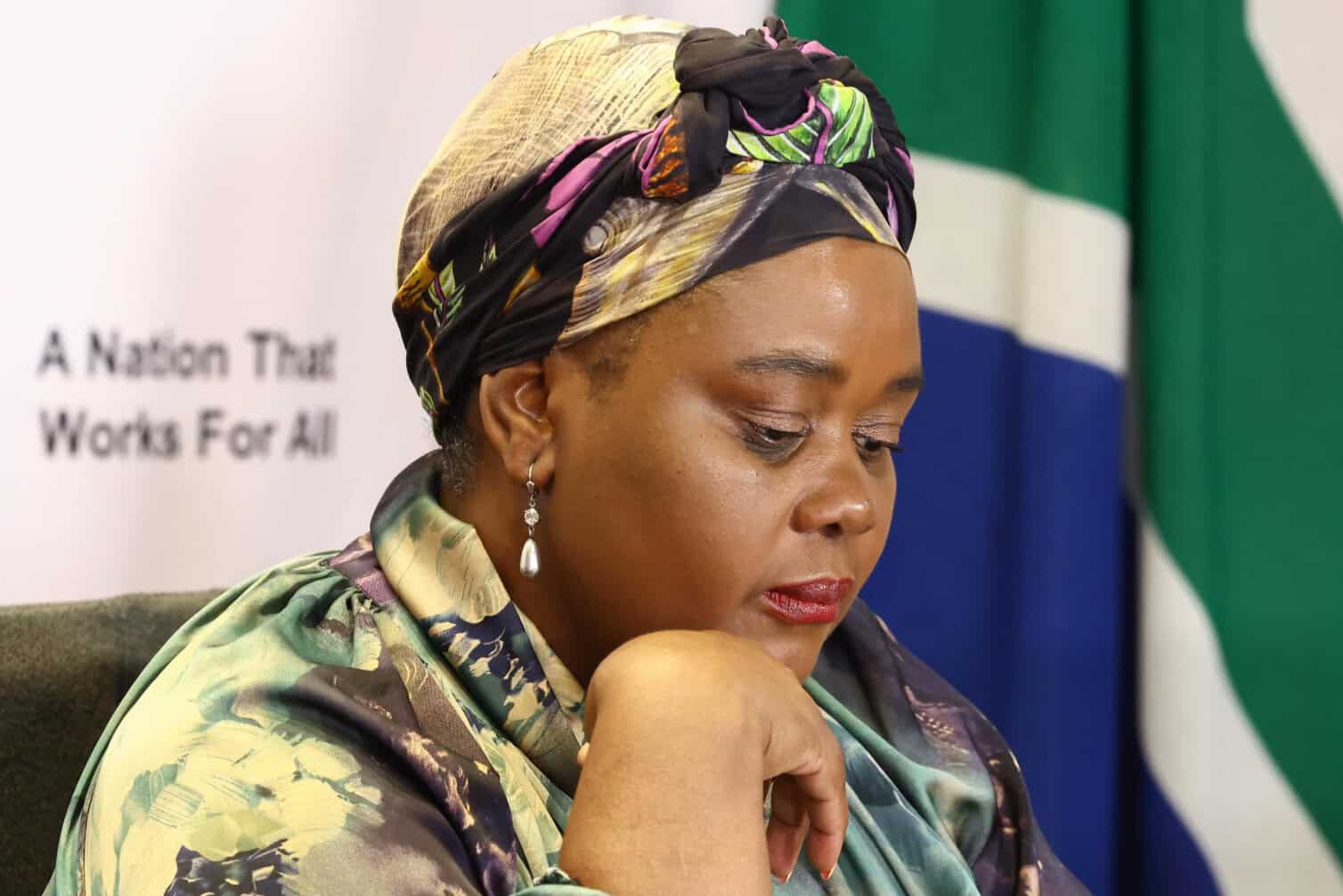
Minister for Justice and Constitutional Development Mmamoloko Kubayi on Thursday publicly released a draft of a bill aimed at providing greater protection for whistleblowers.
Called the Protected Disclosure Bill, it would introduce protocols to protect the identities of those reporting corrupt activities and to help them deal with the fallout of their disclosures.
One of the standout provisions of the bill is the introduction of financial incentives, with the minister elaborating on what they might be.
Kubayi stressed the bill is still a proposal and welcomed input from the public and civil society.
In-kind support likely
Kubayi stated that other than threats to their lives, exposing corruption left individuals open to being targeted in the workplace.
“In some cases, dismissals are used to punish employees and payouts of benefits are delayed.
“When pursuing legal recourse, many whistle-blowers are left to navigate complex processes without adequate institutional support, often while having lost their livelihoods and properties such as their homes and vehicles,” the minister stated.
To mitigate these threats, the proposed bill provides for whistleblowers to be financially compensated for their honesty.
However, Kubayi stressed that it would not necessarily take the form of cash payments or rewards equal to the value of the corrupt activity.
“Let’s say you are a whistleblower and you save the state R100 million, others were saying let’s give that person 10%, I don’t think it would work in that context. The money is meant for a service,” she said.
Kubayi stated that the department was considering minimum payments for whistleblowers, but suggested assistance would come in the form of in-kind support.
“We do believe we can work with partners in the private sector if a whistleblower – let’s say he is dismissed from work while the investigation is happening – [that] the banks not repossess their cars, not repossess their houses.
“We want to encourage people who have proposals. If they have better mechanisms that they can recommend, then we will consider it as the department,” Kubayi told the media.
Confidentiality breaches to become criminal
Kubayi said current legislation was “inadequate in several key respects”, most importantly in how corruption complaints were submitted and addressed.
The bill would set out clear definitions of what a corruption complaint entails, as well as “detrimental action and occupational detriment”.
The bill aims to keep whistleblowers’ identities anonymous “except where strictly necessary”, with the disclosure of protected identities punishable by law.
“It further provides for restricted access to information, in camera court proceedings, and the redaction of identifying details in legal processes.
“Any breach of these confidentiality provisions constitutes a criminal offence,” Kubayi stated.
The minister clarified that witness protection was not currently being considered for whistleblowers, although the bill contemplates it.
She stated that upon the expiry of the public consultation period, her department would attempt to fast-track the bill through parliament.
“That is why we are releasing this information now so that organisations and institutions can start preparing,” Kubayi said.