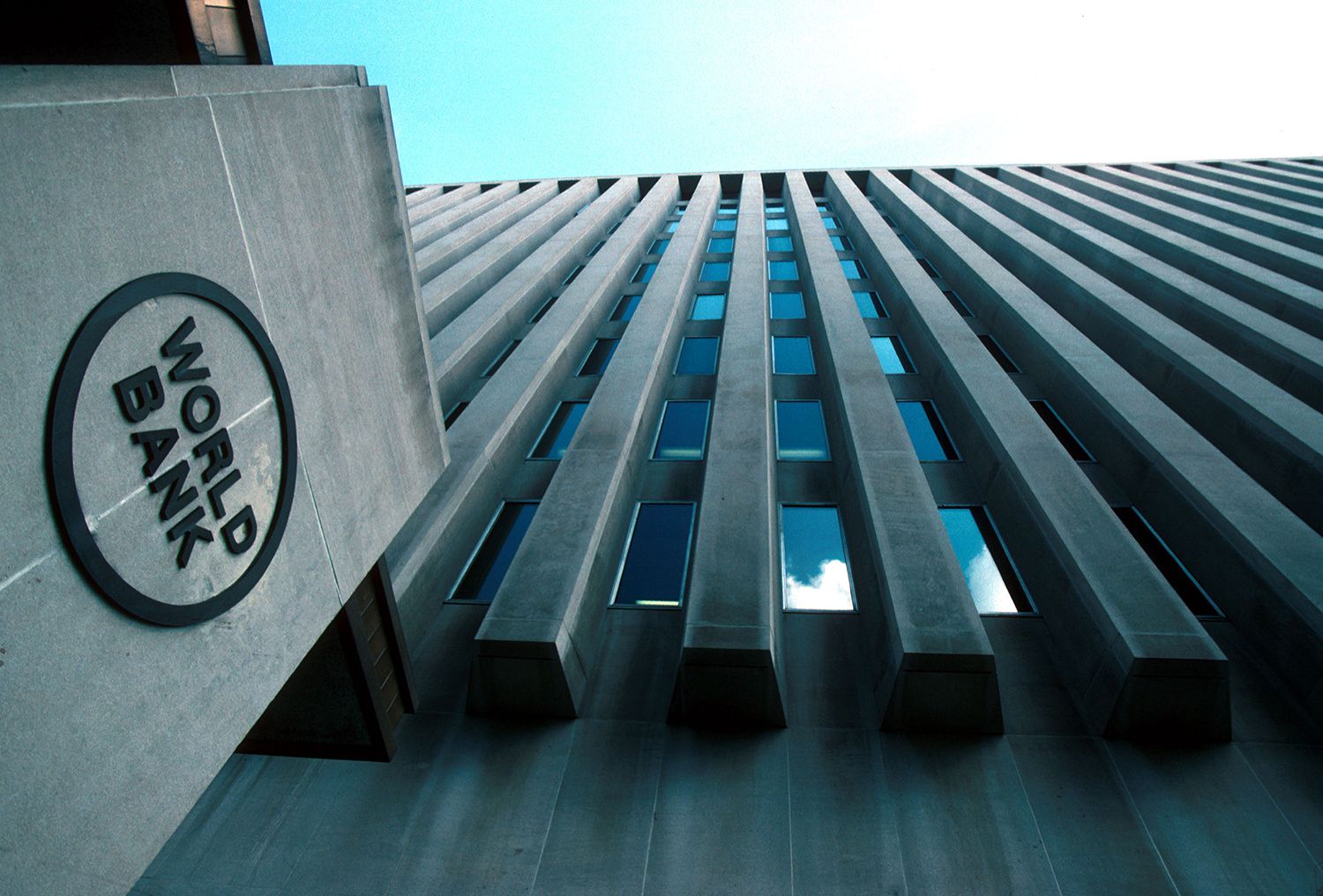
Nigeria’s economic reform drive won rare global plaudits on Tuesday, with the World Bank describing the country as an emerging reference point for steady and credible reform leadership, citing sustained policy consistency, tough fiscal choices and growing investor confidence under the current administration.
Also, President Bola Tinubu has vowed that he won’t abandon ongoing economic reforms in Nigeria, declaring that his government remains committed to sustaining the structural changes and will not reverse course despite the initial pains of adjustment.
Charging the World Bank to deepen and fast-track its partnership with Nigeria, the President, who made the call at the State House, Abuja, while receiving the World Bank delegation led by its Managing Director of Operations, Anna Bjerde, hinted that Nigeria had already crossed the most difficult phase of reform implementation and was determined to stay the course in the interest of long-term stability and prosperity.
Besides, the Minister of Finance and Coordinating Minister of the Economy, Mr. Wale Edun, on Tuesday said Nigeria was firmly on course to achieving sustained economic growth of at least 7 per cent between 2027 and 2028, driven by ongoing macroeconomic and structural reforms aimed at restoring stability, boosting productivity and deepening inclusion.
Tinubu stated that Nigeria remains at the heart of the African continent, adding that the scale of the country’s population and resources makes reform not just desirable, but inevitable.
He said: “I give you the assurance that since we’ve gone into this tunnel of reform, we have our hands on the plough and we’re never going to look back. Initially it was painful and difficult, but those who win are not the ones who give up along the way in difficult times”.
He explained that strengthening the economy requires deliberate focus on Nigeria’s youthful population, its vast arable land and the need to modernise agriculture through mechanisation and improved inputs.
Tinubu outlined ongoing efforts by his government to establish zonal mechanisation centres across the country to support farmers, expand access to improved seedlings, and leverage rising petrochemical output to boost local fertiliser availability.
He emphasised that the measures were aimed at improving yields and transitioning farmers from subsistence production to large-scale cooperatives capable of creating jobs and generating wealth.
He added: “How do we help the farmers convert the local market for fertilisers to improve their yields and move them from ordinary small-scale holders to huge cooperatives that can bring opportunities to Nigerians?”
The President urged the World Bank to identify areas where it could support seed development, mechanisation and agricultural value chains. Reaffirming his administration’s reform philosophy, Tinubu stressed that transparency, accountability and market-driven policies would remain central pillars of governance.
He said difficult decisions taken on fuel subsidy removal and exchange-rate unification were necessary sacrifices for long-term gains.
“It’s difficult for a leader to look the other way in a corrupt environment where subsidy regimes or multiple exchange rates can offer quick gains. We gave that up so that the world and the country can benefit from a stable currency,” the Nigerian leader said.
The President acknowledged that inflation initially rose following the reforms but noted that it had since eased significantly, while the naira had stabilised. He added that improved macro-economic conditions were already enhancing investor confidence and easing the process of doing business in and out of the country.
Tinubu called on the global bank to explore innovative financing models, reduce bureaucratic bottlenecks, help de-risk private investment and support skills development.
World Bank Chief Lauds Nigeria’s Economic Reforms
Earlier in her remarks, the World Bank Chief, Bjerde, said Nigeria is now frequently cited globally as an example of steady, credible reform leadership. Bjerde commended Nigeria’s reform progress over the past two years, particularly the government’s consistent resolve to stay the course despite challenges.
This consistency and the clear evidence of positive results, she said, have built strong confidence among investors, policymakers, and the private sector. The bank chief highlighted the forthcoming Country Partnership Framework as being firmly anchored in Nigeria’s own development vision, particularly the goal of achieving a $1 trillion GDP and 7 per cent growth.
Bjerde underscored the importance of improving access to finance for small, medium, and large enterprises, especially mid-sized firms, which are key drivers of employment.
Edun: Nigeria’s 7% GDP Growth Achievable
Separately, the Minister of Finance and Coordinating Minister of the Economy, Mr. Wale Edun, on Tuesday said Nigeria was firmly on course to achieving sustained economic growth of at least 7 per cent between 2027 and 2028, driven by ongoing macroeconomic and structural reforms aimed at restoring stability, boosting productivity and deepening inclusion.
This was just as the Chairman of the Nigerian Exchange Group (NGX), Umaru Kwairanga, pledged that the Exchange would play a central role in driving Nigeria’s $1 trillion economic growth agenda, leveraging its capacity, resources, and infrastructure to channel long-term investment into critical sectors and connect capital to opportunities that enable businesses to grow in a transparent, efficient, and sustainable marketplace.
Also on Tuesday, S&P Global Ratings projected that Nigerian banks would achieve nominal credit growth of between 20 and 25 per cent in 2026, driven largely by investments in oil and gas, agriculture, and manufacturing sectors.
The International Monetary Fund (IMF) in its latest World Economic Outlook (WEO) had upgraded Nigeria’s growth projection to 4.4 per cent, representing an upward revision of 0.2 percentage points from its October WEO.
Edun, who was represented by the Permanent Secretary at the Federal Ministry of Finance, Mr. Raymond Omachi,, spoke at the African Business Convention (ABC) in Lagos. Edun outlined the government’s economic reform agenda against a backdrop of tightening global financial conditions and rising geopolitical uncertainty.
He noted that global trade and investment dynamics are shifting rapidly, with increasing protectionism, fragmented supply chains and more cautious capital flows making it imperative for countries such as Nigeria to build resilience through domestic reforms.
According to him, many African economies now spend more on debt service than they receive in development assistance, underscoring the urgency of productivity-led growth.
Against this backdrop, Edun pointed out that Nigeria has, since May 2023, embarked on a disciplined and reform-oriented economic programme anchored on restoring macroeconomic stability and rebuilding government capacity to invest strategically in long-term growth drivers such as education, healthcare, infrastructure and human capital.
He said: “To achieve targeted GDP growth by 2027–2028, Nigeria must return to a path of growth of at least 7 per cent, that is what we are working on every day. Not oil-driven growth, but a sustained growth, inclusive and productivity-led growth.
“The global economic environment is challenging, but Nigeria’s direction is clear and we are following it consistently. The foundation is being laid, the reforms are taking hold, and the ambition is unwavering – seven per cent growth. A million lifted out of poverty in Nigeria is not a distant dream and aspiration, it is already here. It is a shared project; we need to work together.”
He acknowledged that the reform process has been challenging, with short-term pains, but stressed that the measures were necessary to reposition the economy for sustainable expansion.
Among the key interventions, he highlighted foreign exchange market reforms, which he said have significantly narrowed the gap between the official and parallel markets, improving transparency and investor confidence.
He added: “For Africa, growth must be domestically driven, private-sector led, and productivity-focused. We must mobilise our own resources, use technology to overcome constraints, and convert our greatest asset, our people, into skilled, productive participants in the global economy. Nigeria, as Africa’s largest economy and most populous nation, has both a responsibility and an opportunity to lead.”
NGX Chair: Strategic Deployment of Capital ‘ll Ensure Inclusive Growth
In his contribution, Kwairanga emphasised that platforms like the ABC are crucial for transforming dialogue into tangible partnerships and investment outcomes, deepening investor participation, fostering innovation, and building resilient financial ecosystems that underpin sustainable growth.
Highlighting Nigeria’s potential as Africa’s largest economy, Kwairanga said strategic deployment of capital and strong collaboration between governments, investors, and businesses would ensure that growth was inclusive and broad-based.
He said: “At the NGX, we see strong alignment with a convention of this nature because our mission centres on connecting capital to opportunity and enabling businesses to grow in a transparent, efficient and sustainable marketplace.
“Platforms such as the ABC mirror our belief that dialogue, cross-border collaboration and partnerships are essential to unlocking Africa’s economic potential.
“As a market infrastructure group, we are committed to supporting innovation, deepening investor participation and building resilient financial ecosystems that empower enterprises of all sizes, while channeling long-term capital into the critical sectors that power Africa’s growth story.
“We at NGX, we are ready, we have the capacity, we have the resources and infrastructure to key into the $1 trillion economy and this is achievable.”
In his remarks, the convener, Dr. Ogho Okiti, emphasised that the ABC seeks to translate dialogue into strategic partnerships and initiatives that foster sustainable growth and prosperity across the continent, highlighting the critical role of collaboration between governments, investors, entrepreneurs and innovators in driving inclusive economic development and closing Africa’s investment, policy and skills gaps.
S&P Forecasts 25% Credit Growth for Nigerian Banks
Meanwhile, S&P Global Ratings has projected that Nigerian banks would achieve nominal credit growth of between 20 to 25 per cent in 2026, driven largely by investments in the oil and gas, agriculture, and manufacturing sectors.
The ratings agency also predicted that Nigeria’s real GDP growth will average 3.7 per cent over 2025–2026, supported by both oil and non-oil sectors. These projections were highlighted in S&P’s Nigerian Banking Outlook 2026 titled, “Banks Face Regulatory Headwinds, But Will Be Able to Preserve Positive Profitability.”
The report stated: “We forecast the average return on equity (ROE) will normalise at 20 per cent-23 per cent in 2026 compared to 25 per cent estimated for 2025, while return on assets will decline marginally to 3.0 per cent-3.1 per cent from an estimated 3.3 per cent in 2025.
“Profitability will be supported by still high interest margins, growing NII, and slightly lower provisions, while capital issuance will increase the equity base leading to a lower Return on Equity (ROE).”
It further noted: “The Nigerian banking sector continues to face challenges in 2026. The end of regulatory forbearance will challenge asset quality, while increased capital requirements come due and net interest margins come under pressure because of expected interest rate cuts.
“Despite this, we anticipate Nigerian banks will prove resilient and capable to preserve their profitability. This is due to growth in Non-Interest Income (NII) (driven by transaction fees and commission growth) and declining but still high cost of risk.
“The latter will remain elevated as the Central Bank of Nigeria (CBN) removed regulatory forbearance measures and the creditworthiness of some restructured exposures remains weak. These could weigh on banks’ asset quality in 2026 and beyond, particularly if the oil price drops significantly below our expectations. Banks have also strengthened their capitalization at the request of the CBN.”
On GDP growth, S&P predicted that Nigeria’s real GDP growth will average 3.7 per cent over 2025-2026, supported by both the non-oil and oil sectors.
“We expect nominal lending growth to remain high at about 25 per cent, supported largely by investments in the oil and gas sector (to increase production following measures to reduce militancy and theft), agriculture, and manufacturing. Retail lending will contribute marginally to banks’ portfolio expansion given its small size.”
The report emphasised that asset quality metrics were expected to remain broadly stable, though risks remain tilted to the downside.
Non-performing loans (NPLs), which increased to about seven per cent in 2025 from 4.9 per cent in 2024, were projected to stabilise at between six to seven per cent in 2026.
On profitability and capitalisation, the report stated: “We expect Nigerian banks’ profitability to decline marginally in 2026. Overall capitalisation for the banking sector is expected to improve as banks complete their capital strengthening initiatives to meet the new capital requirements.”
Deji Elumoye and Nume Ekeghe
About the Author