Winning Without Voting: The quiet mechanics of the 2026 parliament Parliamentary Elections Act, a candidate sponsored by a political party cannot withdraw from an election without a formal notification signed by the party’s secretary general or an authorised official.
Yet, opposition figures say the EC has accepted withdrawals that do not meet this threshold. In Mbarara, two National Unity Platform (NUP) candidates, Provia Bakazi (Rwemigyina Ward) and Hellen Kembaga (Biharwe), withdrew from local council races, citing lack of funding, broken party commitments and campaign fatigue.
Another NUP candidate, Peter Mpaka, pulled out of the Mbarara City North parliamentary race altogether, saying the party failed to honour its promise to finance his campaign. In October, Florence Asio, who had been unveiled as the NUP challenger to Speaker Anita Among, failed to appear for nomination. She later cited family pressure.
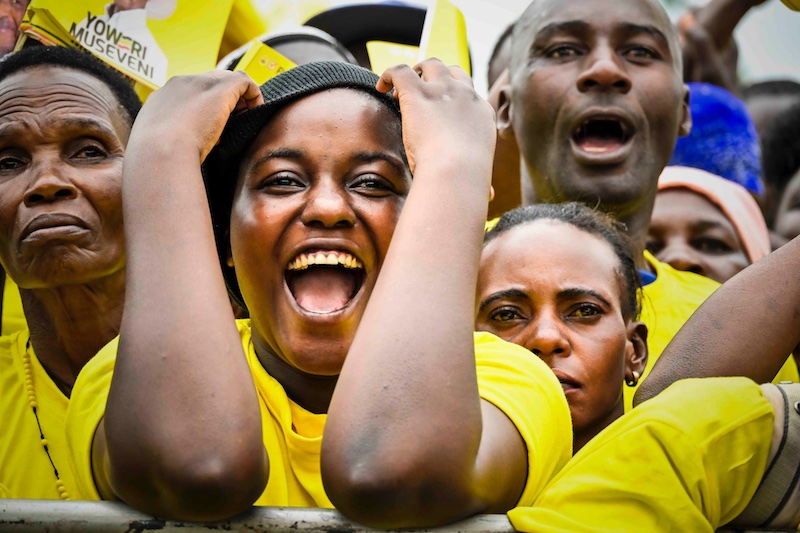
Weeks later, she appeared at an NRM rally with President Yoweri Museveni, declaring that she had never been an NUP member. More recently, NUP flag bearers Ashimeal Mbago (Mwenge Central), George Musabe (Mwenge South), and Jennifer Kabasinguzi (Bundibugyo Woman MP) crossed to the NRM, further thinning the opposition field.
At the same time, several opposition candidates were formally disqualified. Daniel Mulirire, a former police officer challenging Moses Magogo in Budiope East, was denied nomination over an alleged failure to present a resignation letter.

Shalif Ntanda, running against Bright Rwamirama in Isingiro North, was disqualified after the EC said eight of the 10 endorsers on his nomination form were invalid. Christopher Ategeka, who sought to challenge Finance Minister Matia Kasaija in Buyanja County, was also removed after the Commission questioned the authenticity of signatures on his form.
LAWYERS PUSH BACK
For legal practitioners, these decisions strike at the heart of electoral law. Jude Byamukama, a lawyer, called the disqualifications “a clear indication of the impunity with which the Electoral Commission is flouting the law.” “Section 4(4)(a) of the Parliamentary Elections Act requires a civil servant to resign 90 days before nomination,” he said.
“Daniel Mulirire resigned on April 15, 2024. He was, therefore, not a civil servant at the time of nomination. This section does not apply.” Byamukama also questioned the EC’s handling of withdrawals.
“A flag bearer cannot withdraw without the consent of the party. It’s in the law. If it’s a NUP candidate, the withdrawal form must be signed by the secretary general, or someone authorised by the SG. How can the EC permit those withdrawals?” he asked.
Former Makerere University vice chancellor Prof Venansius Baryamureeba echoed that concern.
“There is no legal requirement for anyone to attach a letter of resignation,” he said. “It is the duty of the Electoral Commission to verify with the police whether the candidate was serving at the time of nomination. If he was not, they cannot disqualify him.”
Human rights lawyer Sarah Bireete went further, arguing that the commission has failed in its constitutional role as an impartial arbiter. “When we call out the Electoral Commission, we are holding it accountable. There is no referee who can occupy that space on its behalf,” she said.
“The EC has done a great disservice to Ugandans by denying them a free choice of who should govern them.”
Bireete also questioned the handling of disputed signatures. “Any controversy regarding signatures should be resolved by handwriting experts, not by disqualifying candidates,” she said.
“Why doesn’t the EC forward disputed signatures to the police? It takes only a few days.” Senior lawyer Peter Walubiri offered a blunt assessment. “What we are witnessing right now is not an election,” he said.
“The Constitution prescribes free and fair elections.” Drawing on an analogy from his school days, Walubiri said, “Students would vote, but teachers would allocate positions. What we are seeing now is the allocation of positions by Mr Museveni, with the Electoral Commission and the military executing the process.”
EC EXPLAINS
Julius Mucunguzi, the Electoral Commission’s spokesperson, says the process is rooted in law, not discretion. The Commission, he explains, is mandated to receive complaints from any Ugandan voter against any candidate in the race and to assess those complaints on the strength of the evidence presented.
Where disputes arise, both sides are given a hearing. Based on the evidence, the Commission may either disqualify a candidate or allow them to remain in the contest, in line with the law.
“After nominations, candidates may choose to withdraw their candidature,” Mucunguzi said. “A candidate can also be declared unopposed if there is no one running against them, or if other candidates withdraw, leaving them as the sole contender.”
‘FAKE CANDIDATES’ AND POLITICAL THEATRE
The tensions spilled into public spectacle last week when NUP leader Robert Kyagulanyi, popularly known as Bobi Wine, accused Deputy Speaker Thomas Tayebwa of presenting “fake” NUP candidates to President Museveni.
“Here is Thomas Tayebwa presenting to Museveni three people who have never been NUP candidates,” Kyagulanyi said on X. “They know how desperate he is to buy off our candidates.”
Tayebwa later admitted that one of the individuals presented was not an NUP flag bearer. “It’s true one of the comrades was not a NUP flag bearer, and I regret that,” he said, adding that many opposition candidates were defecting voluntarily. “For you to brand everyone who leaves you a sellout is very unfortunate,” Tayebwa said.
“They are approaching us themselves.”
THE LARGER PATTERN
Taken together, the withdrawals, defections and disqualifications reveal a broader trend: elections increasingly decided at the nomination stage rather than at the ballot box. As Uganda approaches 2026, the question is no longer simply who will win, but whether voters will be allowed to choose at all.
In a system where competition is narrowed through procedure, legality becomes politics, and silence at the polling station may already have been written months before election day.
The controversy surrounding unopposed MPs is not just about numbers. It is about trust—and whether Uganda’s electoral process still offers meaningful choice in a democracy promised by its Constitution.
About the Author