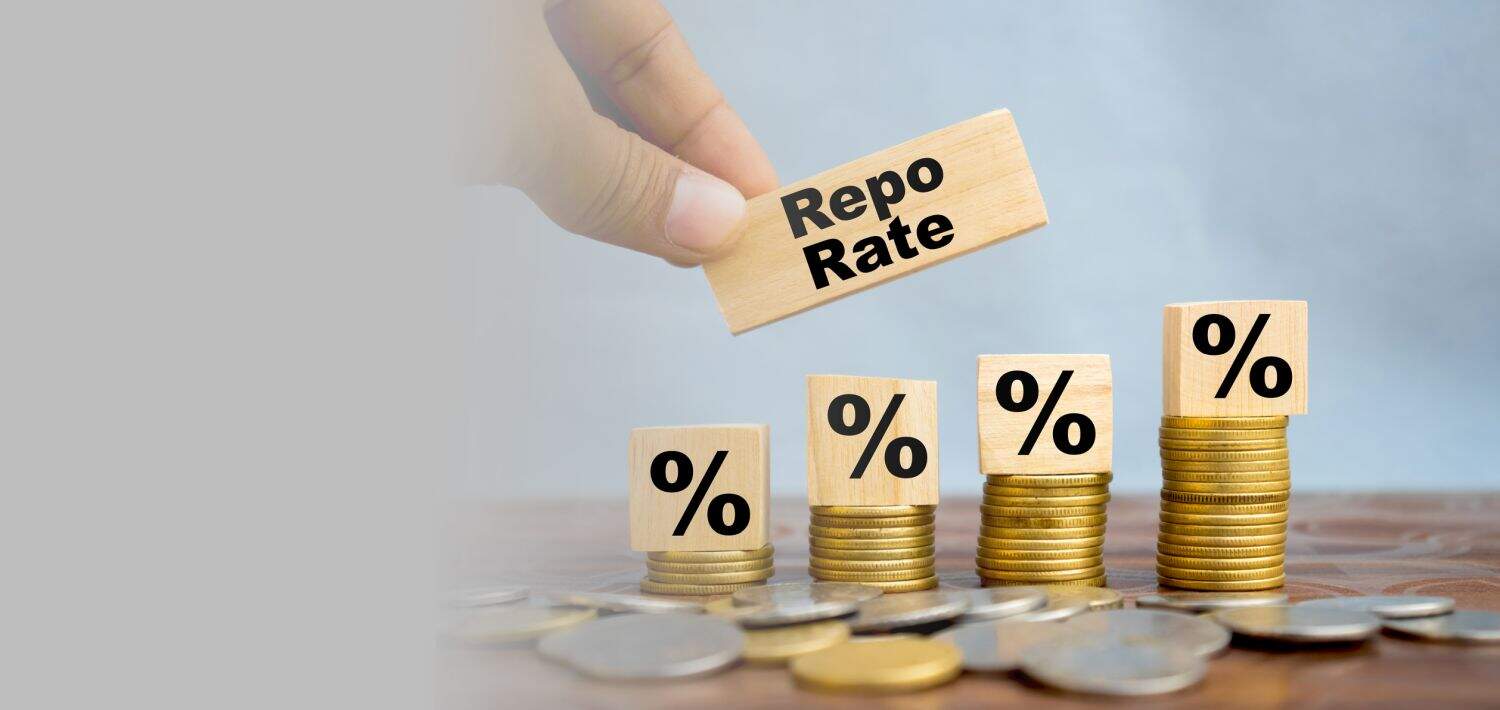
Financial concept showing a hand placing a Repo Rate wooden block on stacks of coins with percentage symbols representing banking policy.
The longer the Middle East conflict continues, the greater the impact on global economies, including South Africa.
The closure of the world’s most important oil shipping route, the Strait of Hormuz, has increased Brent crude oil prices, raising concerns about inflation. This is not great news for the country’s upcoming interest rate announcement.
Following the South African Reserve Bank’s (Sarb’s) monetary policy committee (MPC) decision to keep the repo rate unchanged at 6.75% in January, analysts forecast at least two cuts this year. However, this outlook is not likely at the moment.
ALSO READ: Phasing out prime rate doesn’t mean lower loan repayments, but more transparency, says Sarb
To cut, increase or hold?
Dr Bonke Dumisa, an independent economic analyst, told The Citizen that the current weakening of the rand and rising Brent crude oil prices will negatively impact previously expected economic growth figures and predicted inflation rates.
“In short, we may not have some of the repo rate cuts we may have expected before all this Donald Trump Benjamin Netanyahu military fiasco,” he said.
On Wednesday morning, the price of Brent crude oil opened at $83.27 a barrel, up from Tuesday’s opening of $80.32. In a post, Dumisa described this as “the worst levels since the year 2021”.
Middle East’s influence on interest rates
The interest rate decisions by the MPC are influenced by several economic factors, mainly inflation, economic growth and global conditions.
The committee closely monitors consumer price inflation (CPI) to keep it within its target range, while also assessing the economy’s performance and consumer and business spending. Global developments also play a role.
The ongoing conflict in the Middle East has disrupted global oil supplies and pushed prices higher, which can increase inflation worldwide.
The MPC will have to consider these pressures when deciding on to raise, cut or keep interest rates unchanged in order to keep inflation under control and protect economic stability.
ALSO READ: SA could be a big loser in Middle East conflict: Oil surges, stronger dollar hits rand
SA can weather the storm
Concerns around whether the MPC will hike or cut interest rates come days after the National Treasury said the country can absorb external shocks such as the fallout from the conflict in Iran.
“It would take a very large shock to derail our fiscal plans,” Treasury Director-General Duncan Pieterse told Bloomberg in an interview on Monday. “We have geared ourselves in a way that we can manage some deviation.”
The Iran war could impact South Africa’s economic outlook if it had a lasting impact on global growth or oil prices, he added, although higher prices for gold and other commodities could offset any headwinds from more costly crude.
Fiscal consolidation path
The Treasury projects a primary surplus – which measures revenue minus non-interest spending – of R131 billion in the fiscal year through to March 2027.
That’s R60 billion more than this fiscal year’s surplus, which was 0.9% of GDP and will stabilise South Africa’s debt-to-GDP level, before it starts to shrink from 2026-27.
For South Africa to be pushed off this path of fiscal consolidation, revenue would either have to fall by R60 billion or government spending would have to jump by the same amount, Pieterse said.
NOW READ: Middle East at war: Why South African waters will see more ships than usual
About the Author