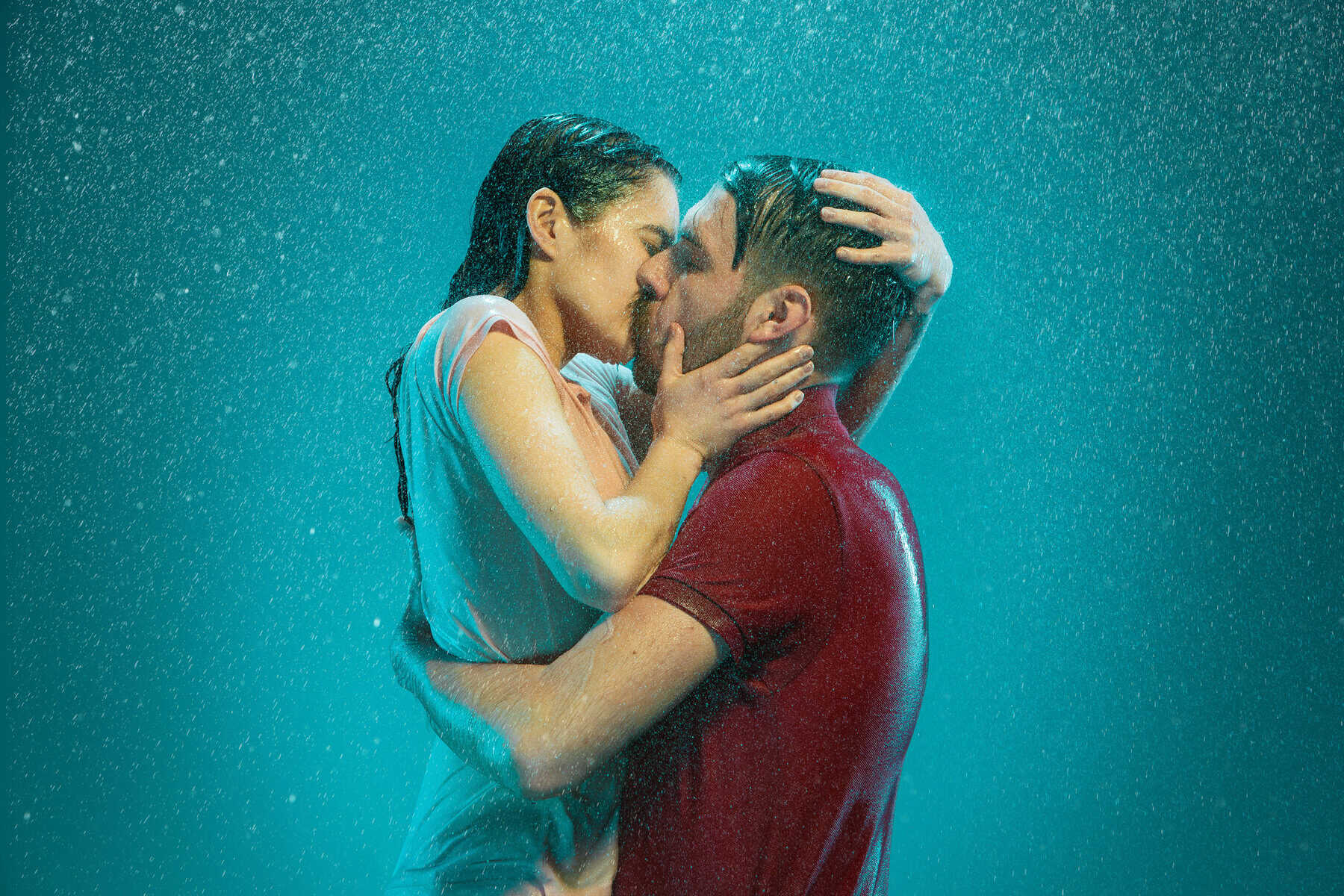
The loving couple kissing in the rain on a turquoise background
The Sixties gave us love’s endless summer, the sexual revolution and the beginnings of free love that spilt into the Seventies. Then came feminism, the excess of the Eighties with its big-hair bravado, and, over the past two decades, the wobble of a life lived on fast-forward.
Somewhere along the way, relationships changed. Social media, dating apps and instant messaging didn’t just shift how we meet; they reshaped how relationships are formed, sustained and increasingly, discarded.
Perhaps that’s why the pull toward the late Eighties and Nineties feels stronger now. Not just for the music or the fashion, but for a different kind of courtship. Lisa Welsh, an accredited sex educator and relationship expert, unpacked what’s really behind the nostalgia.
We often hear that relationships in the 90s were more intentional
It’s partly fair, but nostalgia has a way of smoothing over the rough edges. Relationships in the 90s were slower by necessity. Without smartphones, you had to be present. You called someone’s landline, you waited, and you showed up. That friction created a kind of investment that feels rare now.
But we’re also romanticising a time that had its own serious problems. Emotional unavailability was normalised, same-sex relationships were largely invisible, and many people stayed in unfulfilling partnerships simply because leaving felt too complicated or shameful.
So yes, there was something more grounded about the pace. But “grounded” doesn’t always mean healthier. What people are really mourning is the sense of presence and intention, not necessarily the era itself.

Dating today offers endless choice, but less connection. Is this why 90s love is resurfacing, or is it just swipe fatigue?
Absolutely. Choice without depth is exhausting. When every connection is a scroll away, nothing feels particularly precious. People are starting to notice that abundance isn’t the same as fulfilment.
Swipe culture has created a kind of paradox of availability. The easier access becomes, the harder a genuine connection feels. There’s always another option, which makes it difficult to be fully present with the person in front of you.
The draw toward 90s ideals may be a craving for relationships that feel worth the effort. People want to feel chosen, not just swiped right.
ALSO READ: Men are inflating their scrotums, doctors warn of serious risks
The 90s allowed for more private self-discovery. Has social media made identity a public asset?
For many people, yes. Identity used to be something you quietly tried on before you decided whether it fit. Now there’s pressure to declare, label, and broadcast before you’ve even had time to sit with how you feel.
That public nature changes the process. When self-discovery happens in front of an audience, even a supportive one, there’s an element of performance that creeps in. You start shaping your identity around what’s legible or relatable online rather than what’s genuinely true for you.
Private exploration gave people room to change their minds without consequence. That breathing room was quite valuable for emotional and sexual development.

Did this impact how people connect emotionally?
Yes, and in a subtle but significant way. When someone has already curated a version of themselves for public consumption, vulnerability in private can feel destabilising. There’s a gap between the presented self and the felt self, and intimacy lives in that gap. Genuine emotional connection requires uncertainty. It requires letting someone see you before you’ve figured yourself out.
Online culture rewards the polished version, which can make the messy, unresolved parts of us feel like something to hide rather than share. I see this particularly with younger clients who feel deeply lonely despite being highly connected. They’re visible but not truly seen. Those are very different experiences.
When do people say they want “90s-style love”?
When someone says they want 90s-style love, they’re rarely asking for mix tapes and dial-up internet. They’re describing a feeling of being someone’s priority, of slowness, of showing up without distraction.
What they’re naming is emotional safety. The sense that a person chose you deliberately, stayed attentive, and wasn’t half-present with one eye on a screen. That kind of attention is genuinely intimate.
The longing for a past era is really a longing for conditions that still exist; they’re just harder to create now. Presence, patience, and consistency aren’t nostalgic concepts. They’re timeless ones. We just must be more deliberate about building them.
Now Read: Don’t let FOFO ruin 2026: The fear you didn’t know you had