Nearly half of South Africa’s wastewater treatment systems have reached critical failure, a damning new government report has revealed.
When a wastewater treatment system fails, the sewage has to go somewhere.
In South Africa, it is increasingly going into the country’s rivers, wetlands and groundwater.
These same sources feed drinking water systems, irrigation networks and the taps of communities that have no alternative.
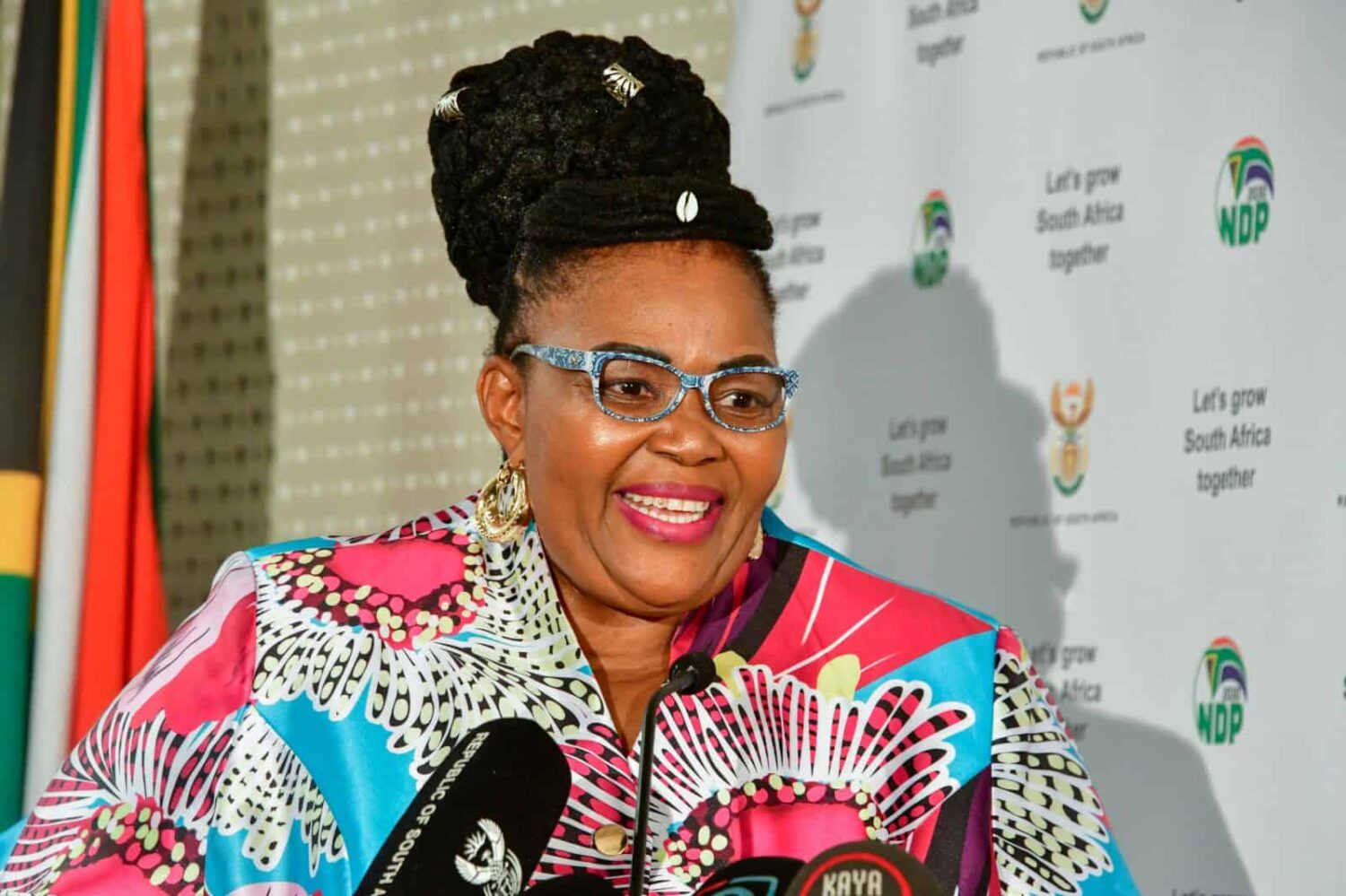
The Green Drop Report 2025, released by Minister of Water and Sanitation Pemmy Majodina on 31 March 2026, puts a number to what many South Africans living downstream of failing municipalities already know from smell alone.
Of the 848 wastewater treatment systems assessed for the 2023-24 municipal financial year, 396 – nearly half – are now classified as being in a critical state.
That figure has risen sharply from 39% in 2022 to 47% in 2025. At the same time, systems performing at excellent or good levels have collapsed from 14% to just 8%.
Only 14 facilities earned Green Drop certification this year, down from 22 in 2022.
“This is not merely another report, a routine publication, or a compliance exercise,” Majodina said at the report’s release in Mpumalanga.
“It shows us how effectively we are protecting our water resources, safeguarding public health and fulfilling our constitutional responsibility to uphold the dignity of our people.”
The data says the country is failing on all three counts.
ALSO READ: Pollution chokes Tshwane’s Rietvlei Dam
Provinces where the risk is highest
The health risk is not evenly distributed.
The report’s findings reveal a country of stark provincial contrasts, where your exposure to contaminated water depends heavily on where you live.
The Western Cape and Gauteng maintain the strongest overall risk profiles, meaning residents in those provinces are comparatively better protected.
Mpumalanga and North West recorded notable improvements in the assessment period. But for residents in the Northern Cape, the Free State and parts of the Eastern Cape, the picture is considerably bleaker.
The Northern Cape carries the highest concentration of critical-risk systems and severe weaknesses across multiple performance indicators.
The Free State was separately identified as a province of material concern.
Majodina did not mince her words about what this means for the people living in these areas.
“Without competent personnel, disciplined operations, effective governance and consequence management, infrastructure will continue to fail and communities will continue to suffer,” she said.
For context, a wastewater system in a critical state is not simply underperforming; it is failing to adequately treat sewage before releasing it back into the environment.
The communities most at risk are those who live near rivers and water bodies receiving that untreated or partially treated effluent and those whose municipalities draw drinking water from those same sources further downstream.
When the tap water itself becomes the question
The Green Drop Report does not stand alone. It was released alongside Progress Assessment Reports for Blue Drop, which tracks drinking water quality, and No Drop, which measures water losses.
Together, the three reports offer a comprehensive and deeply uncomfortable picture of the full water cycle under strain.
On drinking water quality, the Blue Drop data shows marginal national improvement.
Low-risk drinking water systems increased slightly from 60.2% to 61.9%, while critical-risk systems fell from 9.9% to 7.9%.
Majodina acknowledged the improvement but was careful not to allow it to obscure the larger problem.
“Despite these modest gains, critical and high-risk systems require urgent corrective action and intensified regulatory attention,” she said.
Major metropolitan areas are generally performing adequately on drinking water treatment and where municipalities have confirmed that water meets the requirements of SANS 241, South Africa’s national drinking water standard, residents can safely drink from their taps.
But Majodina issued a pointed caveat that should concern anyone relying on a smaller or poorly governed municipality.
“Residents should verify with their municipalities that testing and compliance with SANS 241 are being carried out,” she said.
That verification matters because the compliance chain depends entirely on municipalities conducting regular testing and reporting honestly.
In a sector where nearly half of wastewater systems are critically failing, the assumption that drinking water testing is being conducted rigorously and transparently is one that residents in high-risk provinces would be unwise to take for granted.
The human cost of systems nobody fixed
The physical deterioration of wastewater infrastructure does not happen overnight.
It is the cumulative result of years of deferred maintenance, unfilled technical vacancies and municipal budgets that consistently deprioritised water and sanitation operations.
By the time a system reaches critical state, the damage to the surrounding environment and to public health is already well underway.
Majodina outlined the pattern the report repeatedly exposes across failing municipalities.
“The underlying causes of poor performance include non-adherence to standard operating procedures for drinking water treatment and wastewater treatment, infrastructure in poor condition due to lack of maintenance and municipalities failing to hire qualified staff or prioritise budgets for maintenance and operations,” she said.
The consequences of that pattern are borne most heavily by the people with the least ability to protect themselves, communities without the resources to buy bottled water, install home filtration systems or relocate away from polluted water sources.
“Communities cannot live with broken promises or polluted rivers,” Majodina said.
“To the people of South Africa, you have every right to demand better. Your water, your sanitation, your health and your dignity are non-negotiable.”
Research from the Department of Cooperative Governance, National Treasury, and the Auditor General corroborates the report’s findings, all pointing to widespread governance failures at the municipal level as a primary driver of service delivery collapse.
These institutional failures are compounded by organised criminality, vandalism and deliberate attacks on water infrastructure.
ALSO READ: Millions lost to water corruption
Infrastructure projects handed over, but sustainability remains the test
During National Water Month in March 2026, the government handed over a series of infrastructure projects across multiple provinces as part of its response to President Cyril Ramaphosa’s declaration of a national water crisis.
These included 22 refurbished and upgraded sanitation infrastructure projects in Matjhabeng local municipality in the Free State, the Misgund bulk water project in the Eastern Cape, the Bhongweni water supply project in KwaZulu-Natal and the Piet Retief water treatment works in Mpumalanga, among others.
The National Water Crisis Committee, known as WaterCom and chaired directly by the President, has been established to coordinate urgent, cross-government interventions.
Legislative reform through the Water Services Amendment Bill will give the department new powers to act against municipalities that fail to implement corrective action plans, including the ability to require them to contract licensed water services providers.
But Majodina was candid about the limits of infrastructure delivery without the institutional capacity to sustain it.
“Handovers alone are insufficient without sustainable operation and proper maintenance,” she said. “Infrastructure must be protected from vandalism and theft, supported by competent technical capacity and responsible governance.”
The 105 worst-performing water services authorities have been prioritised for funding through the Regional Bulk Infrastructure Grant and the Water Services Infrastructure Grant.
Whether that funding translates into cleaner rivers and safer water for the communities downstream of failing systems remains the central public health question this report leaves open.
READ NEXT: South Africa’s waste crisis demands urgent circular economy shift, says deputy minister