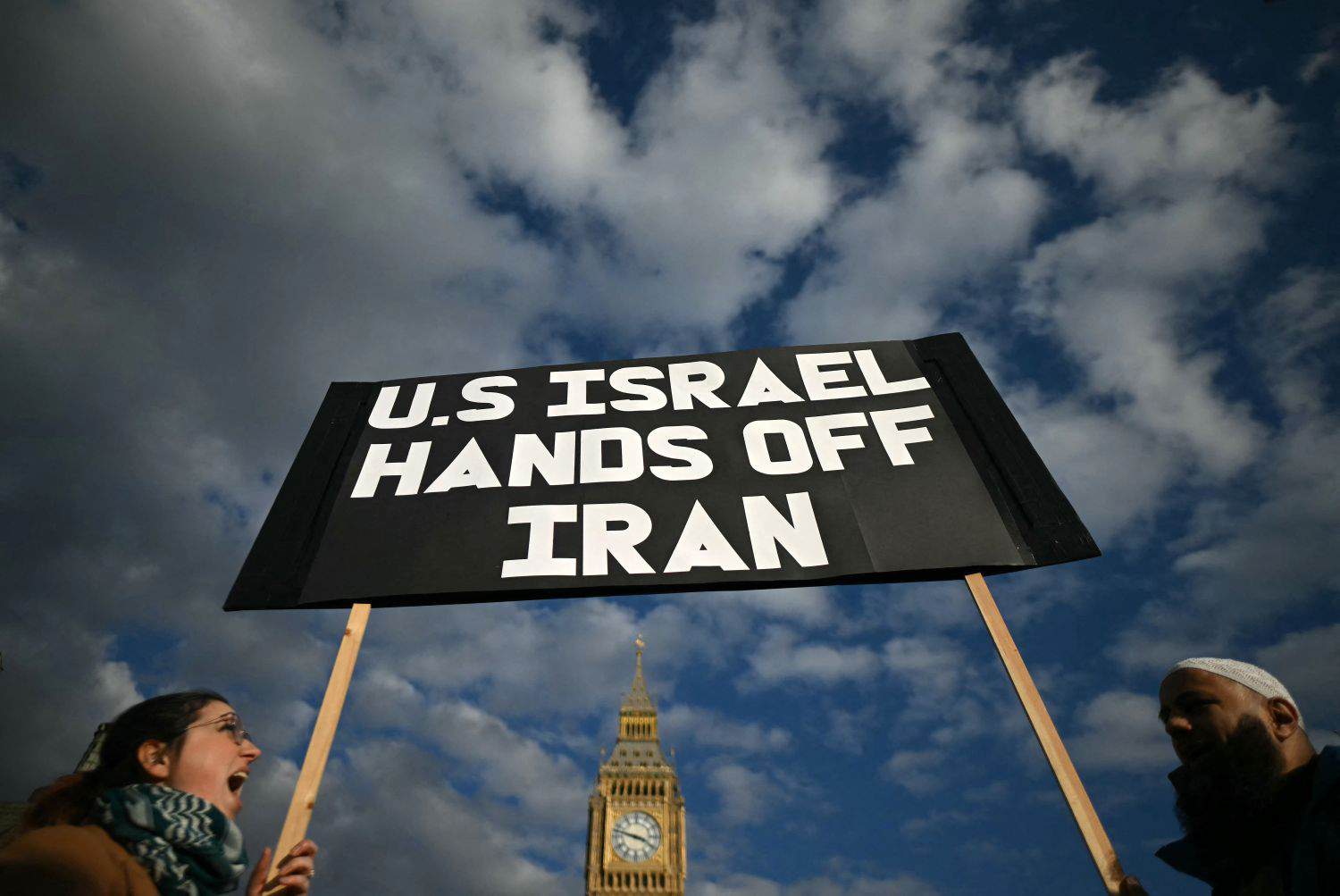
People hold placards during a protest against the US-Israeli attacks on Iran, in Parliament Square in central London, on February 28, 2026. The United States and Israel launched strikes against Iran on Saturday, sending columns of smoke rising over Tehran as the Islamic republic retaliated with barrages of missiles across the region. (Photo by JUSTIN TALLIS / AFP)
The United States and Israel launched a wave of strikes against targets in Iran on Saturday, sparking swift retaliation by the Islamic republic which responded with missile attacks across the region.
The flurry of retaliatory salvos from Iran resulted in airspaces closing around the Middle East.
Meanwhile, the death toll from an attack by the US and Israel on Saturday on a school in Iran’s south has risen to 85, the judiciary said.
ALSO READ: US and Israel launch strikes on Iran, Tehran hits back across region
The US and Israeli strikes on Iran follow the Islamic republic’s violent repression of mass protests and stalled negotiations between Tehran and Washington over existential issues for Iran: its nuclear programme, ballistic missiles and regional proxies.
Protest crackdown
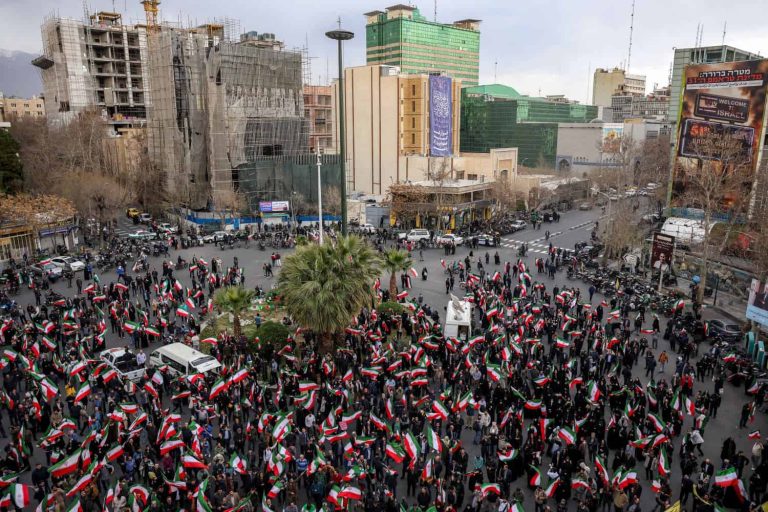
Protests over economic hardship erupted in Tehran in late December before spreading nationwide as a broad anti-government movement, peaking on January 8 and 9.
The unrest prompted a violent crackdown by Iranian authorities, with the US-based Human Rights Activists News Agency (HRANA) recording more than 7 000 deaths, mostly protesters, while warning the full toll was likely far higher.
In addition, more than 53 000 people have been arrested since January.
US President Donald Trump has cited 32 000 deaths, echoing figures reported by Persian-language media based outside of Iran.
For their part, Iranian authorities acknowledge more than 3 000 deaths but blamed the violence on “terrorist acts” they alleged were orchestrated by the United States and Israel.
As the crackdown was waged, Trump initially pledged to the Iranian people on 13 January that “help is on its way”, and ordered the biggest military build-up in decades in the Middle East.
ALSO READ: Iran: Do massacres work?
Nuclear programme
While Trump initially focused on the protest crackdown, he soon pivoted to Iran’s nuclear programme – a long-standing point of contention. Western powers have accused Tehran of seeking nuclear weapons, allegations Iran denies.
The United States has pushed for a total ban on all uranium enrichment, even for civilian purposes, while Tehran maintains its nuclear programme is strictly peaceful, despite enriching uranium to 60% – a level exceeding civilian requirements.
Washington and Tehran opened indirect talks in Geneva this week in an attempt to revive a deal on Iran’s nuclear programme.
On Tuesday, in his State of the Union address to Congress, Trump spoke of Iran’s “sinister nuclear ambitions” and accused Tehran of seeking to develop weapons that could hit the United States.
ALSO READ: Trump threatens Iran over nuclear talks, says ‘time is running out’
The latest round of negotiations concluded on Thursday without an agreement as Washington reportedly sought to have negotiations include Tehran’s ballistic missile programme and regional network of proxy militias.
Iran’s Foreign Minister Abbas Araghchi warned on Friday that Washington must abandon its “excessive demands” if it hopes to secure an agreement, without specifying which terms he was referring to.
Ballistic missiles
The US president expressed frustration after Tehran refused to address its ballistic missile programme during the latest negotiations.
Israel has also pushed for the issue to be addressed, warning that Iran’s short- and medium-range missile arsenals pose a direct threat to its security.
ALSO READ: US allows non-emergency staff to leave Israel as Trump threatens Iran strikes
Trump said on Wednesday that Tehran has developed missiles capable of threatening Europe and US military bases overseas, warning that the regime is also developing weapons that “will soon reach” the United States.
But the Islamic republic said it refuses to negotiate on its ballistic missiles, asserting its right to self-defence.
Iranian-backed proxies
Beyond seeking regime change, the US and Israel have vowed to dismantle Iran’s so-called “axis of resistance” – a network of armed and funded regional proxies that includes Hezbollah in Lebanon, Palestinian militant group Hamas, the Houthis in Yemen and various militias in Iraq.
“We’re going to ensure that the region’s terrorist proxies can no longer destabilise the region or the world and attack our forces,” Trump said in a message posted to his Truth Social platform on Saturday.
“It’s been mass terror, and we’re not going to put up with it any longer. From Lebanon to Yemen and Syria to Iraq, the regime has armed, trained and funded terrorist militias that have soaked the earth with blood and guts,” he said.
He further condemned the “monstrous October 7th attacks on Israel” by Hamas.
The Houthis have also targeted Israel in recent months, while Hezbollah emerged weakened from over a year of war with Israel that a November 2024 ceasefire sought to halt.
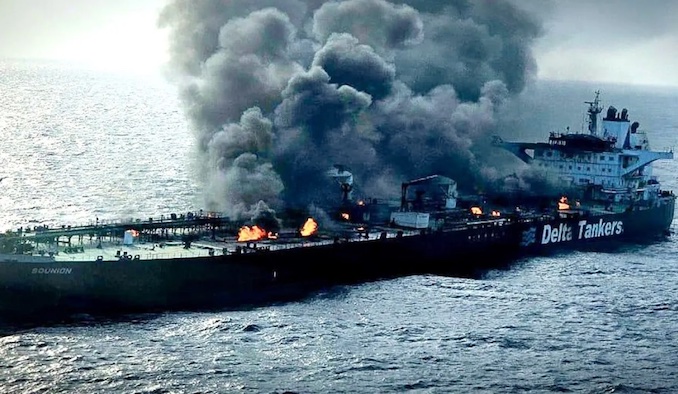
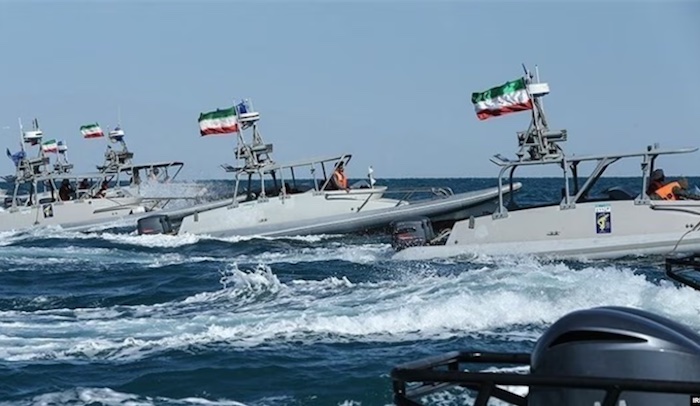
Trump also cited “countless attacks” against US forces in the Middle East, alongside strikes targeting US naval and commercial vessels and international shipping lanes.
READ NEXT: Ramaphosa moves inquiry into Iran’s participation in naval drill to Presidency
About the Author