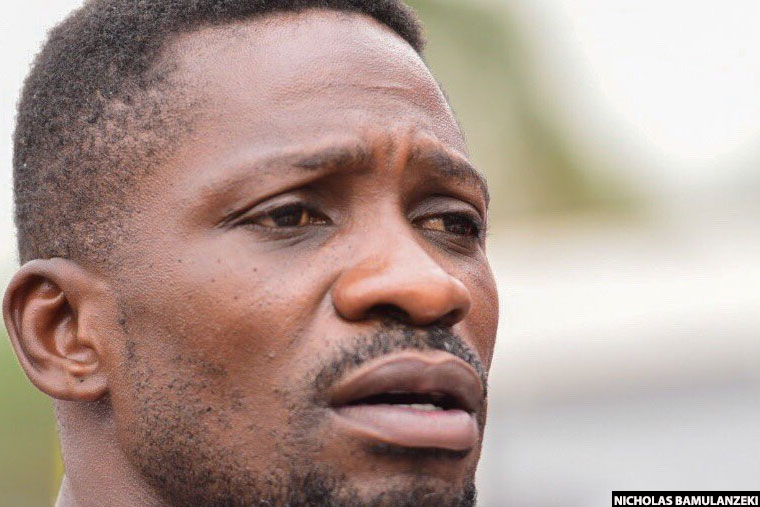
Every morning in Magere, the gates of Robert Kyagulanyi Ssentamu’s home no longer open to ordinary political life.
They open to silence, soldiers, and fear. In the days after Uganda’s January 15 armed presidential election, armoured men scaled the opposition leader’s fence, prowled his compound, and have since camped there.
Kyagulanyi, better known as Bobi Wine, the pop-star-turned politician, slipped away in the night. Since then, he has lived in hiding, his home under what his allies describe as a de facto military siege. The question hanging over Uganda’s post- election moment is stark and unsettling: what, exactly, is Bobi Wine’s crime?
A CANDIDATE BECOMES A TARGET
Kyagulanyi was the main challenger to President Yoweri Museveni in the January 15, 2026 election, a contest that marked four decades of Museveni’s uninterrupted rule. Eight candidates were nominated by the Electoral Commission in September 2025, whittled down from more than 200 aspirants who had picked up nomination forms.
On paper, the election followed constitutional form: universal adult suffrage, secret ballots, and one box per polling station. But since Museveni was declared the winner with about 71 per cent of the vote, the legal rituals have given way to a harsher political reality, especially for the opposition.
Over 500 supporters of Kyagulanyi’s National Unity Platform (NUP) have reportedly been arrested before and after polling day. In a series of now-deleted posts on X, the Chief of Defence Forces, Gen. Muhoozi Kainerugaba, claimed that 22 NUP supporters had been killed.
Several senior NUP officials have disappeared or been detained. Dr. Lina Zedriga Waru, the party’s deputy president for Northern Uganda, was reportedly abducted from her home on polling day and remains missing, according to Kyagulanyi.
Jolly Jacklyn Tukamushaba, the deputy president for Western Uganda, was allegedly abducted a day earlier in Rukiga District. In the Central Region, MP Muwanga Kivumbi was arrested, charged, and remanded to Kitalya Prison.
Against this backdrop, Kyagulanyi’s flight from his own home looks less like political theatre and more like survival.
RAIDS IN THE NIGHT
On January 26, ten days after he went into hiding, Kyagulanyi gave a detailed account of what he says happened in Magere. The first raid came on the night of January 16, hours after the polls closed.
“When we saw them jumping over our fence on the night of January 16, I managed to escape from my home,” he said.
“They did not enter the house; they stopped in the compound.” Two more raids followed on January 21 and January 23. This time, he says, dozens of soldiers broke down doors, confiscated documents, including academic certificates and land titles, and seized phones, laptops, and CCTV cameras.
His wife, Barbie Kyagulanyi, was allegedly held at gunpoint as soldiers demanded to know where her husband was.
“All these actions by Museveni’s regime are signs of weakness,” Kyagulanyi said. “If Museveni claims he won the election, why is he panicking? Why is he harassing people, me, and my family? These are signs of shame and illegitimacy.”
He says he remains away from home because his life is under threat.
“I take this opportunity to thank the international community for the voices they have raised and encourage them to keep an eye on Uganda, especially at this critical time,” he added.
“To my fellow Ugandans, this is our country. All this is being done to intimidate us.”

THE GENERAL SPEAKS
The most explosive commentary has come not from civilian officials, but from the army commander himself. On January 17, Gen. Muhoozi Kainerugaba said no one was looking for Bobi Wine.
Five days later, the tone shifted dramatically. He accused Kyagulanyi of having “started a war against the country” and declared that he would “pay for everything he has done.”
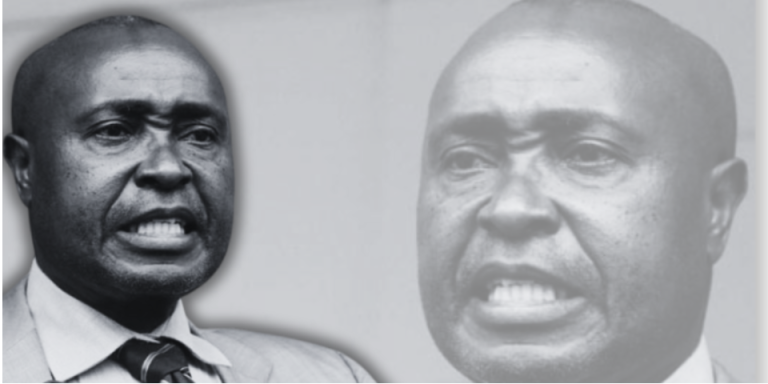
“Whether Robert Kyagulanyi Ssentamu is in the country or not,” Muhoozi said, “I, as CDF, in the interests of national security and for the good of the Commonwealth, ban him from any further participation in Uganda’s electoral processes.”
He said his orders carried the authority of the Commander-in-Chief, President Museveni. On the raids at Magere, the army chief denied assaulting Kyagulanyi’s wife.
“My soldiers did not beat up Barbie, Bobi Wine’s wife,” he said. “First of all, we do not beat women. They are not worth our time. We are looking for her cowardly husband, not her.”
He added that although the search had briefly been suspended, troops had been instructed to apprehend Kyagulanyi “dead or alive”—a phrase that sent a chill through Uganda’s already tense political climate.
The Uganda People’s Defence Forces declined to offer further clarification. “I have nothing to say about it,” said the acting director of defence communications, Chris Magezi.
A DIVIDED GOVERNMENT VOICE
Inside government, the responses have been notably uneven. Information Minister Chris Baryomunsi defended the security presence at Kyagulanyi’s home, saying it was meant to monitor visitors, not to stop him from living there.
He denied that the opposition leader was wanted by the state and suggested Kyagulanyi was simply avoiding the political consequences of defeat.
“I think he is embarrassed that he performed much worse compared to the last elections,” Baryomunsi said.
“He has collapsed in many areas where he was previously strong, and because he can’t explain that loss, he just goes into hiding.”
But other ministers have struck a markedly different tone. Betty Amongi, the Minister for Gender, Labour and Social Development, publicly condemned post-election violence, arrests, and the inflammatory online posts attributed to the army chief.
“It gives inflammatory rhetoric,” she said. “I don’t approve of that because it inflames rather than builds peace. The recklessness is not good for public discourse and democracy.”
Amongi warned that “post-violence, framed arrests” undermine national unity and damage Uganda’s international standing.
“Such actions make the government appear repressive and dictatorial,” she said. “There is significant concern about the democratic direction our country is taking.”
WHAT THIS MOMENT REVEALS
Taken together, the raids, arrests, disappearances, and rhetoric point to something deeper than a dispute over one election result. They expose the unresolved tension at the heart of Uganda’s politics: a system that holds regular elections, but struggles to tolerate genuine opposition.
Bobi Wine’s rise from ghetto pop star to presidential contender once symbolised a generational shift, a sense that politics could be contested without guns. His current predicament suggests how fragile that hope remains.
The state insists he is not wanted. The army speaks of war. Ministers contradict one another. Meanwhile, the opposition leader is in hiding, his home raided, his allies jailed or missing. If Bobi Wine has committed a crime, it has yet to be clearly stated, charged, or tested in court.
What is unmistakable is the message being sent: in today’s Uganda, challenging power can still carry a heavy personal cost. And as the dust settles on yet another election, the country is left with an uncomfortable reckoning not just about who won, but about what kind of political future is being enforced in the aftermath.
About the Author