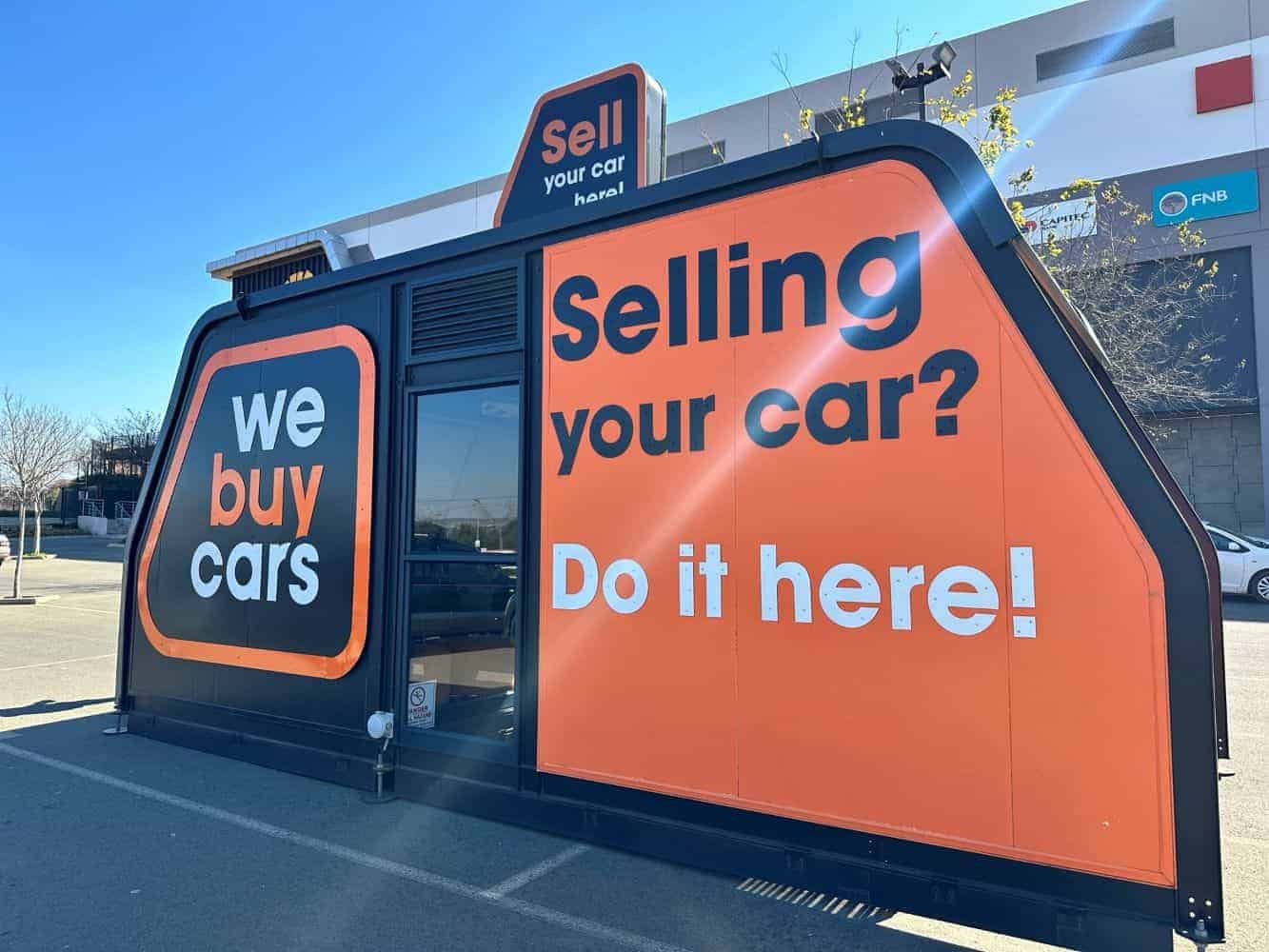
Car dealer WeBuyCars has agreed to pay a fine of R2.5 million and refund 31 consumers who complained after buying used cars that proved to have defects, while the terms of sale deprived them of their rights under consumer legislation.
The National Consumer Tribunal (NCT) confirmed a settlement agreement between the National Consumer Commission (NCC) and WeBuyCars after a constructive engagement between them. The confirmation carries the same weight as a High Court order.
The NCC referred the settlement agreement to the Tribunal on 3 December, and after due consideration, the Consumer Tribunal confirmed the settlement agreement on 19 December, making it a consent order in terms of section 74(1) of the Consumer Protection Act (CPA).
ALSO READ: Nine months, and 46 unhappy WeBuyCars customer complaints heard
This is what WeBuyCars agreed to with the NCC
In terms of the settlement, WeBuyCars agreed to strengthen consumer protection and enhance service delivery by:
- Paying an administrative fine of R2.5 million
- Refund a total sum of R3 419 971, 83 to 31 affected consumers, with amounts ranging from R2 267 to R649 169
- Revising its terms and conditions to align with the provisions of the CPA
- Committing to a Consumer Awareness Programme to enhance consumer education about buying pre-owned motor vehicles and consumers’ rights and obligations, as well as the supplier’s rights and obligations under the CPA, and
- Create 300 job opportunities at various levels across WeBuyCars over a period of five years, over and above the current planned employment opportunities, to enhance customer service capacity and overall consumer experience.
ALSO READ: Even an old car cannot be bought voetstoots or ‘as is’ from a used car dealer
NCC investigated complaints about used cars
The NCC received complaints from consumers stating that WebuyCars failed to provide remedies to consumers based on sale agreements they signed with them, Hardin Ratshisusu, acting commissioner of the NCC, says.
“The NCC formed a reasonable suspicion that WeBuyCars’ terms and conditions, particularly regarding warranty and terms of sale, contravened several provisions of the CPA. The NCC investigated the complaints lodged by the consumers and found that the terms and conditions of the sale agreements contravened the CPA.”
WeBuyCars now has two months to change its terms and conditions of sale, pay the fine and refund the consumers.
According to the order from the Consumer Tribunal, the estimated total amount WeBuyCars will spend over the five years is in the range between R180 000 000 and R195 000 000 which excludes annual salary increases and bonuses.
The Consumer Awareness Programme will be initiated over a two-year period, and WeBuyCars will commit a minimum investment of R500 000 for the programme.
When it comes to the fine, WeBuyCars must pay R1 million on or before 31 December 2025, another R1 million before 30 June 2026 and R500 000 before 31 December 2026.
ALSO READ: High court agrees with Consumer Tribunal’s R100 000 fine for used car dealer
Some terms and conditions in WeBuyCars agreements contravene CPA
The order indicates that the terms and conditions in WeBuyCars’ agreements contravened the provisions of the CPA and therefore constitute prohibited conduct.
WeBuyCars uses this paragraph in its agreements: “You confirm that you have read the Dekra Used Vehicle Report in respect of the vehicle you are buying and that you are fully aware of any roadworthy relevant reconditioning, repair and services work required before the vehicle passes the roadworthy test. You acknowledge that the Dekra Used Vehicle Report does not indicate the mechanical condition or reliability of the vehicle that you are buying. You further acknowledge that the vehicle may therefore need repair work to prevent mechanical problems, including but not limited to its engine and gearbox.”
However, this clause to exclude any liability of WeBuyCars to provide redress to consumers constitute prohibited conduct, because it does not cover the specific defect, considering that the Dekra Used Vehicle Report does not indicate the mechanical condition of the car, falling short of section 55(6)(a) of the CPA.
In addition, the order points out that failure to give the consumer an adequate opportunity to receive and understand the WeBuyCars provision during entering into the sales agreement is a contravention of section 49(5) of the CPA.
The dealer’s sales agreement also directed consumers to use any warranty they bought with the car to pay for repairs, and that the consumer will be responsible to pay for any shortfalls. Any reliance on this provision if the defect is detected within the first six months is a contravention of section 55 of the CPA.
ALSO READ: WeBuyCars refunds buyer of ‘dangerous’ car
These conditions WeBuyCars used also contravened CPA
The WeBuyCars agreements also contained these conditions that contravene the provisions of the CPA:
“It is unreasonable to expect WeBuyCars to have discovered any unsafe characteristics, failure, defect, or hazard in any of the vehicles. We will have regard to our role in marketing the vehicle to consumers and the fact that we did not manufacture the vehicle. For this reason, we cannot accept any liability for any failure in the vehicle or any consequential losses that may result from such failure.”
According to the order, this clause is a contravention of section 56(2) of the CPA that created the implied warranty for a period of six months. It is also unfair, unreasonable and unjust in terms of section 48(1)(ii) of the CPA. Including this is prohibited conduct in terms of the CPA.
You can view the full list of contraventions here: https://www.thenappeal ct.org.za/judgements/.
Ratshisusu welcomed the order. “This settlement concludes investigations against WeBuyCars on contraventions of the CPA.”
ALSO READ: Buying a pre-owned car? Remember these consumer rights
Banks can also not wash their hands of responsibility for adhering to CPA anymore
This news comes hot on the heels of a case in the Supreme Court of Appeal that now shifts the responsibility of defects in a used car within the first six months to the bank that finances the vehicle as a supplier too.
Until now, consumers who bought a used car that gave problems in the first six months could return it to the dealer and get their money refunded. If the car were financed by a bank, the consumer had to repay the bank after getting the refund from the dealer, or the court or Consumer Tribunal could order the dealer to repay the bank’s share directly to the bank.
The bank would never be in the picture otherwise. However, the Supreme Court of Appeal (SCA), did not agree with this and ruled that the bank is also a supplier and must therefore take responsibility for the defective car.
ALSO READ: Ground-breaking judgment rules that bank is responsible for defective bakkie it financed
WesBank will also change processes after court ruling
In this case, the bank that financed the defective used car was WesBank. Jacqui O’Sullivan, FNB corporate affairs executive, said in reaction, WesBank established processes to support customers who report defective vehicles bought from an approved dealership through a financed transaction.
“These processes require that any vehicle reported as defective be referred back to the selling dealership for inspection, in line with both South African law and WesBank’s contractual arrangements with approved dealerships.
“Where a material defect is confirmed, customers are entitled either to elect cancellation of the transaction and a refund of deposits and instalments already paid, or to request that the dealership do the necessary repairs or replace the vehicle.”
She says WesBank is also conducting a full internal review to understand why standard procedures designed to protect customers and ensure compliance were not followed in this instance.
“This review is intended to ensure continued alignment with legal requirements and to strengthen internal adherence to established processes. WesBank supports the SCA’s ruling. The Bank remains confident in the robustness and legality of its processes and will continue to operate fully within the ambit of the law.”
About the Author