There are many people who believe that if you are visiting one of our national parks by road, then you need to travel in a 4×4 or SUV.
The reasoning is that such vehicles are higher, both from a seating and ground clearance perspective and will give you better game viewing and cope better with the awful conditions of many of the roads in these reserves.
From personal experience, in Kruger National Park particularly, I can say we have had some good sightings in ordinary cars – most recently in a 1.0 litre Ford Fiesta.
The car coped with the gravel roads, although this was mainly because Kruger’s staff generally keep them in excellent condition (except when Mother Nature washes them away in floods).
Riding in 4x4s and SUVs should, in theory, give you a good view, but generally that view is often obscured by similar large, high vehicles.
Why a big vehicle is essential on a Pilanesburg game drive
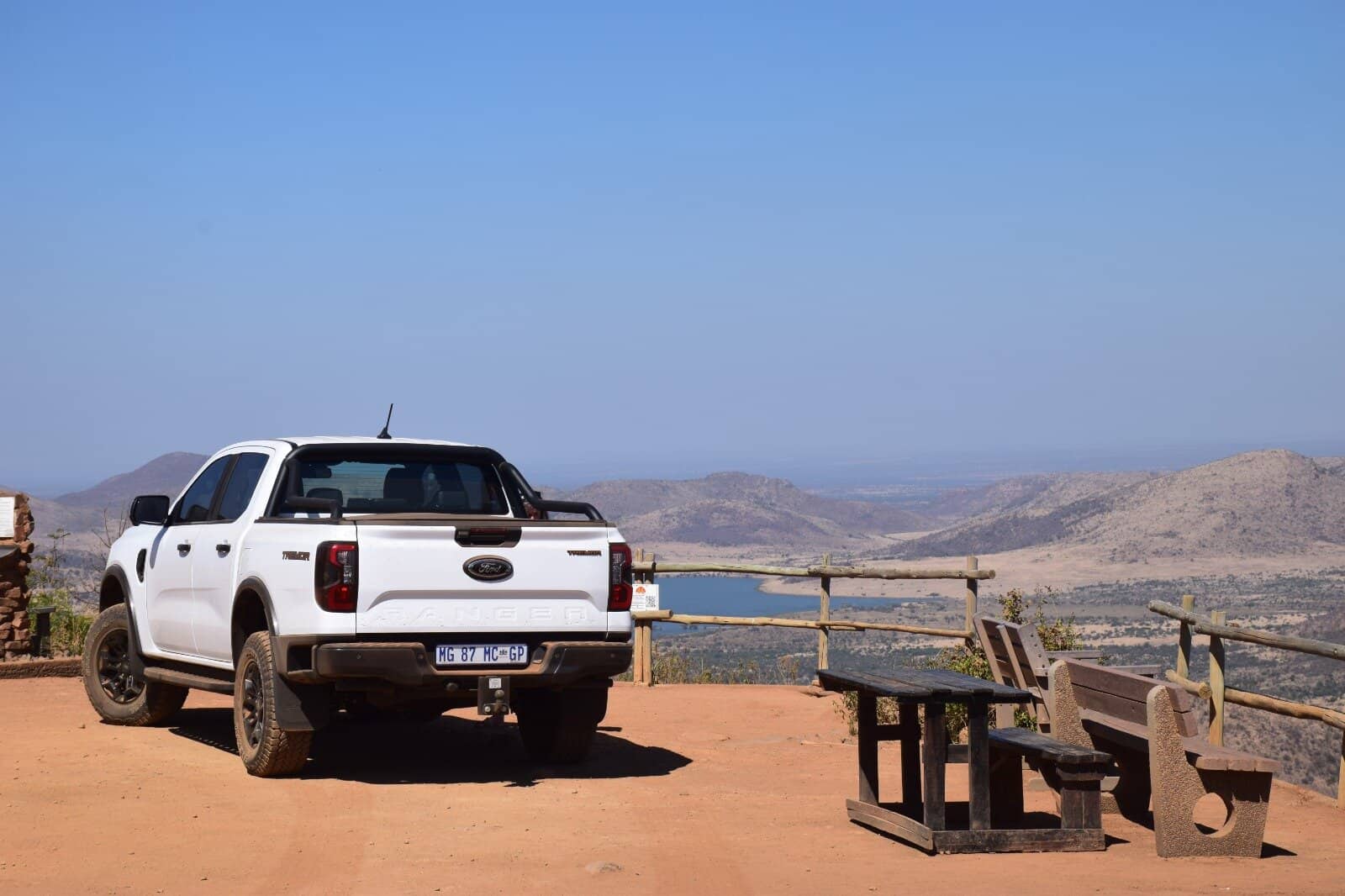
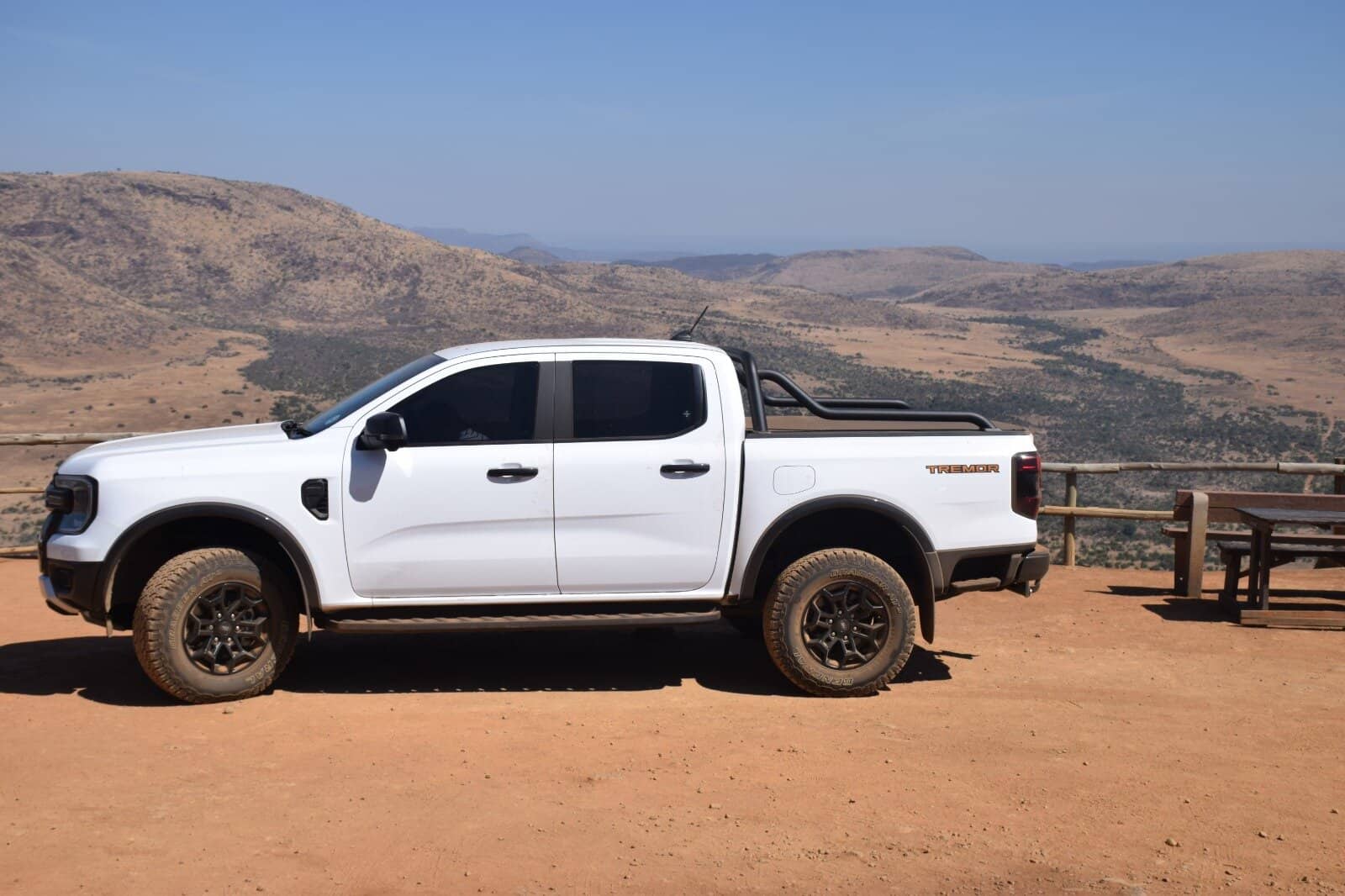
However, after a recent trip to Pilanesberg National Park (run by the North West Parks Board), I now understand why having a vehicle like our long-term test Ford Ranger Tremor is a must for places like that.
There were many occasions when I had reason to thank the tough wheels and beefy off-road-biased tyres for absorbing the bashes from the ruts and rocks on the gravel roads, which, to be kind, are poorly maintained.
However, it was on the tarred roads – or those roads which used to be tar and are now a collection of various-sized potholes connecting isolated pieces of tar – that the Ranger absorbed even more punishment.
Its off‑road inclination meant that, in many cases, it was easier to get right off the tar and onto the dirt shoulder to allow oncoming traffic to pass.
The Ford did such a good job that I found myself admiring it more than the wildlife… and that, honestly, is sad.
Not for me, but for a park like Pilanesberg, which attracts thousands of visitors a day because it is a Big Five reserve within easy reach of Gauteng.
To add insult to injury, just after we got back, we heard the authorities are going to increase fees by between 100% and 518% in December….
Ford Ranger Tremor surprises… again
The Tremor’s excellent aircon meant we could cruise through the park as temperatures climbed to the upper 20s.
I still can’t understand the “fresh air fiends” who drive around parks with windows rolled down. You may be getting fresh air but you’re also getting clouds of dust… as friends of ours realised when they stopped and their Land Cruiser had a fine coating of red dust all over the inside…
The Ranger surprised again, by its comfort on three hour-plus journeys.. at least for the front seats.
I don’t think full-size adults would be too happy in the back seats of the double cab for more than two. So on long journeys, stop regularly. Actually, not a bad idea, that.
Not in a hurry to get to Pilanesberg or home, I wasn’t pushing it, staying well within the speed limit.
On the way, the Ranger’s fuel consumption was just 7 litres per 100km, which is incredible considering its size and twin-turbo 154kW 2.0-litre diesel engine.
And, despite all the low-speed ups and downs in the park and a slightly faster trip home, the overall figure was still a highly commendable 9.6l/100km.
Despite the rough roads (tarred and gravel) the Ranger Tremor did not once need to be taken out of its two-wheel-drive mode, in which power is sent to the rear wheels only.
Like the upper-spec Ford Everest Platinum we tested earlier this year, the Tremor comes equipped with a “best of both worlds” four-wheel-drive system.
This features thestandard 2WD and 4WD modes (the latter of which has low range as well as a diff lock for mountain goat scrabbling) but also a permanent AWD (all-wheel-drive).
This drives all four wheels all the time through a fancy clutch system, which gives stability and security on loose surfaces.
Had it been raining on the way back to Joburg, I would have probably popped the transmission into AWD mode to give me that extra peace of mind in slippery conditions.
There is, according to overseas tests I have seen, less than a 1% penalty for increased fuel consumption when in AWD mode.
Many testers say it’s the best way to go – but I found I was quite happy to go “old school”.
We’ve driven plenty of different Ranger variants over the past few years, and it is always a pleasure to get back into another one.
Sadly, though, that pleasure – for me at least – doesn’t extend to the Pilanesberg and we probably won’t be going back there any time soon.
ALSO SEE: Rewriting the great SA road trip
About the Author