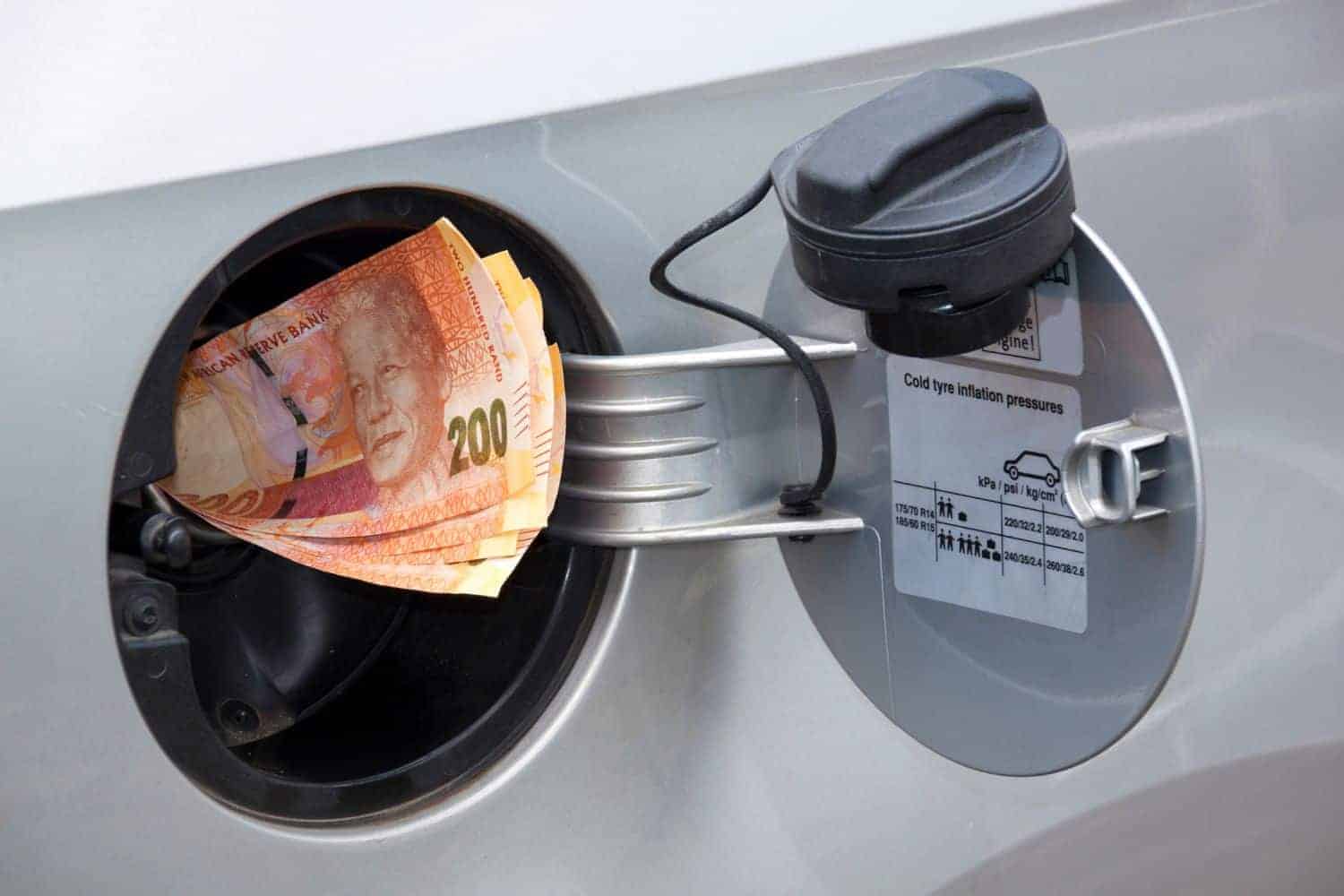
As the US and Israel’s war continues in Iran with no end in sight, motorists may be in for another painful fuel increase in May.
The projected fuel prices continue to spike, putting more pressure on consumers amid a difficult and volatile economic climate.
Increases
According to the latest data (6 April 2026) from the Central Energy Fund (CEF), motorists could pay more than R13 per litre for diesel.
The CEF’s under-recoveries also indicate that petrol prices may rise by more than R4.30 per litre, adding further strain on households and businesses.
According to the CEF’s data, the under-recovery in petrol prices has now reached between R4.30 and R4.70 per litre, while Diesel has soared to about R13.07 and R13.13 per litre.
Underrecoveries on illuminating paraffin are now amounting to R10.70 per litre.
ALSO READ: Economist warns of grim economic fallout amid hefty fuel price hikes
Temporary relief
Earlier this month, the Department of Minerals Resources and Energy announced a temporary R3 price relief on the fuel levy for April.
Unless the department absorbs the minor reduction for May, the R3 will also kick in, adding more pain to the spike in fuel prices.
How much will fuel cost you?
At the current projections and without any fluctuations or interventions, when the fuel price adjustment kicks in, a litre of 93 unleaded petrol may cost R30.35 per litre, while 95 unleaded will be R31.06
Based on the current forecast, the wholesale price of 0.05% (500 ppm) diesel may increase to R 41.97 per litre, and 0.005% (50 ppm) will cost R 42.24.
Storing fuel
Meanwhile, the South African Insurance Association (SAIA) has warned motorists and residents against storing large amounts of petrol at home.
When fuel prices increased in April, some motorists and residents flooded service stations to stock up ahead of the price rise, leading to stations running dry.
The Association said improper fuel storage poses serious fire, health and environmental risks.
Hazardous
It said that petrol is classified as a hazardous substance under occupational and fire safety legislation, with the serious risk of fire or explosion.
Petrol vapours pose health hazards, and spills can contaminate soil and water sources, causing significant environmental damage.
Municipal bylaw
The Citizen explained in March that storage of fuel at a private residence is primarily governed by municipal by-laws, which can vary slightly by province or city.
While storage limits for individuals are relatively uniform, the availability and consumption of fuel vary significantly by province according to the Department of Minerals, Resources and Energy.
In 2021, the Department of Mineral Resources and Energy clarified regulations prohibiting the storage of petrol and diesel in containers.
ALSO READ: Fuel price hike: Can you work from home