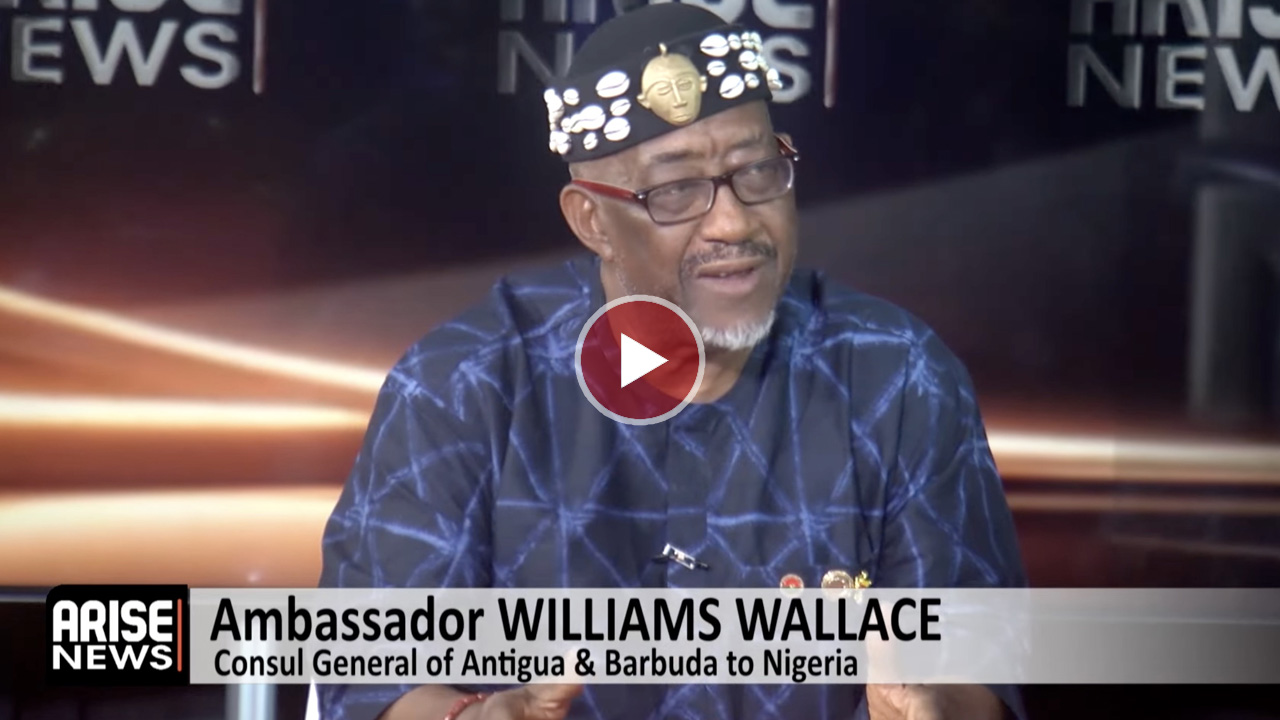

Consul General of Antigua and Barbuda to Nigeria, Ambassador Williams Wallace, has said the country plans to significantly tighten its Citizenship by Investment Programme in response to United States visa restrictions, a move aimed at addressing Washington’s security concerns and preserving longstanding diplomatic relations.
Speaking in an interview with ARISE News on Sunday, Wallace disclosed that the Antiguan government had already begun reviewing residency requirements under the programme, following complaints from the US government that some new citizens were showing little commitment to the country.
“Yes. Well, the honourable Prime Minister has already indicated that he will now extend the residency requirement,” Wallace said. “Before, it used to be five days within five years that you spend in the country.”
He acknowledged that the previous arrangement had become too loose.
“I think those obviously needed tightening because people just get the passport, they come for a weekend or make the five days in one week and they go away,” he said.
According to Wallace, the United States’ concern centres on national security and the credibility of citizenship applicants.
“I think the concerns by the American government, which is their right, is that people were not showing enough commitment to the country of their new citizenship to verify that they are genuine in their quest for being Antiguan citizens,” he explained.
As an immediate response, Wallace said the residency requirement had been increased to 30 days, with the possibility of further extension.
“So the Prime Minister has said that now you must spend 30 days. I don’t know if, in negotiations, he will now be forced to or asked to create maybe a 90-day requirement during a year or within five years. That will be the government and the Prime Minister’s decision,” he said.
Wallace stressed that security concerns, not politics, were at the heart of the US action.
“The important thing is the security aspect of the citizenship by investment route,” he said, adding that the US would not arbitrarily sanction a small country like Antigua and Barbuda.
“The American government will not just wake up and put a country like Antigua, which has just 60,000 people, on a restriction list without serious cause,” he noted.
Explaining how the citizenship process works, Wallace said multiple layers of security checks already exist but warned that unofficial intermediaries pose a serious risk.
“If you are applying for an Antigua passport through citizenship by investment, we normally do a pre-security check before you can even apply,” he said. “If that is bypassed, that is already one security risk.”
He said only licensed lawyers and professional accountants are authorised to act as agents.
“When it goes to the country, there are only two sets of professions that can be agents — members of the Law Society and professional accountants,” Wallace said. “They can be held responsible and even removed from their profession if they bypass security regulations.”
Wallace warned that claims by unauthorised individuals offering passports outside the official process would inevitably draw the attention of US intelligence agencies.
“If you bypass that process by claiming you can get a passport through your relationship with the government, then you are creating a local security risk for the American government,” he said.
He added that Nigeria’s security profile heightens US concerns.
“Nigeria is a cause for concern to the American government based on terrorism, money laundering and fraud,” Wallace said.
Beyond security, Wallace acknowledged that a sudden spike in visa applications by Antiguan passport holders had raised red flags.
“If, for example, you have only about 100 visa applications a year and suddenly you have 1,000, there is cause for concern,” he said.
On the economic implications, Wallace warned that Antigua’s tourism-dependent economy could suffer if the restrictions persist.
“The tourism sector is the mainstay of Antigua’s income and revenue,” he said. “What you might see is cruise ship operators deciding to exclude Antigua because of a perceived red flag.”
However, he expressed confidence that diplomatic engagement would resolve the matter.
“In the United States, we have Ambassador Sanders, who has been there for more than a decade and has very strong relationships with the American government,” Wallace said. “I think he will utilise that relationship, and the Prime Minister will be guided by his advice to ensure Antigua comes out of this.”
Wallace emphasised that Antigua remains committed to cooperation.
“What would be told to the American government is: look, we comply with everything that you’ve asked, and we will continue to comply,” he said. “Give us a checklist.”
Despite public disagreements, Wallace said dialogue would prevail.
“At the end of the day, when the Prime Minister and the US administration speak privately, they will work things out,” he said. “There has always been an extremely good relationship between the United States and Antigua, and I’m quite certain that will continue.”
Boluwatife Enome
About the Author