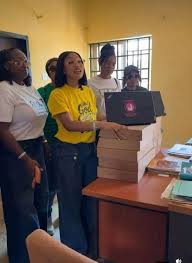
Award-winning Nigerian singer and advocate Waje was among the notable attendees at the 6th Nigerian Governors’ Spouses Forum Conference held in Abuja on Thursday.
The event brought together wives of state governors, policymakers, development partners, and social impact leaders to explore solutions to key national challenges, including women’s empowerment, healthcare access, education reforms, youth development, and social welfare.
Waje, widely known for her humanitarian work, joined discussions on how cultural influencers shape societal behaviour. She emphasized that policies alone cannot drive transformation unless everyday conduct, both online and offline, reflects the values Nigeria hopes to build.
Addressing the responsibility carried by public figures, especially men, she highlighted the ripple effect of their choices.
“I truly believe male influencers and creators have more power than they sometimes realise,” she said. “The first thing is what they normalise, the jokes they laugh at, the language they use, and what they allow in their comment sections. Silence can sometimes feel like endorsement.”
The singer encouraged men with public platforms to challenge harmful norms, not through public shaming but through firm, educational responses. According to her, a simple statement like “this is not okay” from a respected male voice can shift cultural attitudes faster than heated arguments.
She added that men should help amplify women’s voices, particularly when issues of abuse, harassment, or inequality are raised. “Not speaking over them, but standing beside them,” she said. “When men model respect online, it permits boys to do the same offline.”
Waje’s remarks echoed the conference’s central message: sustainable social change requires more than institutional leadership, it demands intentional, values-driven influence from individuals who shape conversations and culture.
The conference concluded with a renewed call for collaborative efforts to build a safer, more equitable society for women, children, and young people across Nigeria.
About the Author