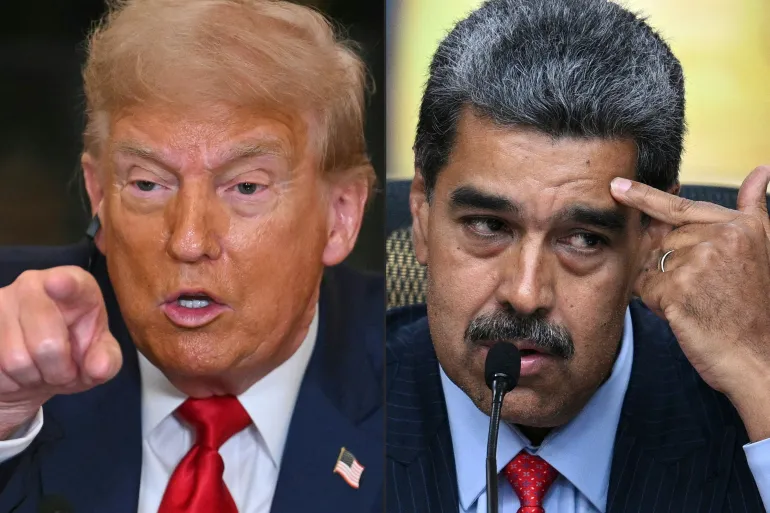
Venezuela announced on Friday that it has initiated talks with the United States to restore diplomatic relations, days after U.S. forces removed Nicolás Maduro from power in a high-profile operation. The move marks the latest sign of cooperation between the interim government in Caracas and Washington, which has asserted authority over the South American nation.
Officials confirmed that U.S. diplomats are in Caracas to assess the reopening of the American embassy, while in Washington, President Donald Trump prepared meetings with oil companies regarding access to Venezuela’s vast crude reserves.
The announcement comes amid the release of political prisoners, many of whom were detained under Maduro’s government. Relatives anxiously gathered outside Venezuelan jails Friday as authorities freed prisoners, a move Washington took credit for. “When I heard the news, I broke down,” said Dilsia Caro, 50, waiting for the release of her husband, Noel Flores, jailed for criticizing Maduro.
Diplomatic Engagements
Foreign Minister Yvan Gil said the interim administration, led by Delcy Rodríguez, has “decided to initiate an exploratory diplomatic process with the United States, aimed at re-establishing diplomatic missions in both countries.”
A U.S. official, speaking on customary condition of anonymity, confirmed that John McNamara, Washington’s top diplomat in neighboring Colombia, and other personnel had traveled to Caracas to conduct an initial assessment for a phased resumption of operations. Venezuela plans to reciprocate by sending a delegation to Washington.
Trump’s Oil Plans and Military Decisions
Earlier Friday, Trump said he had called off a second wave of attacks on Venezuela after securing cooperation from the new leadership. “Venezuela is releasing large numbers of political prisoners as a sign of ‘seeking peace,’” Trump said on his Truth Social platform. “Because of this cooperation, I have cancelled the previously expected second wave of attacks.”
The U.S. also announced the seizure of a tanker near Venezuela as part of ongoing enforcement of an oil blockade. Trump said oil companies have pledged $100 billion in investments to modernize Venezuela’s aging oil infrastructure, heavily impacted by years of mismanagement and sanctions.
He further proposed selling 30 to 50 million barrels of Venezuelan crude, with revenues directed toward purchasing U.S.-made products, a move he framed as both strategic and economic.
Release of Political Prisoners
Venezuela began releasing prisoners on Thursday—the first such gesture since Maduro’s capture in a deadly January 3 operation that killed over 100 people, according to Caracas sources. Among those freed was Enrique Marquez, a former opposition candidate in the contested 2024 presidential election.
Parliament Speaker Jorge Rodríguez, brother of interim leader Delcy Rodríguez, said a “large number of Venezuelan and foreign nationals” were being released immediately to foster “peaceful coexistence.”
Protests and Public Sentiment
Despite the new government’s pledges, protests erupted in Caracas on Friday as demonstrators demanded Maduro’s release. “We don’t have to give one little drop of oil to Trump after all that he has done to us,” said Josefina Castro, 70, a civil activist. “Our Venezuelan brothers died in the attack, and that hurts.”
Exiled opposition figures, including Edmundo Gonzalez Urrutia, stressed that any democratic transition must recognize the contested results of the 2024 election, in which Maduro was declared the winner amid widespread allegations of fraud.
Meanwhile, Trump confirmed plans to meet next week with opposition leader Maria Corina Machado, whom he previously dismissed as “a very nice woman” lacking the “respect” to lead Venezuela.
The unfolding situation underscores Venezuela’s delicate political transition, with the interim government balancing diplomatic engagement, economic cooperation, and domestic unrest following Maduro’s removal.
About the Author