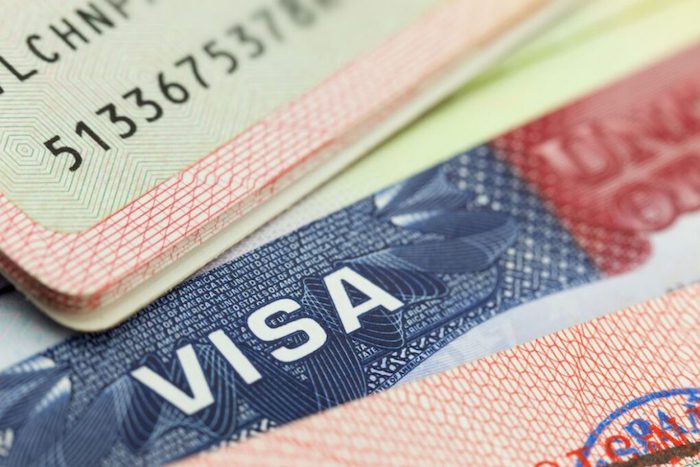
The United States has suspended immigrant visa processing for Nigeria and 74 other countries as it reviews screening procedures under the “public charge” rule.
The United States Department of State has announced an indefinite suspension of visa processing for nationals of 75 countries, including Nigeria, as part of a broader tightening of immigration screening measures.
According to an internal State Department memo obtained by news organisations, the policy takes effect on January 21, 2026, and directs U.S. embassies and consulates worldwide to halt visa issuance to applicants from the affected countries while a comprehensive review of screening and vetting procedures is conducted.
Under the new guidance, consular officers have been instructed to strictly apply existing U.S. immigration law, particularly provisions related to the “public charge” rule, which allows visa refusals if an applicant is considered likely to become dependent on public welfare in the United States.
Factors to be considered in determining eligibility include the applicant’s health status, age, financial capacity, English language proficiency, employment prospects, and potential need for long-term medical or social care.
State Department spokesperson Tommy Pigott said the measure reflects long-standing legal authority under U.S. immigration law.
“The State Department will use its long-standing authority to deem ineligible potential immigrants who would become a public charge in the United States,” Pigott stated.
While the pause is understood to primarily affect immigrant visas—those leading to permanent residency—reports indicate that a wide range of visa categories may be impacted as the reassessment continues.
Countries listed as affected span Africa, Asia, the Middle East, Europe, and the Americas. In addition to Nigeria, they reportedly include Somalia, Afghanistan, Russia, Brazil, Iran, Iraq, Egypt, Thailand, and Yemen, among others.
The development comes amid intense political debate in the United States over immigration and follows earlier executive actions aimed at tightening entry rules and expanding national security screening.
Critics argue that the suspension could disrupt families, international education plans, and workforce arrangements, while supporters contend that it is necessary to prevent undue strain on U.S. public resources.
As of the time of filing this report, the State Department has not published an official public list of all affected countries, and the duration of the suspension remains tied to the outcome of the ongoing review.
Michael Olugbode, Abuja
The United States Department of State has announced an indefinite suspension of visa processing for nationals of 75 countries, including Nigeria, as part of a broader tightening of immigration screening measures.
According to an internal State Department memo obtained by news organisations, the policy takes effect on January 21, 2026, and directs U.S. embassies and consulates worldwide to halt visa issuance to applicants from the affected countries while a comprehensive review of screening and vetting procedures is conducted.
Under the new guidance, consular officers have been instructed to strictly apply existing U.S. immigration law, particularly provisions related to the “public charge” rule, which allows visa refusals if an applicant is considered likely to become dependent on public welfare in the United States.
Factors to be considered in determining eligibility include the applicant’s health status, age, financial capacity, English language proficiency, employment prospects, and potential need for long-term medical or social care.
State Department spokesperson Tommy Pigott said the measure reflects long-standing legal authority under U.S. immigration law.
“The State Department will use its long-standing authority to deem ineligible potential immigrants who would become a public charge in the United States,” Pigott stated.
While the pause is understood to primarily affect immigrant visas—those leading to permanent residency—reports indicate that a wide range of visa categories may be impacted as the reassessment continues.
Countries listed as affected span Africa, Asia, the Middle East, Europe, and the Americas. In addition to Nigeria, they reportedly include Somalia, Afghanistan, Russia, Brazil, Iran, Iraq, Egypt, Thailand, and Yemen, among others.
The development comes amid intense political debate in the United States over immigration and follows earlier executive actions aimed at tightening entry rules and expanding national security screening.
Critics argue that the suspension could disrupt families, international education plans, and workforce arrangements, while supporters contend that it is necessary to prevent undue strain on U.S. public resources.
As of the time of filing this report, the State Department has not published an official public list of all affected countries, and the duration of the suspension remains tied to the outcome of the ongoing review.
Michael Olugbode, Abuja
About the Author