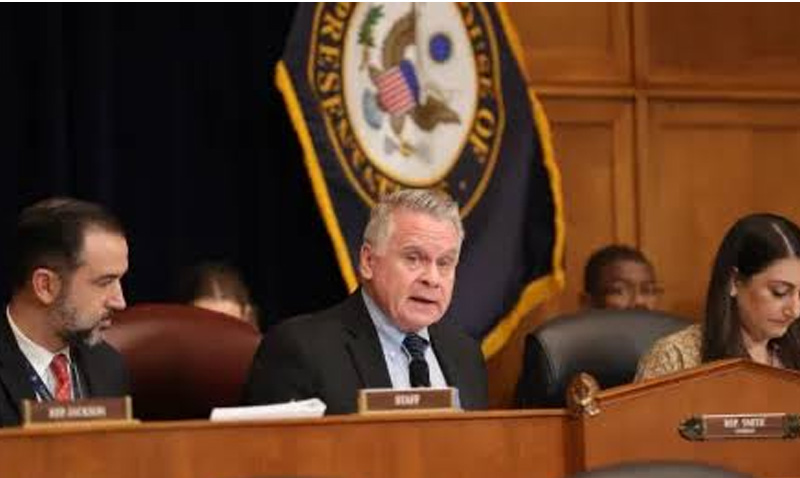
United States lawmakers have strongly criticised the Nigerian government for spending millions of dollars on lobbying efforts in Washington instead of addressing worsening insecurity and religious persecution at home.
The condemnation came during a congressional hearing on religious freedom, where members of the US House of Representatives expressed deep concern that Nigeria was allegedly paying as much as $9 million to lobbyists to downplay the scale of violence and persecution in the country.
Speaking at the hearing, one lawmaker recalled the impact of the International Religious Freedom Act, passed into law in 1988, noting its global significance and warning against complacency.
“Passed into law in 1988 and it has made a major difference globally, including now in Nigeria. We can’t take our eyes off of that.”
The Chairman of the subcommittee was particularly scathing about the Nigerian government’s priorities, revealing details of the lobbying contracts.
“I just want to say to my colleagues, to all of us, I’m deeply concerned that Nigeria has hired the K Street lobbying firm, DCI, to the tune of $9 million, $750,000 a month, and a Nigerian billionaire has entered into a $120,000 a month contract with the BALCORP to influence Congress and the executive branch. And, Ambassador, you know as well as I over these many years that you have fought this fight.”
Another lawmaker warned that such lobbying tactics were not new and had historically been used by regimes accused of human rights abuses to sanitise their records before the international community.
“They hire these firms, they come up with their very well-written talking points to say, nothing to see here. Whether it be Haiti, China does it better than anyone else, or worse really is what it is. We saw with Romania, I remember during the years of Nicholas Ceausescu, and I led the effort on that along with Frank and you, Sam, Mr Ambassador, and they always had these lobbying firms that said Ceausescu is a good guy. He has all these churches that he has opened. He was torturing Christians.”
Adding a personal reflection, another member of the panel referenced the book that shaped his own commitment to religious freedom, criticising lobbying firms for prioritising clients over victims.
“And the book that got me into religious freedom myself was Tortured for Christ by Richard Wurmbrand who talked about the duplicity and unfortunately how these firms are just so good at putting fine, advocating for their client. Well, advocate for freedom and religious end to religious persecution. I have many other things I’d say but I want to cut it off here.”
The Chairman concluded by thanking participants and handing over proceedings to the ranking member.
“I do want to thank again all of you for being here. I’d like to yield to my good friend Ranking Member Jacobs for any comments you might have.”
In response, the ranking member acknowledged the significance of the hearing and the testimonies presented.
“Thank you, Mr Chairman, and thank you all the witnesses for testifying before the subcommittee on this important—”
The hearing underscores growing frustration in Washington over Nigeria’s handling of security challenges, particularly attacks linked to religious persecution, and raises questions about the government’s decision to prioritise foreign lobbying over domestic protection of its citizens.
Boluwatife Enome
About the Author