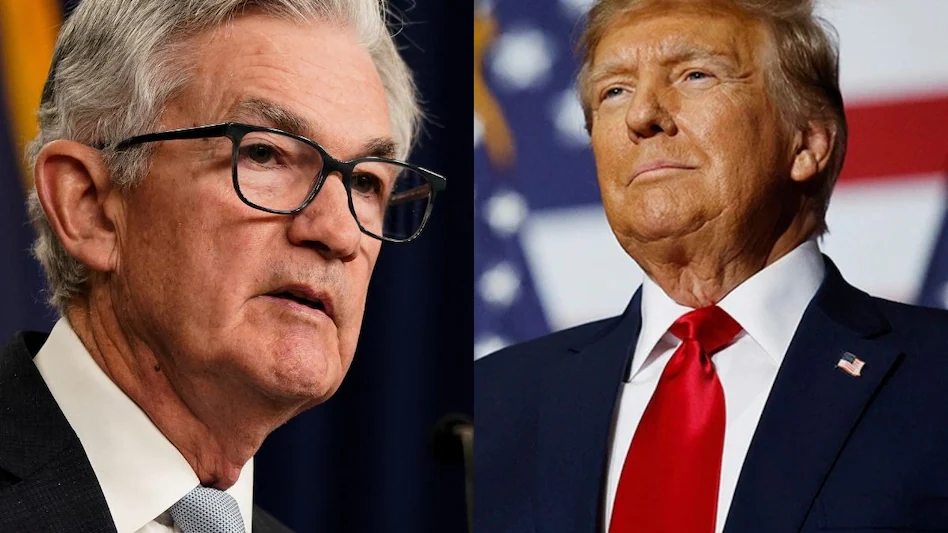
Policy makers open second day of meeting amid political pressure, credibility concerns, and stubborn inflation
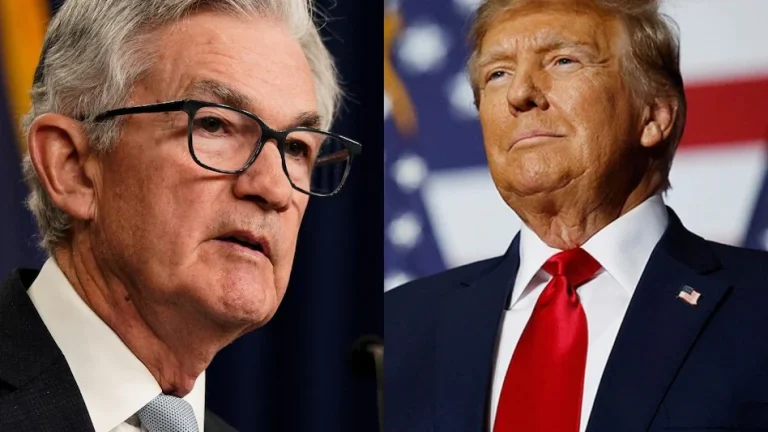
The United States Federal Reserve opened the second day of its closely watched policy meeting on Wednesday, with officials widely expected to leave interest rates unchanged, a move that once again places the central bank at odds with President Donald Trump’s push for deeper rate cuts.
The rate-setting Federal Open Market Committee (FOMC) began deliberations at 9am Eastern Time (1400 GMT), according to a Federal Reserve spokesperson.
The Fed has already cut rates at each of its last three policy meetings, lowering the benchmark interest rate to a range of 3.50 per cent to 3.75 per cent as concerns mounted over a cooling labour market. However, recent economic data showing solid GDP growth, relatively low unemployment and persistently elevated inflation have prompted policymakers to pause further easing.
That cautious stance risks reigniting tensions with Trump, who has repeatedly demanded aggressive rate reductions since returning to the White House a year ago.
The president has sharply intensified pressure on the central bank in recent months, actions that Fed officials and economists warn could undermine the institution’s political independence. Trump has sought the removal of Fed Governor Lisa Cook over allegations of mortgage fraud, while his administration has also launched an investigation into Chairman Jerome Powell over the renovation of the Fed’s headquarters.
Earlier this month, Powell issued an unusually blunt response, warning that threats of criminal prosecution raise fundamental questions about whether monetary policy will be guided by economic data or political intimidation.
Despite the pressure, economists say the current data does not support additional near-term easing.
“While the Fed has been politically pressured to cut rates, it is not pressed by the data,” said Gregory Daco, chief economist at EY-Parthenon.
According to Daco, officials have largely coalesced around a pause in rate reductions, with internal discussions now focused on what conditions would justify further cuts and the pace at which they should occur.
“The hurdle for additional near-term cuts has risen,” he said, adding that policymakers will likely wait for clearer and more sustained evidence of disinflation or a renewed deterioration in the labour market before acting again.
Although divisions within the Fed over interest rates have deepened in recent months, Dan North, senior economist at Allianz Trade North America, said he expects less dissent in Wednesday’s decision.
North noted that Fed Governor Stephen Miran, appointed by Trump last year and whose term runs until late January, is likely to again argue for lower rates. However, it remains uncertain whether other governors, including Michelle Bowman and Christopher Waller, would align with that position.
Financial markets, meanwhile, largely expect the Fed to hold rates steady until at least its June meeting, according to CME FedWatch data.
Attention is also shifting to the future leadership of the central bank, with Trump’s nominee set to succeed Powell when his term as chair ends in May.
Nationwide chief economist Kathy Bostjancic said inflation is expected to peak and begin easing later this year, adding that a new Fed chair may be more inclined to support lower interest rates as part of broader economic management.
“We think inflation peaks and starts to turn lower this year,” she said. “Importantly, we think a new Fed chair would be more open to helping to navigate lower interest rates.”
However, analysts warn that leadership change could introduce new credibility challenges.
ING analysts said one key question is whether a new chair would be able to bring the rest of the rate-setting committee along in support of further easing. Beyond the Fed itself, convincing investors that the central bank remains committed to its dual mandate of price stability and maximum employment—free from political influence—could prove more difficult.
Michael Strain, director of economic policy studies at the conservative American Enterprise Institute, said the Trump administration’s targeting of Powell could make it harder for the next chair to establish credibility.
“Establishing credibility will be much more challenging” for Powell’s successor than it has been for previous Fed chiefs over the past several decades, Strain said.
He also cautioned that the Fed may have already gone too far in cutting rates last year, warning that the labour market could be stronger than policymakers believe and that inflation risks remain.
“Certainly, the Fed should not continue to cut,” Strain said. “I’m worried the Fed’s going to have to hike in 2026.”
About the Author