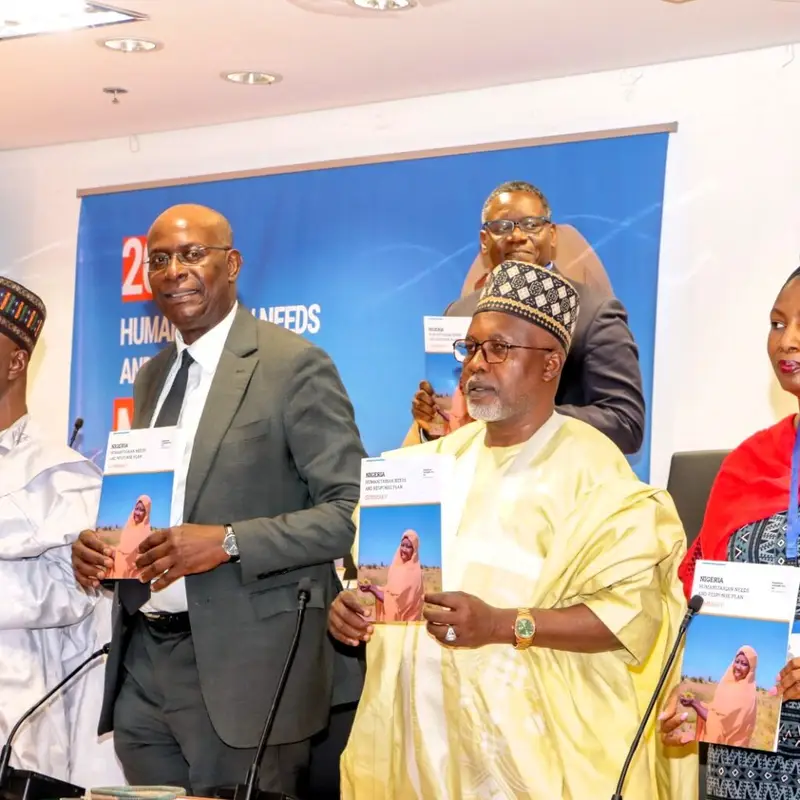
In a collaborative effort to address a deepening humanitarian crisis, the Government of Nigeria, alongside its humanitarian partners, has launched an urgent appeal for $516 million to provide lifesaving assistance to 2.5 million vulnerable individuals in Borno, Adamawa, and Yobe (BAY) States this year. Alarmingly, women and children represent a staggering 80% of those in immediate need.
This appeal forms part of Nigeria’s 2026 Humanitarian Needs and Response Plan (HNRP) and is prompted by the significant deterioration of conditions in the BAY States, resulting from a prolonged 16-year conflict. The situation has been exacerbated by widespread displacement, restricted access to essential services, climate impacts, economic challenges, and dwindling livelihood opportunities.
“The humanitarian needs are dramatically worsening at a time when we are witnessing the steepest decline in international funding for humanitarian operations,” stated Mohamed Malick Fall, the UN Resident and Humanitarian Coordinator in Nigeria. He further emphasized the urgency of the situation, warning, “Every day that funding gaps persist is a day another malnourished child is pushed closer to preventable death.”
Looking ahead to 2026, projections indicate that approximately 3 million children under the age of five in Nigeria will face life-threatening severe acute malnutrition, with 1 million of these children located in the BAY States. Furthermore, nearly 35 million Nigerians are expected to experience acute food insecurity during the 2026 lean season, including 5.8 million individuals in the BAY States.
The HNRP underscores the importance of transitioning to nationally led humanitarian initiatives, with an anticipated gradual decrease in international support due to declining global funding. Successful implementation of these plans will require robust collaboration between the Government and humanitarian partners to address the urgent needs of these affected communities.
In his remarks, Dr. Bernard Doro, Federal Minister of Humanitarian Affairs and Poverty Reduction, reaffirmed the Government’s leadership in coordinating humanitarian responses. He stated:
“The Government will continue to provide policy direction, coordination leadership, and systems alignment to ensure humanitarian efforts complement broader national reforms aimed at reducing poverty, strengthening human capital, and building resilient communities.”
The Governors of the BAY states – Professor Babagana Zulum (Borno), Ahmadu Umaru Fintiri (Adamawa), and Mai Mala Buni (Yobe) – also pledged to strengthen collaboration with humanitarian partners to deliver urgent assistance and advance durable solutions.
Funding for the 2025 HNRP amounted to $282 million, about half of what was received in 2024, leading to a significant drop in humanitarian assistance. In 2026, additional resources, including increased government investment, are urgently needed to provide lifesaving food, nutrition, healthcare, water, sanitation, and protection services. Improved security remains critical to reduce civilian risks and create conditions for sustainable solutions in the BAY States.
About the Author