The discovery of oil in the Albertine Graben is proving to be a transformative force, reshaping communities and boosting livelihoods through comprehensive restoration programs.
The Petroleum Authority of Uganda (PAU) estimates that the Graben holds around 6.5 billion barrels of oil, with 1.4 billion barrels considered technically recoverable. These programs include financial literacy training, transitional support services, agricultural assistance, and business capacity-building.
By reinforcing traditional livelihood systems while creating opportunities to improve crop handling, storage, transportation, and marketing, these initiatives are not just supporting communities they are redefining how people live, work, and thrive in the Albertine region.
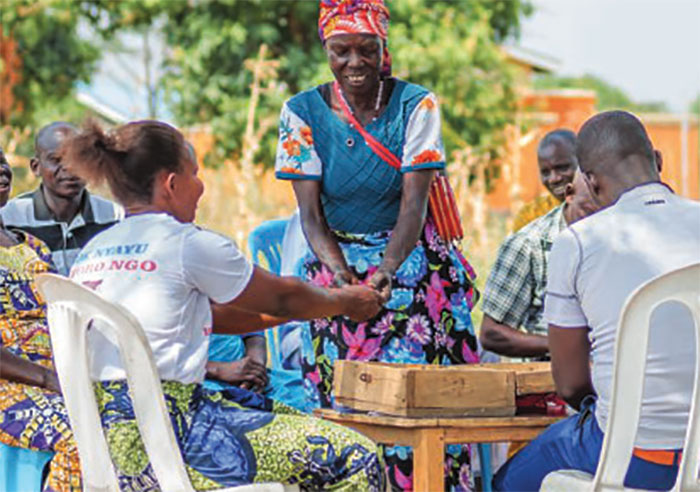
Many community members are already reaping the benefits of financial literacy, modern farming techniques, and value addition. At the forefront of these efforts is the Avogera-Kamandidi- Uduk Savings and Business Group.
Following the discovery of oil and subsequent developments, six Village Savings and Loan Associations (VSLAs) were formed through a membership program. Members received training in financial planning and management, and the groups were formally registered at the district level.
The skills have laid a solid foundation for improved household incomes, financial independence, and broader socio-economic development across Tilenga project host communities. Future Options Consulting Ltd and Sunmaker Energy, both Ugandan companies, were contracted to provide financial and business capacity- building services to households in affected communities.
The program supports the restoration of businesses, strengthens entrepreneurs’ capacity to manage and grow their ventures, and equips youth and other project-affected persons with vocational skills and links to employment or business opportunities.
It also teaches participants how to run small businesses, maintain proper records, and track their earnings ensuring long-term economic resilience. Every week, under the shade of a tamarind tree behind Avogera health centre, the members of Avogera- Kamandidi-Uduk savings and business group convene.
This is more than just a meeting it is a space for sharing financial literacy knowledge, a practice introduced by Sunmaker Energy Uganda Ltd, a contractor for TotalEnergies EP Uganda.
For Janet Munowa, a 70-year-old widow and businesswoman selling palm oil, this group has transformed her approach to money. Before joining, her business earnings would vanish without a clear trace.
“I wasn’t keeping track of where my money was going. I would sell my palm oil, but by the end of the month, I had nothing to show for it,” she recalls.
Through the financial literacy training, she learned how to keep business records, save money, and separate personal expenses from business funds.
“Now, I have savings. I even managed to buy goats with my savings something I never thought possible before,” she says with pride.
Munowa has not only improved her own life but also those under her care. She can now comfortably pay school fees and provide a stable home for her two grandchildren. She expresses deep gratitude to TEP Uganda and Sunmaker Energy for introducing the program.
“Before, we spent money unknowingly, but now we see where every coin goes. Paying school fees, buying uniforms, and even expanding businesses has become easier.”
Beyond providing financial literacy and sharing knowledge with each other, Avogera-Kamandidi-Uduk savings group members save with the group and can also access loans. Membership allows one to borrow depending on how much they have saved and their projected annual savings.
Alfred Orom, the group’s secretary, has also experienced a major shift since joining. A businessman dealing in electronics, he used to struggle with managing money.
“Before, we would make money but spend it just as fast. Saving was never a priority,” he admits.
When the financial literacy training started, Orom realized the power of record-keeping, budgeting, and financial planning.
“We learned to track sales, purchases, loans, and profits. Once we started implementing these lessons, we saw real change in our businesses,” he explains.
Orom has a large family of 15 members, including 13 dependents. Before joining the savings group, his children were often sent home from school due to unpaid fees. The group started in 2022 but only began saving actively in 2024.
They started with 17 members but now have 16, as one member moved away, and have big plans for growth.
“We want to start income-generating projects like renting out tents and chairs for events, which will bring in extra funds,” Orom shares.
About the Author