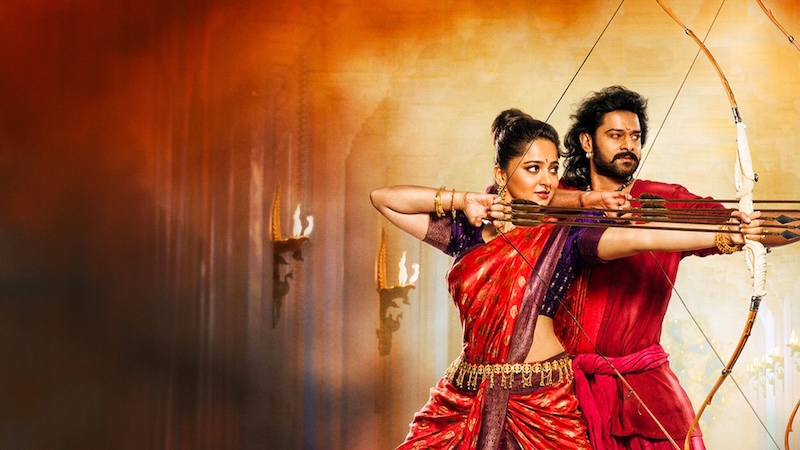
Many entertainment journalists have commended Indian films such as RRR and Baahubali for raising Tollywood’s profile internationally.
However, we mentioned a few days ago that most international viewers place all Indian films under the ‘Bollywood’ category. They have no idea that Tollywood even exists. They think Bollywood represents all Indian cinema the same way Hollywood represents all American cinema.
But that could not be further from the truth. Bollywood and Tollywood hail from different regions of India. Bollywood is Hindi-language cinema based in Mumbai, the country’s most populous city, with a population of 12.5 million.
It is called Bollywood, because the British called the city Bombay after taking control in the 17th Century. The Indian government changed it to Mumbai in 1995 in honor of the Hindu goddess Mumbadevi. Tollywood, on the other hand, is Telugu-language cinema from Southern India.
The difference in language matters because it contributes to the hostility that occasional flares between these two entities and their followers. You can trace both industries back to the early 1900s.
Bollywood’s first silent film (Raja Harishchandra) came out in 1913. Meanwhile, Tollywood released Bhisma Pratighna in 1921. Bollywood has always produced more movies of a much higher quality, at least in terms of production values.
Audiences associate the brand with explosive stunts, expensive musical numbers, and melodramatic storytelling. They can afford to sink millions of dollars into their projects because Bollywood films have an enormous audience at home and abroad.
Their emphasis on Hindi-language content has expanded their reach domestically because Hindi is the most popular language in India, boasting 528 million speakers, a stark contrast to the 83 million Telugu speakers in the country.
Therein lies the challenge for Tollywood, at least politically. First, Telugu is the fourth most spoken language in the country, which makes Tollywood films less appealing in some circles because most Indians either speak Hindi or understand it.
Secondly, Southern Indians have repeatedly accused the Indian government of forcing Hindi on non-Hindi speakers. Telugu speakers believe that Bollywood is one tool the government is using to achieve its goal, hence the resistance Bollywood films have encountered in certain corners of the country.
It is worth noting that Tollywood prides itself on being a pro-Indian industry. Unlike the romance and family dramas viewers associate with Bollywood, Tollywood emphasizes action, adventure, fantasy, and Indian mythology.
More than that, their films are rooted in Indian culture and tradition, which is why the Telugu-language descriptor is not entirely accurate. While Telugu is the core language, Tollywood is gradually overtaking Bollywood because the industry dubs most of its films in multiple languages, including Hindi, making them more accessible to Indian viewers from diverse backgrounds.
Keep in mind that India has 22 official languages. Bollywood’s focus on Hindi locks them out of certain markets within the country. Additionally, Bollywood’s urban sheen has rubbed many Indians the wrong way.
Tollywood attracts nationalistic right-wingers (not my words) who have accused Bollywood of being ‘Westernized.’ They argue that their biggest competitor has adopted the trends and habits of its Western counterpart (Hollywood), which would explain the ‘Liberal’ and ‘Woke’ content present in many Bollywood films.
Those accusations won’t make sense for those of you who feel like Bollywood films are incredibly conservative. I should point out the one prominent criticism Bollywood routinely receives, is the many Muslim stars it has nurtured over the decades. Why does that matter?
Well, India has a strong anti-Muslim sentiment. Stories of Hindus either killing Muslims or expelling them from their homes are fairly common. The government, which is predominantly Hindu, has been routinely criticized by the West for encouraging Hindus to segregate against the country’s 200 million Muslims.
So naturally, Bollywood’s insistence on hiring and promoting Muslim actors clashes with India’s ‘traditional attitudes.’ So, is Tollywood truly rooted in India’s culture?
Has Bollywood stripped the cultural spark and traditional norms out of its films to appeal to international audiences? If you know next to nothing about this world, take the time to identify the origins of the Indian films you want to watch. A simple Google search will tell you everything you need to know.
mbjjnr8@gmail.com
About the Author