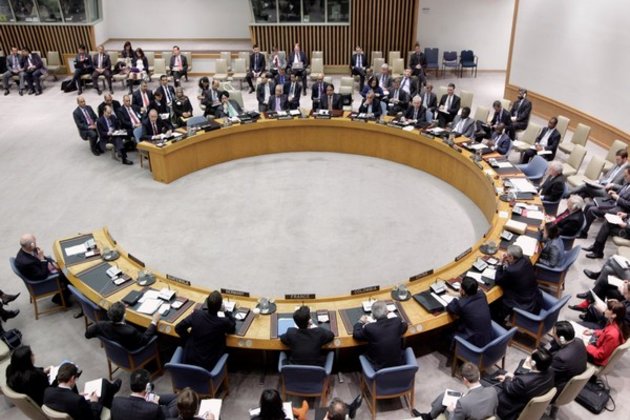
The UN panel has begun its emergency meeting in the wake of US-Israel attacks on Iran.
“Military action carries the risk of igniting a chain of events that no one can control in the most volatile region of the world,” UN Secretary General Guterres said, adding that about 20 cities had been hit in Iran.
He noted reports of Iranian leaders being killed but said he could not independently confirm.
European Union Foreign Policy Chief, Kaja Kalla, has said that the bloc’s foreign ministers would hold “extraordinary” talks on Iran today.
“The Iranian regime’s indiscriminate attacks against its neighbours carry the risk of dragging the region into a broader war, and we condemn this.”
Iran has also called for an emergency meeting of the UN nuclear watchdog to discuss what it described as “baseless” US and Israeli claims that Tehran’s atomic programme partly justified their military action against it.
Crude Oil Prices Expected to Skyrocket
Meanwhile, oil prices will likely rise when trading opens on Monday morning, as Tehran has repeatedly threatened to blockade the Strait of Hormuz, a key oil export channel and a critical maritime corridor.
Other things being equal, the rising international price of crude is a plus for Nigeria, whose 2026 budget rests on a projected oil production benchmark of 1.84 million barrels per day (bpd), and a price benchmark of between $60 to $64.85 per barrel.
Beyond being a major oil producer, Tehran has repeatedly threatened a blockade of the Strait of Hormuz.
In 2024, approximately 20 million barrels of crude oil passed through it daily, which is equivalent to nearly 20 per cent of global liquid oil consumption, according to a report by the US Energy Information Administration (EIA).
About the Author