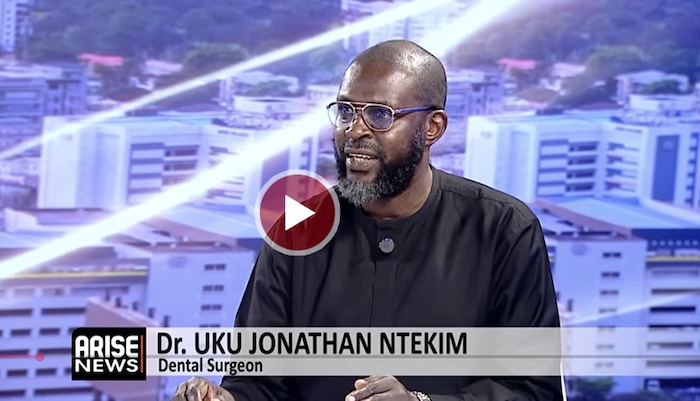
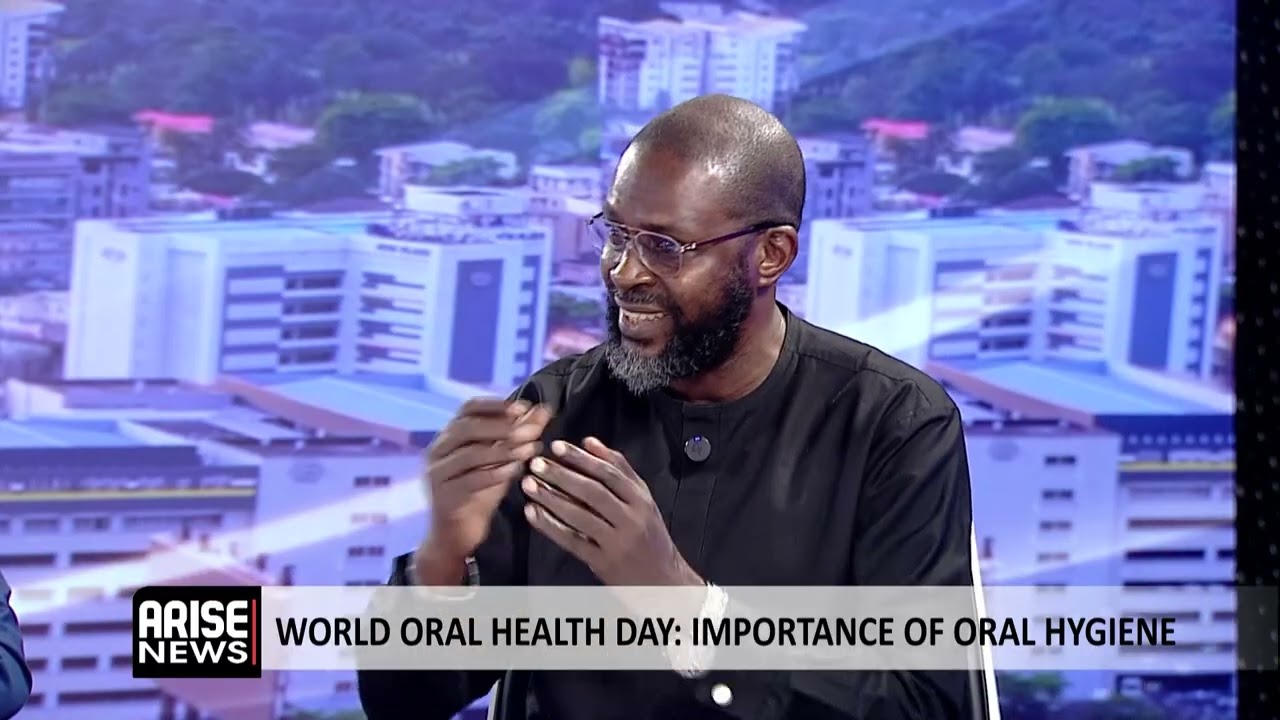
A dental surgeon, Dr. Uku Jonathan Ntekim, has underscored the critical link between oral hygiene and overall health, warning that poor dental care could contribute to serious conditions such as heart disease, diabetes, and kidney problems.
Speaking in an interview with ARISE News on Friday to mark World Oral Health Day, Ntekim said the mouth plays a central role in the body’s well-being and should not be overlooked.
“I wouldn’t say the mouth is more important than other parts of the body, but it is equally important because the mouth is actually the gateway to the body,” he said.
He explained that everything entering the body—including food and drink—passes through the mouth, making oral hygiene fundamental to overall health. According to him, simple daily habits such as brushing and flossing are crucial in maintaining healthy teeth and preventing disease.
“Your teeth are designed to last for your lifetime. The habits you cultivate every day will determine their longevity and your health in general,” Ntekim added.
The dental expert highlighted the strong medical link between oral diseases and systemic conditions, particularly diabetes. He noted that bacteria from untreated gum disease can travel through blood vessels to vital organs.
“Bacteria in the mouth, when there’s an issue with the gums, can track through the tiny vessels and reach the heart, causing serious problems. It can also affect the kidneys,” he said.
He further explained the two-way relationship between gum disease and diabetes, stressing that each condition can worsen the other if left untreated.
“When diabetes is uncontrolled and there is existing gum disease, it affects the management of both conditions. That is why they must be treated together,” he said.
Ntekim also expressed concern over low dental visitation rates in Nigeria, noting that many people only seek care when problems become severe. He called for stronger government intervention to improve access to dental services.
“For every nation to thrive, it must invest in its human capital. Nigeria needs to invest more in healthcare and make it accessible to the common man, starting from the grassroots,” he said.
He urged authorities to strengthen primary healthcare systems, particularly at the local government level, to ensure wider reach and affordability of dental services.
On daily oral care, Ntekim advised brushing at least twice a day—preferably after breakfast and before bedtime—emphasising that nighttime hygiene is especially important due to increased bacterial activity.
“At night, saliva flow is low and bacteria are most active. If food particles remain on the teeth, bacteria feed on them, produce acid, and gradually destroy the enamel,” he explained.
While acknowledging the widespread use of mouthwash, he maintained that it should not replace brushing.
“Brushing is more effective than mouthwash,” he said.
He also cautioned against using abrasive alternatives such as charcoal, salt, or baking soda in place of toothpaste, warning that they can damage tooth enamel over time.
“These substances are abrasive and can erode the enamel continuously,” he said.
However, he noted that traditional chewing sticks can be beneficial if used alongside modern dental tools.
“Chewing sticks are not bad, but they should be used together with a toothbrush and toothpaste,” Ntekim advised.
The interview forms part of global efforts to raise awareness about the importance of oral hygiene, with experts urging individuals to adopt preventive habits and seek regular dental care to safeguard long-term health.
Boluwatife Enome
About the Author