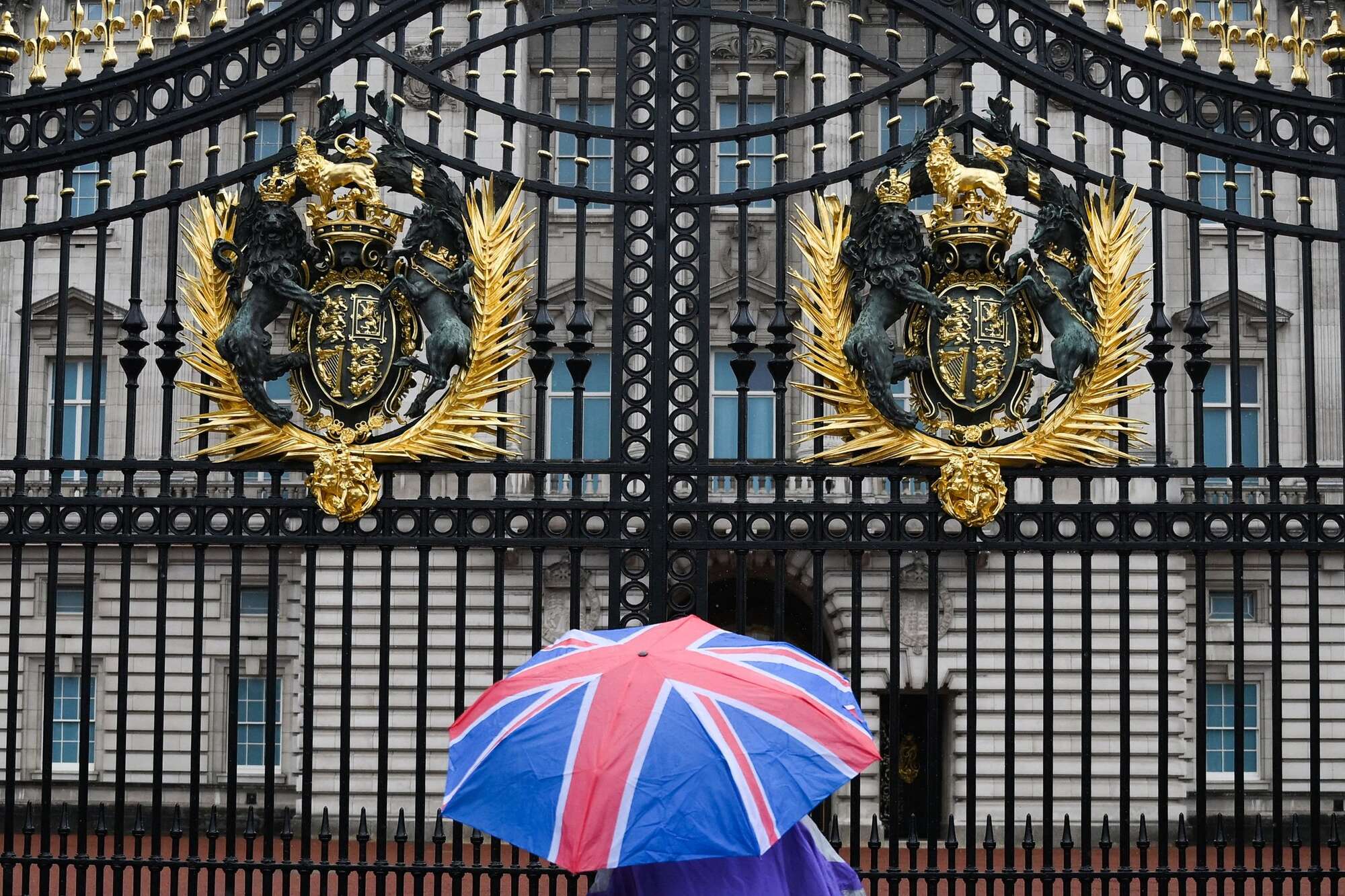
A person with an umbrella picturing the British national flag stands guard in front of Buckingham palace, central London, on September 8, 2022. - Fears grew on September 8, 2022 for Queen Elizabeth II after Buckingham Palace said her doctors were "concerned" for her health and recommended that she remain under medical supervision. The 96-year-old head of state -- Britain's longest-serving monarch -- has been dogged by health problems since last October that have left her with difficulties walking and standing. (Photo by Daniel LEAL / AFP)
Starting on Wednesday, visitors to Britain from 85 countries must obtain an electronic permit in advance of their trip or they will be barred from travelling, the UK interior ministry said.
The Electronic Travel Authorisation (ETA) scheme requires all visitors who do not need a visa to enter Britain to purchase a pre-travel permit online at a cost of 16 pounds ($21.57).
It was introduced in 2023 and extended to European visitors in April last year, but has not been strictly enforced.
However, from February 25, it will be mandatory for visitors to the UK to have obtained an ETA to travel.
This means that airlines will prevent passengers from boarding if they do not have an ETA, eVisa or other valid documentation, the interior ministry said.
British and Irish citizens, including dual citizens, as well those with the right to live in the UK, are exempt from needing an ETA.
“The ETA scheme is a vital part of our work to strengthen the UK’s border security, helping to deliver a more efficient and modern service that works for both visitors and the British public,” migration minister Mike Tapp said.
In October last year, the European Union (EU) began rolling-out its much delayed post-Brexit border security checks for UK nationals entering the bloc. Britain formally left the EU in 2020.
The EU’s Entry/Exit System (EES) removes the requirement to manually stamp passports at the EU’s external borders and instead creates digital records.
However, travellers have complained the new system’s introduction has caused delays at some airports, and industry leaders have expressed concern that full implementation at Easter could cause widespread disruption.
About the Author