The High Court in the United Kingdom has ruled that the government’s designation of the pro-Palestinian campaign group Palestine Action as a “terrorist organisation” was unlawful, marking a landmark victory for free speech and civil activism.
In a statement on Friday, Huda Ammori, co-founder of Palestine Action and lead challenger of the ban, described the ruling as “a monumental victory—both for our fundamental freedoms in Britain and for the struggle for Palestinian liberation.” She called the government’s original ban “one of the most extreme attacks on free speech in recent British history.”
Despite the ruling, the UK government has signaled its intention to appeal. Home Secretary Shabana Mahmood expressed disappointment, stating that she disagreed with the court’s view that banning the group was disproportionate, and affirmed plans to challenge the judgment in the Court of Appeal.
Ammori warned that any attempt to overturn the ruling would be “profoundly unjust,” particularly for the thousands of supporters arrested for backing the group—many elderly or disabled—facing up to 14 years in prison.
The case has underscored a sharp divide between UK government policy and public sentiment. While the government has maintained diplomatic support for Israel, widespread protests have erupted across the country demanding an end to the conflict in Gaza.
The ban, announced last June under anti-terrorism legislation, placed Palestine Action alongside groups like al-Qaeda and ISIL (ISIS), making membership a criminal offence.
The move drew immediate legal challenges, criticism from human rights organisations, and nationwide protests, with many arguing that it criminalised legitimate political dissent.
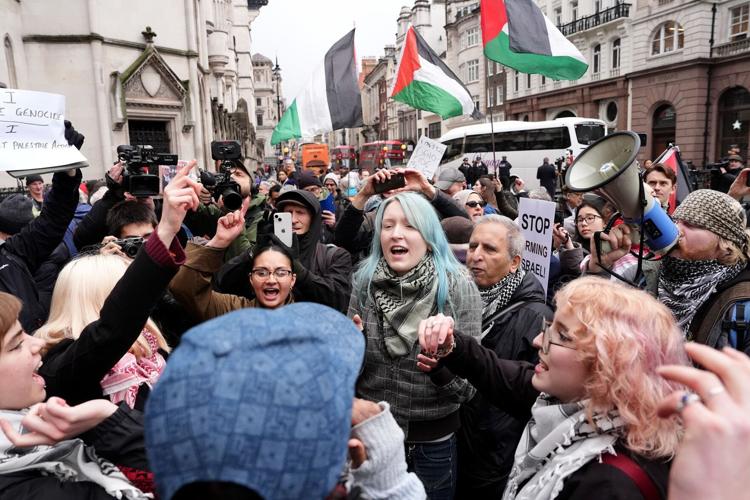
According to the campaign group Defend Our Juries, some 2,787 people were arrested for peacefully protesting in support of Palestine Action, holding signs saying, “I oppose genocide. I support Palestine Action.” The High Court ruling now renders those arrests unlawful.
A spokesperson for Defend Our Juries described the ban as “straight out of the dictator’s playbook,” adding that “thousands of people of conscience took personal risks to resist it, inspired by each other’s courage.”
Supporters celebrated the ruling as an “absolute triumph.” Artist Nicola Moxham, herself arrested for supporting the group, called the decision a “vindication” and a “triumph for direct action in support of Palestine Action and against the genocide in Gaza.” Her husband, retired professor John Moxham, described the ban as a “total travesty” and called for accountability from government ministers.
Campaign group CAGE International hailed the ruling as “a decisive rejection of attempts to shield corporations complicit in arming the genocide in Gaza.” Anas Mustapha, the group’s head of public advocacy, called for the withdrawal of charges against all Palestine Action activists and thousands of participants in civil disobedience campaigns.
Ammori emphasized that the ban targeted the group not for terrorism, but because its actions against the UK subsidiary of Israel’s largest arms manufacturer, Elbit Systems, “cost the corporation millions in profits.” Elbit Systems, whose drones have been widely used by Israel in Gaza, describes them as the “backbone” of its drone fleet.
The court ruling has ignited celebrations among supporters in London, who could be heard chanting: “From the river to the sea, Palestine will be free.” It marks a major legal and symbolic victory for activists advocating for Palestinian rights and the protection of civil liberties in the UK.
About the Author