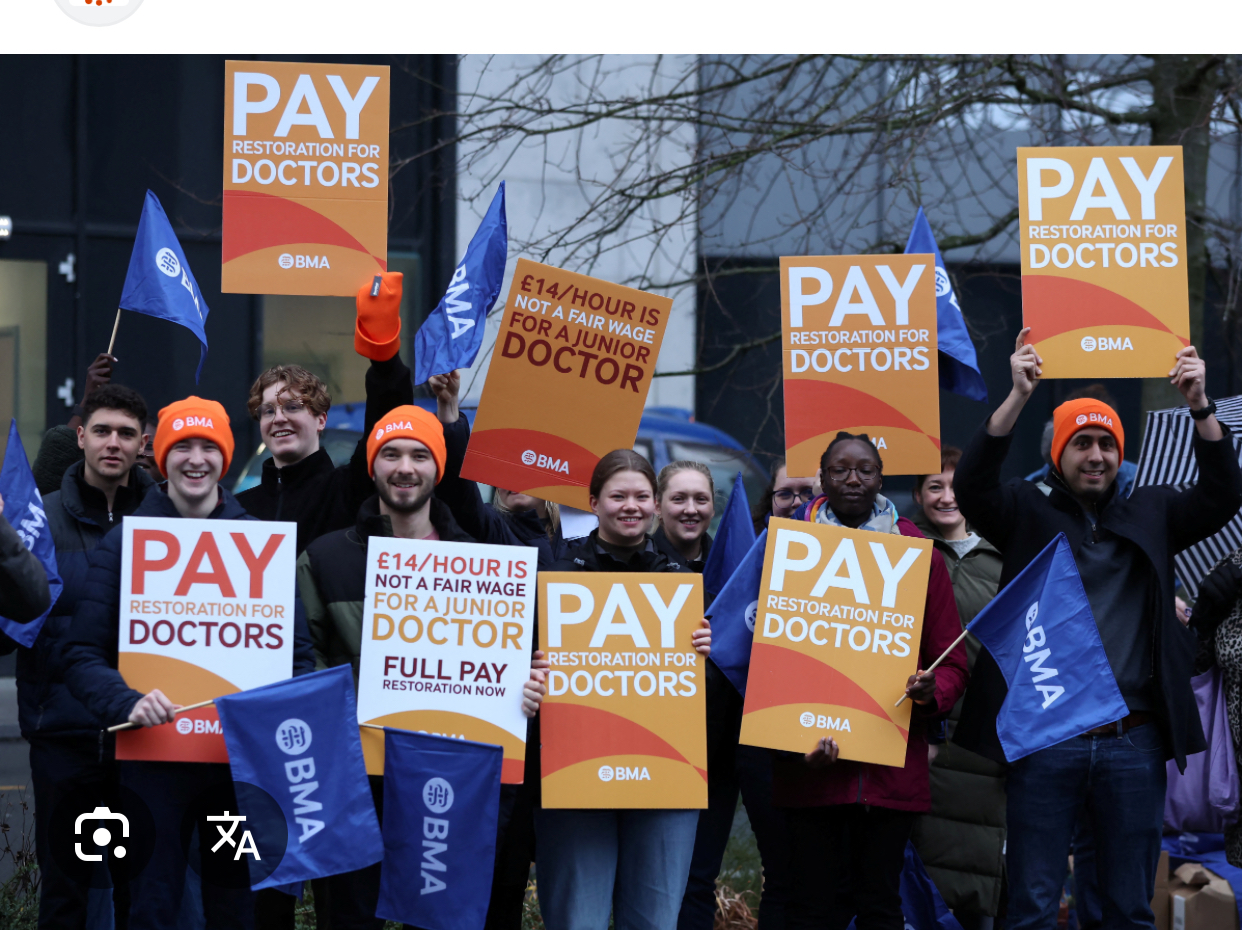
For the 15th time in just over three years, resident doctors in England have downed tools in a prolonged dispute over pay.
The six-day strike involves resident doctors, those below consultant level, and comes after a series of previous walkouts that secured a 28.9% pay rise over three years.
Despite that increase, the British Medical Association (BMA) says pay has still not kept pace with inflation and is calling for further restoration to 2008 salary levels.
The strike has intensified tensions between the government and the doctors’ union, with both sides remaining firmly opposed on the issue of additional pay increases.
Health Secretary, Wes Streeting, criticised the industrial action, describing resident doctors as among the biggest beneficiaries of recent public sector pay awards. He said the strike would place additional pressure on the National Health Service (NHS), with estimated costs of around £300 million.
Streeting also noted that the government had already made concessions, including agreeing to prioritise UK-trained doctors for training positions over overseas applicants.
However, the BMA insists that doctors have suffered long-term real-term pay erosion and argues that the current offer of 4.9% is insufficient in the face of ongoing cost-of-living pressures.
The UK government maintains that it is not financially possible to meet the union’s demands, warning that continued strike action could further disrupt healthcare services across England.