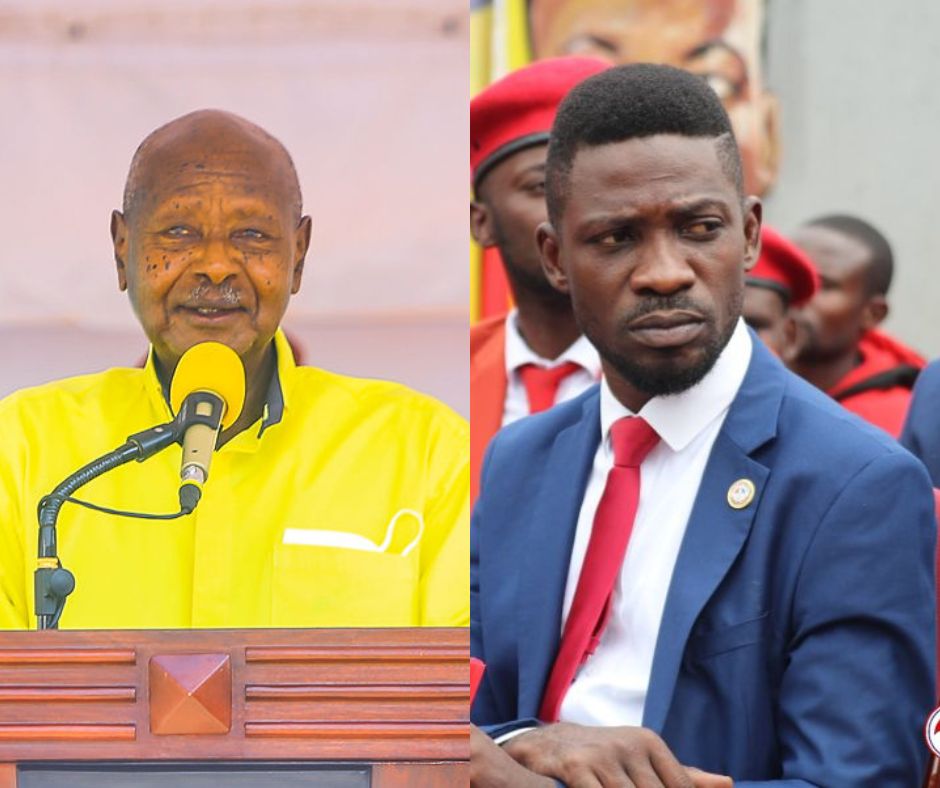
Uganda’s opposition has denounced the country as a “military state” ahead of a presidential election widely expected to extend President Yoweri Museveni’s four-decade rule.
At a prayer gathering on Sunday, Kampala Mayor Erias Lukwago told supporters that they were either “political prisoners or potential political prisoners,” framing the vote as a “face-off” between ordinary citizens and Museveni’s entrenched regime.
The 81-year-old president maintains near-total control over the state and security apparatus, having risen to power as a bush fighter in the 1980s. His re-election campaign has been marked by widespread crackdowns: hundreds of opposition supporters have been arrested and at least one killed.
Main opposition candidate Robert Kyagulanyi, popularly known as Bobi Wine, now rarely appears in public without a flak jacket and has described the campaign as a “war.” Wine has faced multiple arrests and reportedly endured torture while in military custody.
Another key opposition figure, Kizza Besigye, was kidnapped in Kenya in 2024 and secretly transferred to a Ugandan military prison, where he faces ongoing treason charges in a case that has dragged on for months.
Sunday’s prayer meeting, hosted by Besigye’s wife, UNAIDS director Winnie Byanyima, highlighted the opposition’s concerns over the concentration of military power. “We are really a military state,” Byanyima told AFP. “There’s total capture of state institutions by the individual who holds military power, President Museveni.” She added that Uganda has only a “thin veneer” of democracy.
Researcher Jude Kagoro, who studies African policing, said most Ugandan officers do not view themselves as neutral arbiters. “They see it as their duty to support the incumbent and often require no explicit order to use brute force,” he noted.
The regime has also developed a network of informants, informally known as “ghetto structures,” to infiltrate opposition groups. Young people recruited in opposition strongholds are tasked with disrupting activities and spying on activists.
Authorities, caught off guard by Bobi Wine’s rapid rise ahead of the 2021 election, have spent the past four years strengthening this system to withstand opposition pressure. On election day, citizens are being instructed to vote and return home immediately, a strategy analysts say is meant to intimidate voters.
David Lewis Rubongoya, secretary-general of Wine’s National Unity Platform, said the ongoing arrests and abductions have made grassroots organizing “way too dangerous.” Uganda expert Kristof Titeca added that the high cost of political engagement has left only a core group of loyal supporters. “What’s left is a group of core supporters. Is there a grassroots opposition? No, there isn’t,” he said.
With security forces heavily aligned with the state and opposition activity under constant threat, the upcoming election is shaping up to be one of the most tightly controlled in Uganda’s modern history, casting serious doubts on the country’s democratic credentials.
About the Author