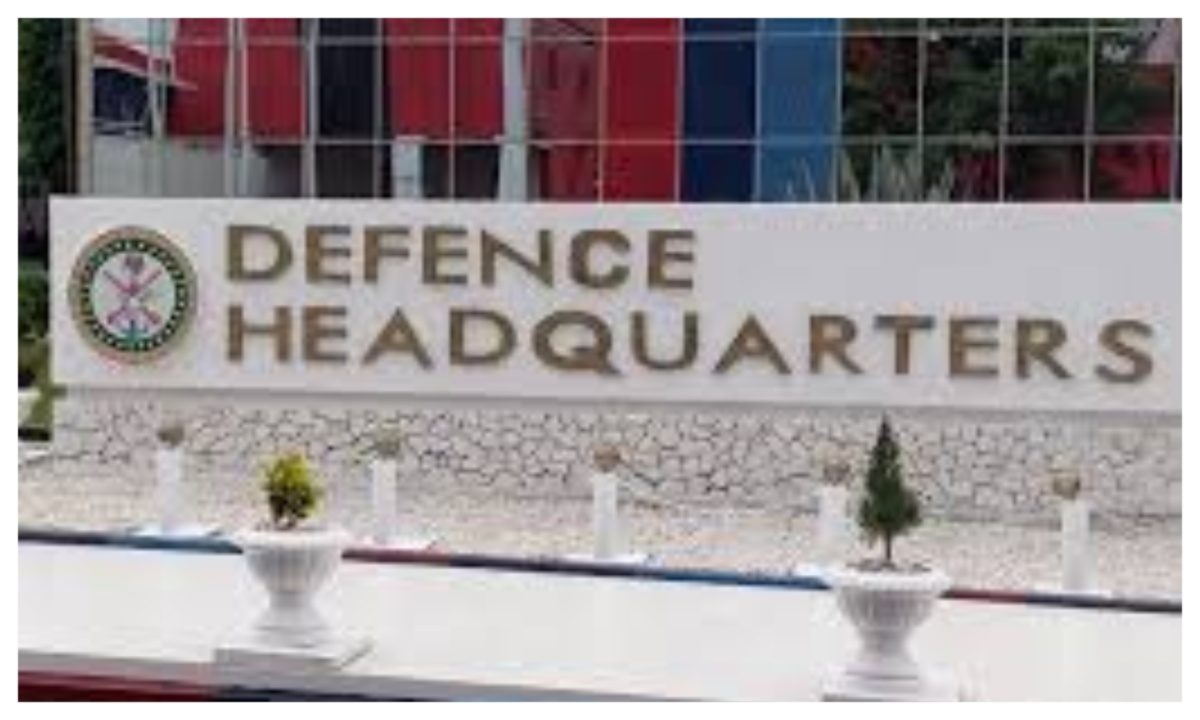
The Defence Headquarters (DHQ) has disclosed that a comprehensive battle damage assessment is still underway following the recent United States–Nigeria joint air strikes against terrorist targets in north-western Nigeria.
The Director of Defence Media Operations, Major General Michael Onoja, made this known on Wednesday while responding to questions from journalists in Abuja, assuring that the military would publicly release its findings once the assessment process is concluded.
His remarks come amid widespread public debate over the effectiveness and outcome of the joint operation.
“On the United States strikes conducted in conjunction with Nigerian forces, there is an established process of battle damage assessment. We are still within that process, and once it is completed, we will communicate our observations to the public,” Onoja said.
“In due course, we will provide all the information required concerning the U.S.–Nigeria strikes.”
The operation gained international attention after United States President Donald Trump announced on Christmas Day that American forces had carried out lethal air strikes on Islamic State targets in north-western Nigeria. The Federal Government later confirmed the action, describing it as part of ongoing counterterrorism cooperation between both countries.
Addressing questions on whether terrorists were actually present at the bombed locations, Onoja said credible intelligence reports confirmed their presence prior to the strikes.
“Terrorists are ubiquitous; they are not confined to one location. There is evidence of their presence across the Sahel, and given the proximity of the Sahel to Sokoto, intelligence reports confirmed that they were in those areas before the strikes were carried out,” he explained.
“The operations were intelligence-driven. The fact that certain details were not publicised was largely due to operational security considerations.”
Onoja further revealed that the Armed Forces are closely monitoring the movement of terrorists outside the targeted areas and working with field commanders to prevent their infiltration into nearby communities.
“We are monitoring their movements and coordinating with force commanders in identified threat areas to prevent them from blending into communities and causing further havoc,” he said.
“As operations continue, the public will be briefed at the appropriate time. While we are acting decisively, it is important to maintain confidentiality for operational effectiveness.”
He also emphasised ongoing efforts to engage civilians, urging them to support security agencies with timely and credible intelligence.
“We are mobilising the civilian population to remain vigilant and report any suspicious movement to the military and other security agencies so that swift action can be taken,” he said.
“Security challenges can only be addressed through collective effort. This is what we call the whole-of-society approach.”
Responding to criticisms of the joint strikes, the defence spokesman said the Armed Forces would not be drawn into public controversies, stressing that other relevant agencies were better positioned to address such concerns.
“Every agency has its defined responsibilities. It is not the duty of the Armed Forces to respond to every public opinion about our operations. Our focus remains on kinetic and, where necessary, non-kinetic operations,” he noted.
Onoja also issued a public safety warning, calling on individuals who may have picked up ammunition or debris from the operation to return such items immediately to security agencies.
“We do not expect anyone to take away those materials. They should be returned to the military or security formations for safe recovery and disposal to prevent further harm,” he said.
He assured Nigerians that the Armed Forces would sustain counterterrorism operations into the new year, reaffirming the military’s commitment to safeguarding lives, property, and national security.
About the Author