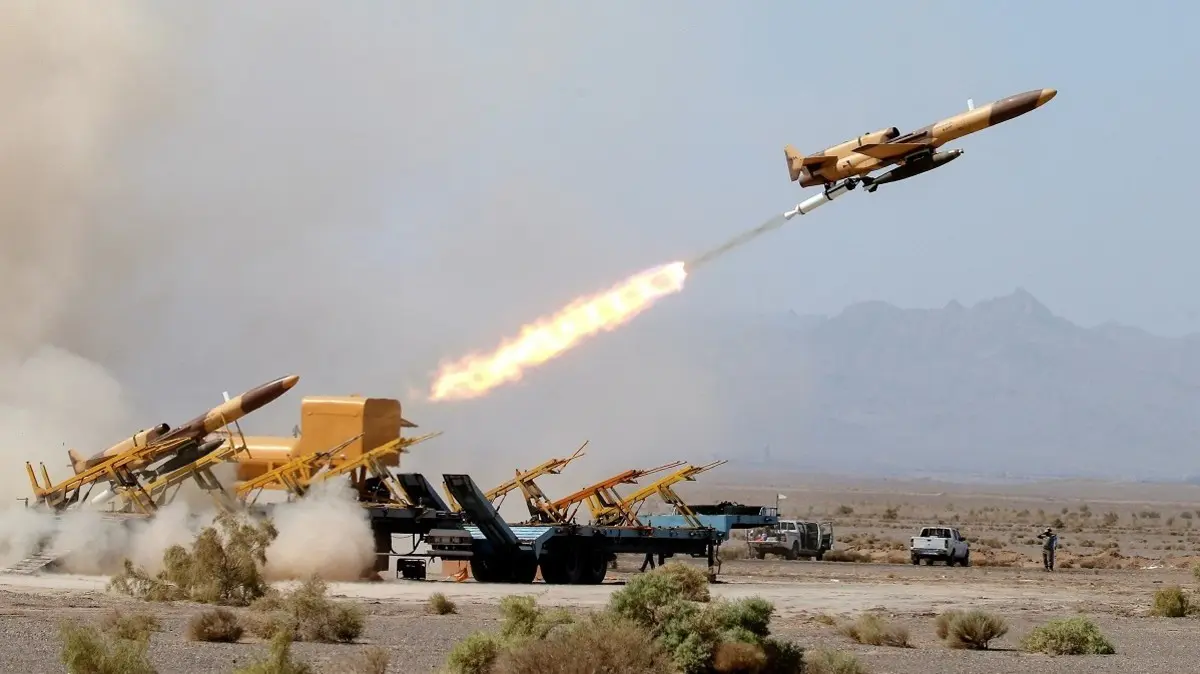
The United States military has shot down an Iranian drone after it “aggressively approached” the USS Abraham Lincoln, an American aircraft carrier operating in the Arabian Sea, officials said Tuesday.
According to U.S. Central Command, an F-35C stealth fighter launched from the carrier destroyed the drone in what was described as an act of self-defense. At the time, the carrier was approximately 500 miles off Iran’s coast.
The drone’s intent remains “unclear,” the military noted. No U.S. personnel were injured, and no equipment was damaged during the incident.
The incident occurs amid heightened tensions between Washington and Tehran, as the U.S. maintains a strengthened military presence in the region.
President Donald Trump has repeatedly warned that military action remains on the table if Iran refuses to negotiate restrictions on its nuclear program.
White House Press Secretary Karoline Leavitt emphasised that diplomatic talks with Iran are still expected later this week. “The President remains committed to always pursuing diplomacy first,” she said, while adding that “a range of options” remains available, including military force.
Iran’s Supreme Leader, Ayatollah Ali Khamenei, has previously warned that any attack on Iran could trigger a wider regional conflict. Tehran has not publicly commented on the drone incident.
In a related development on Tuesday, U.S. military officials reported that Iran’s Islamic Revolutionary Guard Corps harassed a U.S.-flagged, U.S.-crewed merchant vessel in the Strait of Hormuz, one of the world’s busiest oil shipping lanes. U.S. military forces intervened, de-escalating the situation and allowing the tanker to continue safely.
Leavitt also confirmed that U.S. special envoy Steve Witkoff will represent the White House in the upcoming talks. Initial reports indicated Witkoff would meet Iran’s Foreign Minister Abbas Araghchi in Istanbul with regional counterparts, but U.S. media reported that Iran requested the venue be moved to Oman for a direct, bilateral meeting, which the U.S. has agreed to.
Iranian President Masoud Pezeshkian signaled willingness to negotiate, stating that Tehran is ready to engage with Washington “provided that a suitable environment exists.”
The tensions come against the backdrop of last year’s U.S. airstrikes on Iran, which Trump claimed destroyed key nuclear enrichment facilities.
Trump warned that any future attacks would be “far worse” than those carried out during Israel’s 12-day conflict with Iran last June, when Israel targeted Iranian nuclear facilities, military commanders, and missile infrastructure.
Iran responded with hundreds of missile and drone attacks on Israel and struck a U.S. airbase in Qatar.
Iran maintains that its nuclear program is entirely peaceful, denying ambitions to develop nuclear weapons. The Trump administration has also tied negotiations to Iran’s domestic unrest, insisting that Tehran end violent crackdowns on protesters and commit to “no nuclear” development.
Human rights groups estimate thousands of demonstrators have been killed during protests over economic hardship and demands for political reform, though Iranian authorities dispute the figures.
Iran’s leadership has described the unrest as foreign-backed “sedition,” accusing the U.S. and Israel of instigating the protests.
About the Author