Nigeria’s recent decision to spend millions of dollars on lobbying efforts in Washington has drawn criticism from U.S. lawmakers, who warn that the move could be aimed at deflecting attention from persistent religious freedom and human rights violations.
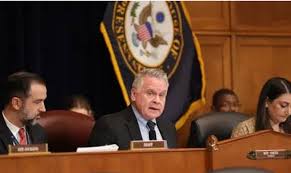
The concerns were raised during a joint hearing of the U.S. House Subcommittee on Africa and the Subcommittee on the Western Hemisphere, held to review global religious freedom challenges. Lawmakers and expert witnesses cautioned that expensive lobbying campaigns could weaken accountability and obscure the realities facing vulnerable communities in Nigeria.
Former U.S. Ambassador-at-Large for International Religious Freedom, Sam Brownback, and former chair of the U.S. Commission on International Religious Freedom (USCIRF), Stephen Schneck, told lawmakers that Nigeria’s security crisis remains severe. Schneck revealed that in addition to the Federal Government’s reported $9 million lobbying contract, a Nigerian billionaire had also signed a separate agreement worth about $120,000 per month with a Washington-based firm to influence U.S. policy.
Some lawmakers criticised what they described as coordinated efforts to downplay violence and religious persecution. Others, however, urged caution against oversimplifying Nigeria’s crisis. Ranking Member of the subcommittee, Representative Sara Jacobs, warned against framing the violence solely as Christian persecution, noting that Muslim communities have also suffered significant losses.
Jacobs also questioned U.S. policy consistency, pointing out that Washington had reduced foreign assistance to Nigeria, including programmes that previously supported interfaith peacebuilding and conflict prevention. She cited the termination of the Community Initiatives to Promote Peace programme, arguing that such initiatives had proven more effective than military responses alone.
Echoing this view, Schneck warned that heavy reliance on military action could strengthen militant groups, adding that the cost of airstrikes in northern Nigeria likely exceeded previous investments in humanitarian and interfaith programmes.
While the Nigerian government continues to reject claims of genocide against Christians, maintaining that insecurity affects citizens across religious and ethnic lines, official U.S. filings confirm that Nigeria recently entered into a multi-million-dollar lobbying agreement to present its security efforts to American policymakers.
About the Author