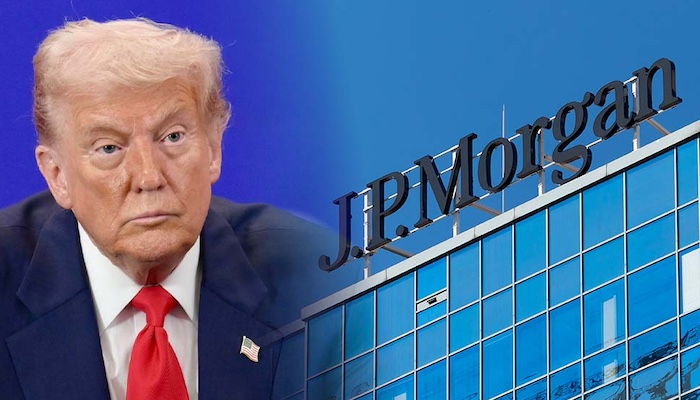
US President Donald Trump has filed a $5 billion (£3.7bn) lawsuit against JPMorgan Chase, the country’s largest bank, alleging the institution illegally closed his accounts and those of his businesses in 2021 for political reasons. The suit also names JPMorgan CEO Jamie Dimon.
Trump claims the closures caused “considerable financial and reputational harm,” coming in the wake of the January 6, 2021 Capitol riot, when Trump supporters attempted to disrupt the certification of the 2020 election results.
The complaint, filed in Florida, a state that bars banks from discriminating against clients based on political beliefs, alleges that JPMorgan acted on “unsubstantiated, ‘woke’ beliefs” and sought to distance itself from Trump and his conservative political views. According to the filing, the bank’s decision to close the accounts was part of a “systemic, subversive industry practice” aimed at pressuring the public to shift political allegiances.
Trump also accused JPMorgan of trade libel, claiming his name and that of his businesses, and possibly his family, were placed on a “blacklist” shared with other banks to mark clients with a history of “malfeasant” activity—a move he alleges was approved by Dimon.
A JPMorgan spokesperson rejected the allegations, stating, “The suit has no merit. JPMC does not close accounts for political or religious reasons. We do close accounts because they create legal or regulatory risk for the company.” The bank said it regretted having to close accounts but insisted that regulatory obligations often drove such decisions.
The lawsuit represents the latest clash between Trump and Dimon, who has been critical of certain administration policies, including proposals to cap credit cards and the government’s approach to the Federal Reserve.
Debanking, the process of closing accounts, has become a recurring grievance for Trump, who has previously criticised multiple banks for restricting access to sectors such as oil and gas, private prisons, and adult entertainment. Regulators recently found that nine major US banks made “inappropriate distinctions” among customers based on business activities.
Melissa Enoch
About the Author