The Trump administration appears to be recalibrating its immigration enforcement strategy in Minneapolis following the fatal shooting of a second US citizen by federal agents, a development that has intensified political backlash and public unrest.
A senior Border Patrol official, Commander Gregory Bovino, who has been the public face of the federal immigration operation in the city, is preparing to leave Minneapolis along with several enforcement agents.
His departure follows the killing of 37-year-old nurse Alex Pretti on Saturday and signals what observers in Washington view as a possible shift in tone by the White House amid mounting pressure.
Operational oversight in Minneapolis will now be assumed by President Donald Trump’s border tsar, Tom Homan, who will coordinate enforcement efforts on the ground and report directly to the president.
Although the administration has not announced a formal policy change, the leadership transition is being interpreted as an attempt to temper the administration’s most aggressive posture. Online tracking data, however, indicates that immigration raids have continued despite the shake-up.
The change comes as the administration faces growing criticism from Democrats and senior Republicans alike, with calls intensifying for an independent investigation into Pretti’s death. The shooting occurred during a confrontation between federal agents and Pretti, who had been filming officers during an enforcement operation.
Bovino claimed Pretti intended to “massacre” federal officers—remarks that further inflamed protests across Minneapolis. The Department of Homeland Security later said agents fired in self-defence, alleging that Pretti was armed with a handgun and resisted attempts to disarm him.
That account has been strongly disputed by eyewitnesses, local officials and Pretti’s family, who insist he was holding a mobile phone, not a weapon. Pretti’s parents accused the administration of spreading what they described as “sickening lies” about their son’s death. Video analysis by BBC Verify found no visible firearm in Pretti’s hand at the time he was shot.
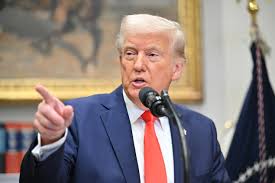
President Trump, who initially adopted a confrontational tone, has since softened his public rhetoric. In recent days, he has held phone calls with Democratic state and city leaders, which he described as constructive, and has refrained from repeating earlier claims by senior aides that appeared to assign blame to Pretti.
The political fallout widened on Monday when Republican defence lawyer Chris Madel withdrew from Minnesota’s gubernatorial race, describing the federal operation as “an unmitigated disaster.” Madel had previously provided legal advice to the agent involved in the fatal shooting of another Minneapolis resident, Renee Good, earlier this month.
Pretti was the second Minneapolis resident killed by federal immigration officers since their deployment to the state. On January 7, Renee Good was shot dead by an Immigration and Customs Enforcement agent. An estimated 3,000 federal immigration officers are currently operating in the city.
While some media reports suggested Bovino had been dismissed, the Department of Homeland Security denied the claim. DHS spokesperson Tricia McLaughlin said Bovino remained a valued member of the administration.
“Chief Bovino is a key part of the president’s team and a great American,” she said.
Homan, though known for advocating strict enforcement, brings longer institutional experience, having served in senior immigration roles during the administration of former President Barack Obama.
Tensions remained high across Minneapolis and neighbouring St Paul on Monday, with residents reporting fear and disruption caused by the federal presence.
“A lot of people aren’t able to work or even leave their homes. They’re afraid,” said George Cordero, a St Paul resident.
Carol Engelheart, a retired nurse in Minneapolis, said the events had shaken her deeply.
“We need to care about this country. We need to care that we still have a Constitution,” she said. “If people organise and stand up, we can do this.”
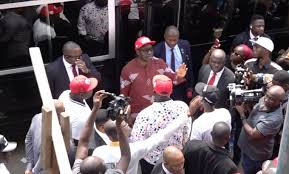
Protests and memorials continued into Monday night. About 100 demonstrators gathered outside the hotel where Bovino was believed to be staying, demanding his immediate departure. Further vigils and protests are planned in the coming days.
The federal crackdown in Minneapolis began in December after several Somali immigrants were convicted in a large-scale fraud scheme involving state welfare programmes. Minnesota is home to the largest Somali immigrant population in the United States.
White House Press Secretary Karoline Leavitt said the president wanted “the resistance and chaos” in Minneapolis to end. Trump confirmed that he had spoken with Minnesota Governor Tim Walz and Minneapolis Mayor Jacob Frey, both Democrats who have opposed the federal operation.
Describing his conversation with Walz as positive, Trump said they were “on a similar wavelength” and that his focus remained on “criminals in their possession.”
Governor Walz said Trump agreed to review the federal deployment and allow for an independent investigation.
“The president agreed to look into reducing the number of federal agents in Minnesota and to ensure the Minnesota Bureau of Criminal Apprehension can conduct an independent investigation,” Walz said.
Mayor Frey said he hopes to meet with Homan on Tuesday to discuss next steps.
Several senior Republicans have also voiced concern. Senator Ted Cruz urged a more measured response, calling the situation a tragedy, while Senator Lindsey Graham praised the decision to deploy Homan as “a very smart move.”
Utah Senator John Curtis echoed calls for accountability, saying, “There must be a transparent, independent investigation. Those responsible—no matter their title—must be held accountable.”
About the Author