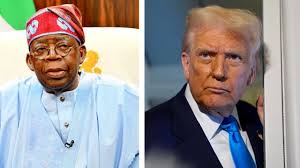
United States President, Donald Trump, has threatened further military action in Nigeria, citing continued attacks on Christians, a warning that has drawn criticism from Nigerian officials.
In an interview with the New York Times on Thursday, Trump was asked about the December 25 strikes in Sokoto State, which targeted camps operated by Islamist militants. He replied: “I’d love to make it a one-time strike. But if they continue to kill Christians, it will be a many-time strike”.
Trump’s remarks follow his 2025 designation of Nigeria as a “country of particular concern”, citing what he described as an “existential threat” to its Christian population. Nigerian authorities, however, have rejected claims that Christians are being singled out. A government spokesperson insisted that jihadist groups attack indiscriminately, affecting “Muslims, Christians, and those of no faith alike”.
When pressed about reports suggesting that most victims of jihadist attacks are Muslims, Trump responded, “I think that Muslims are being killed also in Nigeria. But it’s mostly Christians”. Nigeria, Africa’s most populous nation with over 230 million people, is roughly divided between Christians in the south and Muslims in the north.
The December strikes targeted camps run by a jihadist group known as Lakurawa in Sokoto State, a predominantly Muslim region near the Niger border. Both US and Nigerian authorities have linked the group to Islamic State-affiliated militants in the Sahel, though no official IS claim has been made. Official casualty figures from the strikes have not been released.
Nigeria’s Foreign Minister, Yusuf Tuggar, described the operation as a “joint effort” and emphasised that it was not motivated by religion. He confirmed that the strikes were carried out with the approval of President Bola Tinubu and included participation by Nigerian armed forces. Tuggar also clarified that the timing of the strikes was unrelated to Christmas, despite Trump referring to them as a “Christmas present”.
The incident underscores ongoing tensions over how international powers engage in counterterrorism operations in Nigeria, particularly regarding perceptions of civilian and religious impact.
About the Author