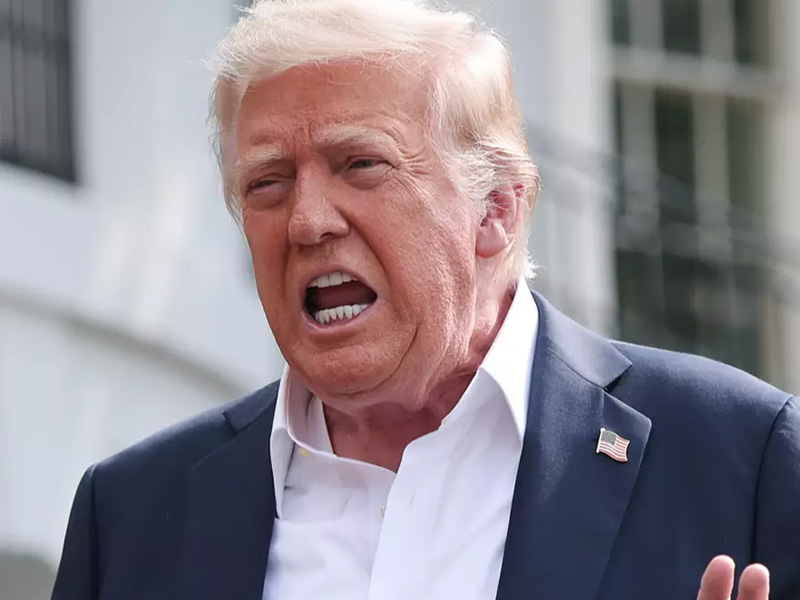
US President Donald Trump is set to travel to China in May for a summit with Chinese President Xi Jinping, after postponing the trip due to the ongoing war involving Iran.
The visit, which will be Trump’s first to China in eight years, had initially been scheduled for the following week but was pushed back as tensions in the Middle East intensified.
Announcing the revised schedule in a Truth Social post on Wednesday, Trump said he would visit Beijing on May 14 and 15. He also disclosed plans to host Xi in Washington later in the year as part of reciprocal diplomatic engagement.
“Our Representatives are finalizing preparations for these Historic Visits,” Trump said. “I look very much forward to spending time with President Xi in what will be, I am sure, a Monumental Event.”
China’s embassy said it had no information to share regarding the announcement, noting that Beijing typically reveals Xi’s official engagements only a few days in advance.
The rescheduling reflects Trump’s attempt to demonstrate confidence while navigating the geopolitical fallout of the Iran conflict and managing strained ties between the United States and China, the world’s two largest economies.
Washington’s broader effort to reset relations in the Asia Pacific region has faced repeated disruptions in recent months. In February, the US Supreme Court limited the president’s authority to impose tariffs, weakening a key bargaining tool in trade negotiations with China, America’s third biggest trading partner.
Later that month, Trump’s joint military operation with Israel against Iran introduced fresh tension with Beijing, which remains Tehran’s main oil buyer.
Trump last visited China in 2017, marking the most recent trip by a sitting US president. His upcoming Beijing meeting will be the leaders’ first face to face talks since they met in South Korea in October, where they agreed to a temporary trade truce.
The two day visit is expected to combine ceremonial state engagements with substantive negotiations on trade and security issues. While both sides may announce goodwill agreements covering agriculture and aviation, significant divisions remain, particularly over Taiwan.
Trump has increased US arms sales to the self governed island during his second term, drawing sharp criticism from Beijing, which considers Taiwan part of its territory.
Uncertainty also persists over whether the Iran war will subside before the planned summit. The conflict has unsettled global markets and threatened energy supply routes.
Trump has sought cooperation from major oil consuming nations, including China, to counter Iran’s attempts to disrupt shipping through the Strait of Hormuz. However, Beijing has yet to respond directly to his request.
Asked whether the conflict could ease in time for the China visit, White House spokeswoman Karoline Leavitt said: “we’ve always estimated approximately four to six weeks. So you could do the math on that.”
She added that Xi had agreed to the rescheduling, stating: “President Xi understood that it’s very important for the president to be here throughout these combat operations right now.”
Faridah Abdulkadiri
About the Author