Donald Trump has agreed to bring a sweeping federal immigration crackdown in Minnesota to an end, concluding Operation Metro Surge after weeks of mounting protests, legal disputes and political backlash.
The decision was confirmed by Tom Homan, the administration’s border enforcement chief, who said he had proposed ending the operation and that the president had concurred. Operation Metro Surge, launched on 1 December, saw approximately 3,000 armed agents from Immigration and Customs Enforcement (ICE) deployed across the state, with a particular concentration in Minneapolis.
Homan said the surge had achieved its objectives, arguing that Minnesota was now “less of a sanctuary state for criminals” as a result of the intensified enforcement. He added that more than 4,000 people had been arrested during the operation. Last week, he had initially announced that over 700 ICE agents would withdraw after local officials agreed to transfer arrested immigrants into federal custody.
The operation formed part of the administration’s broader deportation drive and marked one of the largest concentrated ICE deployments in a single US state in recent years. Officers were frequently seen conducting operations in military-style camouflage gear and face coverings, a presence that drew sharp criticism from local leaders and civil rights advocates.
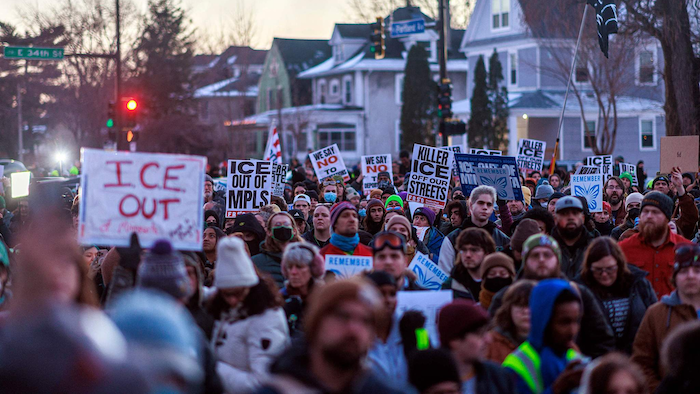
Demonstrations erupted repeatedly in Minneapolis and surrounding communities. Protesters accused federal authorities of heavy-handed tactics and of targeting immigrant families indiscriminately. Several rallies escalated into violent confrontations. Two protesters were killed during clashes linked to the enforcement actions, further intensifying tensions.
Among the most controversial incidents was the death of 37-year-old Renee Nicole Good, a mother of three who was shot in her car by an ICE agent in early January. Authorities said the shooting occurred in self-defence. In another case, Alex Pretti, a 37-year-old intensive care nurse, was wrestled to the ground and shot multiple times by federal agents during an encounter in Minneapolis. Both cases became rallying points for critics of the operation.
Minnesota’s Democratic governor, Tim Walz, strongly opposed the deportation sweeps throughout the operation. Responding to the announcement that the surge would end, he wrote that “the long road to recovery starts now,” warning that the economic, educational and social impacts of the enforcement drive would not be reversed overnight.
Minneapolis Mayor Jacob Frey also condemned the operation, stating on social media that the city had endured what he described as an “occupation.” He added that community solidarity had ultimately prevailed over federal pressure.
Legal scrutiny intensified as the operation unfolded. Minnesota’s chief federal judge reprimanded Trump administration officials, stating that ICE had defied dozens of court orders directing the release of migrants who were allegedly wrongfully detained. The rebuke added to growing concerns about due process and compliance with judicial rulings during the surge.
Despite the withdrawal of agents from Minnesota, Homan emphasised that immigration enforcement would not cease. He described the end of Operation Metro Surge as a tactical conclusion rather than a shift in overall policy, making clear that deportation efforts would continue elsewhere as part of the administration’s nationwide strategy.
The closure of the Minnesota operation marks a significant moment in Trump’s broader immigration agenda, highlighting both the scale of federal enforcement actions and the fierce political, legal and public resistance they have generated.
Erizia Rubyjeana
About the Author