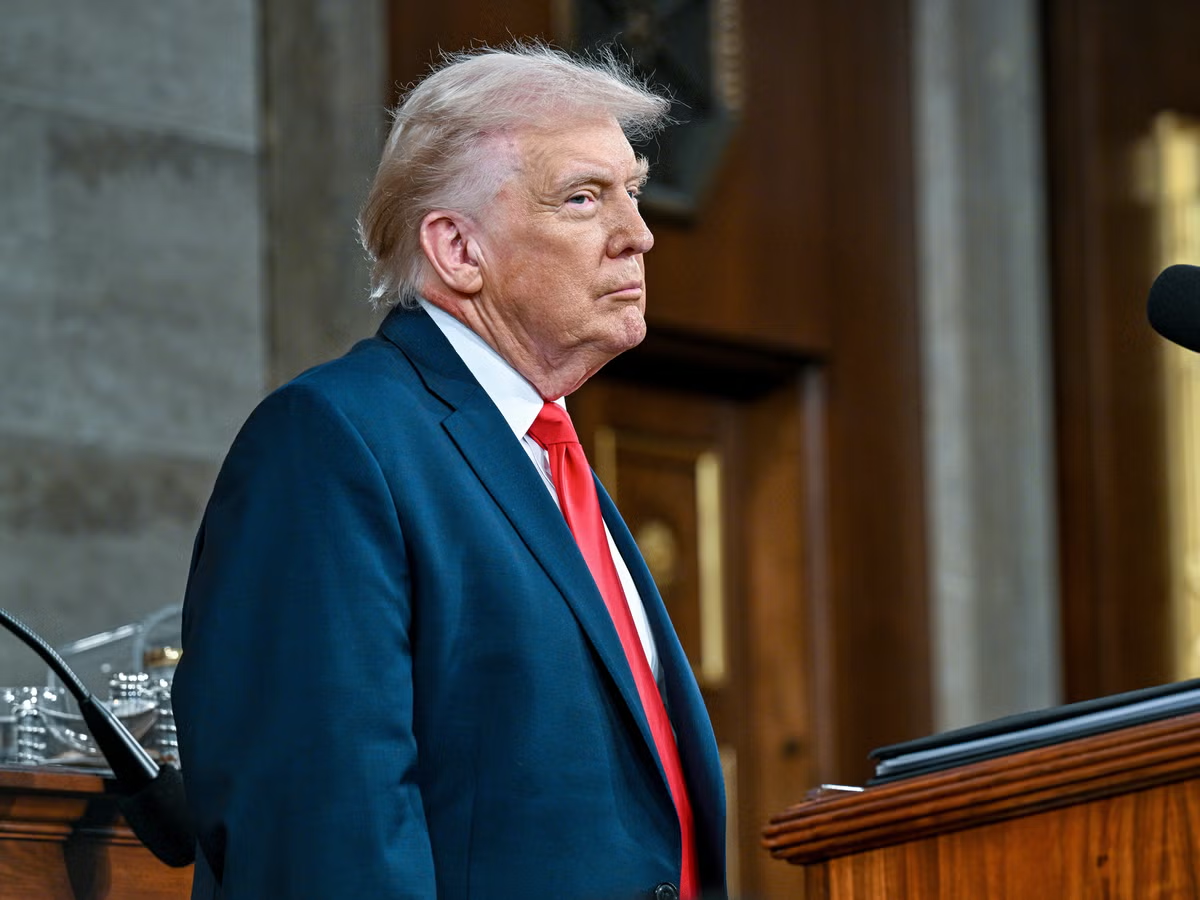
U.S. President Donald Trump has reiterated that Washington should have a decisive influence over the selection of Iran’s next Supreme Leader, warning that any successor who emerges without U.S. approval “is not going to last long.”
Trump made the remarks on Sunday during an interview with ABC News, just hours after a member of Iran’s Assembly of Experts revealed that the powerful clerical body had already chosen a successor to Ayatollah Ali Khamenei.
Khamenei was reportedly killed shortly after the United States and Israel launched coordinated military strikes against Iran on February 28, an attack that triggered a rapidly escalating conflict across the Middle East.
“He’s going to have to get approval from us,” Trump said, referring to Iran’s next Supreme Leader. “If he doesn’t get approval from us, he’s not going to last long.”
The U.S. president added that his position was aimed at preventing future administrations from facing the same security challenges.
“I don’t want people to have to go back in five years and have to do the same thing again—or worse, allow them to develop a nuclear weapon,” he said.
Iranian officials, however, have firmly rejected any suggestion that the United States could influence the country’s leadership selection process.
Speaking earlier on Sunday, Iran’s Foreign Minister, Abbas Araghchi, insisted that the matter was strictly an internal decision for the Iranian people.
“We will allow nobody to interfere in our domestic affairs,” Araghchi said, explaining that the Iranian public elects the Assembly of Experts, which is constitutionally responsible for appointing the Supreme Leader.
Trump’s latest remarks came as the war between Iran and the U.S.-Israel alliance entered its ninth day, with the conflict spreading across several parts of the Middle East.
According to available figures, the death toll in Iran has risen to at least 1,332 people. The violence has also claimed lives elsewhere in the region, including 11 people in Gulf states, 11 in Israel, and six U.S. soldiers killed during the ongoing hostilities.
The escalating conflict continues to raise fears of a wider regional war as both sides maintain military operations and exchange retaliatory strikes.
About the Author