High court rebuke fails to stop president’s tariffs as U.S. prepares alternative measures; companies face uncertainty over refunds….
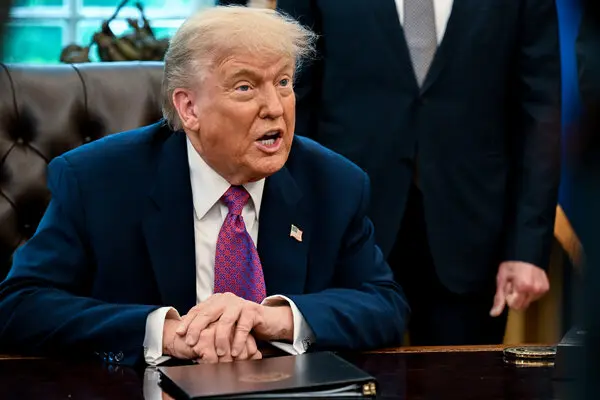
U.S. President Donald Trump on Friday signed an order imposing an additional 10 percent tariff on imports, following a Supreme Court ruling that struck down the legal basis for many of his prior, sweeping duties. The move delivers a rare judicial rebuke to Trump’s signature trade policy while keeping his protectionist agenda largely intact.
The new duty is scheduled to take effect on February 24 for 150 days, with exemptions for sectors under separate investigations such as pharmaceuticals and imports under the US-Mexico-Canada Agreement, according to a White House factsheet. Trading partners that had negotiated previous tariff deals with the Trump administration will also face the 10 percent levy, regardless of prior arrangements, though officials indicated the administration may later adjust rates through “more appropriate or pre-negotiated” mechanisms.
The Supreme Court, in a conservative-majority 6-3 decision, ruled that a 1977 law, the International Emergency Economic Powers Act (IEEPA), which Trump had relied on to impose unilateral tariffs on individual countries, “does not authorize the President to impose tariffs.” Chief Justice John Roberts wrote that if Congress had intended to grant such authority, it would have done so explicitly in the statute.
Trump, whose nominees make up two of the justices that ruled against him, reacted angrily, alleging without evidence that the court was influenced by foreign interests. “I’m ashamed of certain members of the court… for not having the courage to do what’s right for our country,” he told reporters. Nonetheless, he insisted the ruling left him “more powerful,” claiming he could now charge even higher tariffs to protect the nation.
Treasury Secretary Scott Bessent addressed the Economic Club of Dallas, saying the alternative approach would maintain “virtually unchanged tariff revenue in 2026.” The Supreme Court decision did not affect sector-specific tariffs on steel, aluminum, and other goods, and ongoing government probes may lead to additional targeted duties.
Market and Business Reactions
Wall Street saw modest gains following the decision, which was largely anticipated. Business groups welcomed the ruling, with the National Retail Federation saying it “provides much-needed certainty” for companies.
However, questions remain over refunds for companies that paid tariffs deemed unlawful. The Trump administration argued that refunds would be issued, but the Supreme Court did not address this. Justice Brett Kavanaugh, the lone Trump nominee siding with the president, warned the process could be “a mess.” Analysts at the University of Pennsylvania’s Penn Wharton Budget Model estimate potential refunds could reach up to $175 billion.
California Governor Gavin Newsom, who is expected to run for president in 2028, called for immediate reimbursement of all unlawfully collected tariffs, while Senate Banking Committee member Elizabeth Warren cautioned that many consumers and small businesses may have no legal mechanism to recoup payments.
The Budget Lab at Yale University noted that the effective average tariff rate would drop from 16.9 percent to 9.1 percent following the decision, still the highest level since 1946 (excluding 2025).
International Implications
Close U.S. trading partners, including the European Union and Britain, said they are reviewing the ruling. Canada, long targeted by Trump’s tariff threats, called the Supreme Court decision “justified” but warned of potential new mechanisms that could apply trade pressure in more disruptive ways. Candace Laing, president of the Canadian Chamber of Commerce, said, “Canada should prepare for new, blunter mechanisms to be used to reassert trade pressure, potentially with broader and more disruptive effects.”
The ruling marks the largest Supreme Court rebuke of Trump’s trade policy since his return to the White House 13 months ago, though it stops short of ending his protectionist strategy entirely.
About the Author