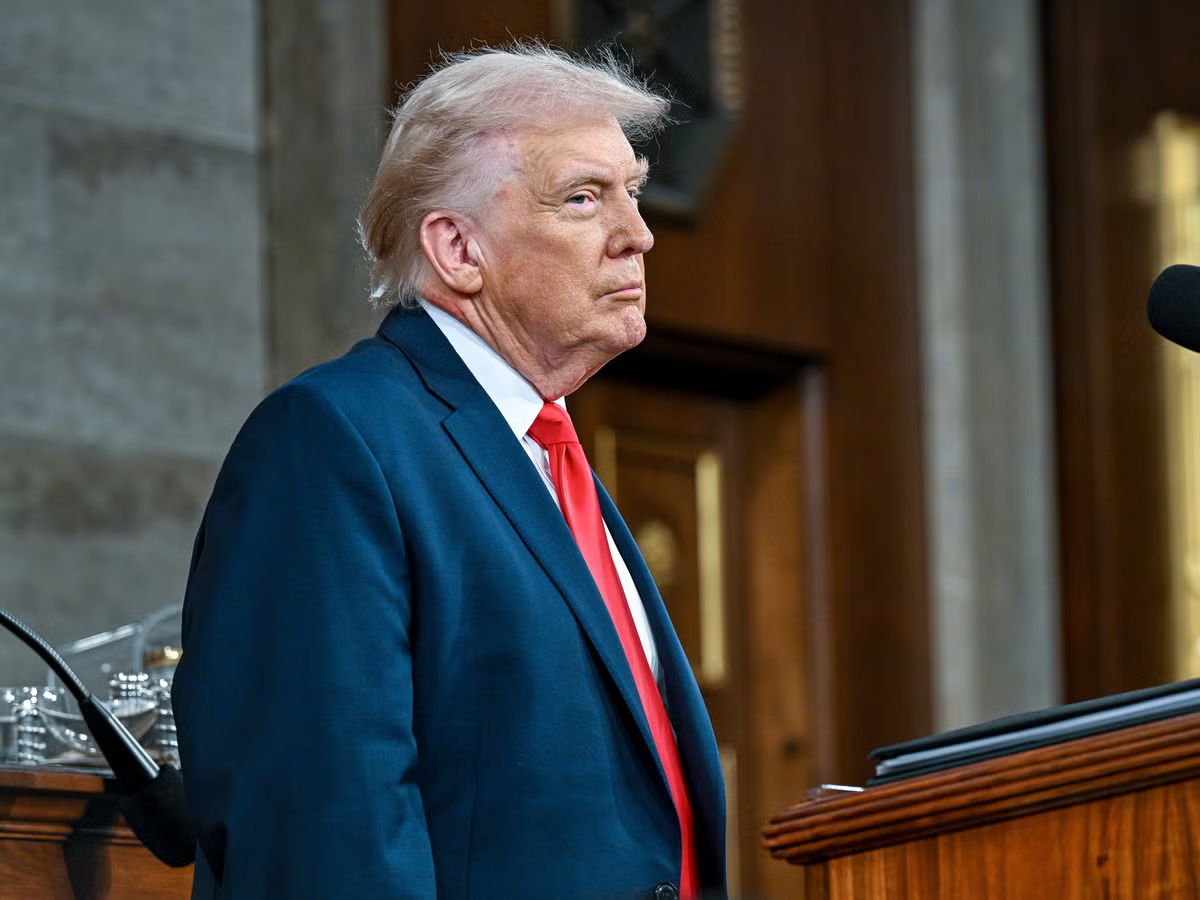
Donald Trump has called on major world powers to deploy naval forces alongside the United States to help secure the Strait of Hormuz, as rising tensions in the Middle East continue to disrupt one of the world’s most critical energy corridors.
In a post on Truth Social, the US president said countries heavily affected by Iran’s attempted restriction of maritime movement through the strategic waterway should join a coordinated international effort to keep the passage open.
“Many countries, especially those affected by Iran’s attempted closure of the Hormuz Strait, will be sending warships, in conjunction with the United States of America, to keep the strait open and safe,” Trump wrote, while expressing hope that nations including China, France, Japan, South Korea and the United Kingdom would contribute naval assets to the operation. ()
The appeal comes as maritime traffic through the strait remains severely disrupted following Iranian strikes and growing fears of further escalation. The narrow channel—just 54 kilometres wide at its narrowest point—handles roughly one-fifth of global crude oil and liquefied natural gas shipments, making it one of the world’s most strategically sensitive trade routes. ()
Speaking on Friday, Trump said the United States would soon begin escorting oil tankers through the waterway, signalling imminent naval action to protect commercial shipping and stabilise global energy supplies.
“It’ll happen soon, very soon,” he said when asked when the United States Navy would begin tanker escort operations. ()
Trump also claimed that Iran’s military strength had been largely neutralised, but acknowledged that Tehran still retained the ability to threaten shipping through drones, sea mines and short-range missile attacks.
“We have already destroyed 100% of Iran’s military capability, but it’s easy for them to send a drone or two, drop a mine, or deliver a close-range missile somewhere along, or in, this waterway,” he wrote.
He added that the United States would continue military operations along the shoreline and target Iranian vessels if necessary, insisting that the strategic passage would soon be reopened and secured.
The latest remarks underscore growing international concern over the security of the Strait of Hormuz, where prolonged instability has already triggered fresh spikes in global oil prices and renewed fears over energy supply disruptions worldwide.
About the Author