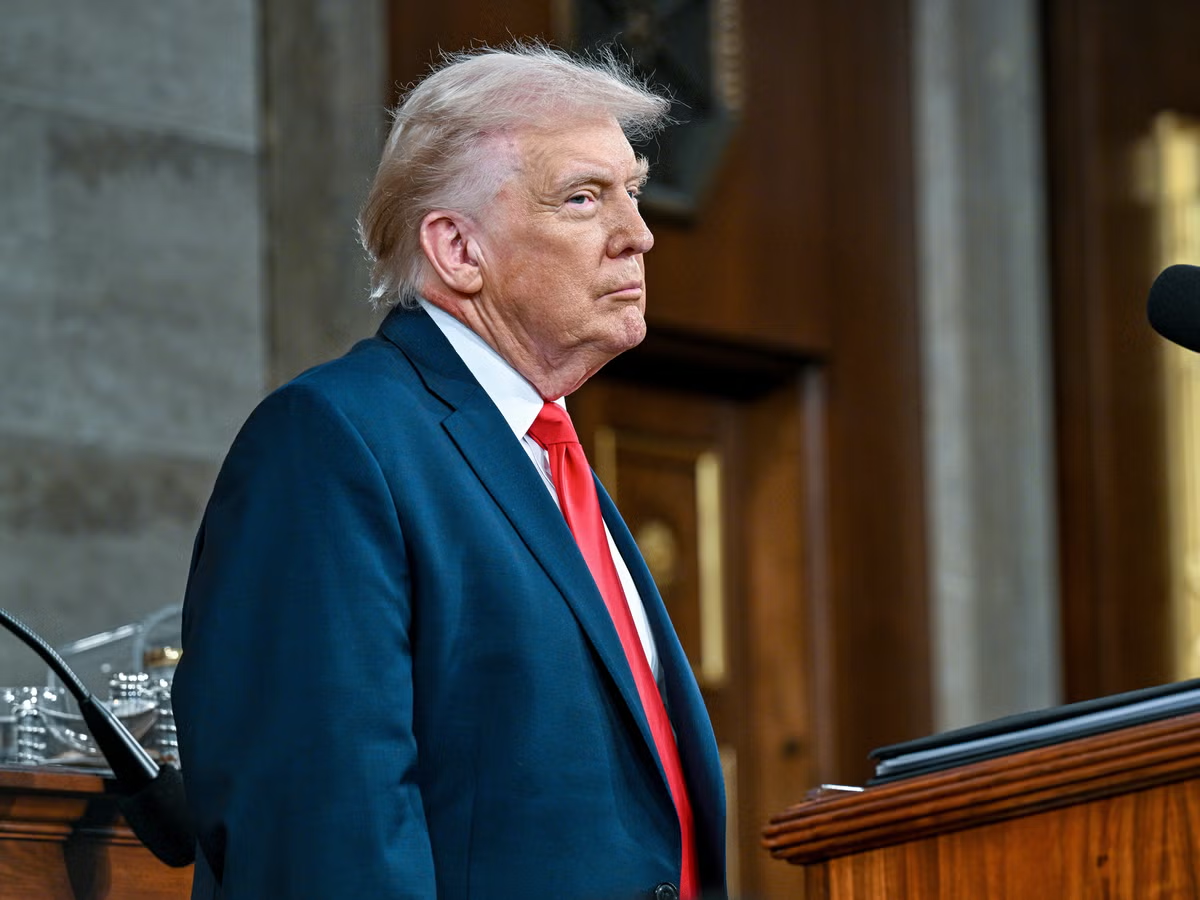
The administration of Donald Trump has faced scrutiny over what critics describe as limited publicly available evidence supporting its justification for escalating military actions against Iran, even as United States and Israel expand their joint strike operations.
Officials have framed the campaign in shifting terms, alternating between warnings of an imminent Iranian attack and broader arguments that Tehran’s long-term nuclear and regional ambitions pose an existential threat.
On Monday, the defence and diplomatic messaging was on display as Pentagon chief Pete Hegseth and other officials suggested that Iran’s 47-year post-revolutionary military and geopolitical strategy, including its ballistic missile programme and potential nuclear capabilities, could constitute a direct threat to American security.
Meanwhile, Marco Rubio indicated that close U.S. ally Israel was preparing potential strikes on Iran, warning that any Israeli attack could trigger Iranian retaliation against American assets — a scenario the administration says may justify pre-emptive action.
However, the White House has provided little publicly available evidence to substantiate the claims of an immediate Iranian threat, according to security analysts, advocacy groups, and some Democratic lawmakers who participated in classified intelligence briefings.
“The reality is they’ve presented very little evidence, and that’s a huge problem,” said Emma Belcher, president of the nuclear disarmament advocacy group Ploughshares Fund.
Belcher argued that the administration’s approach suggests either a belief that detailed justification for the war is unnecessary or a reluctance to expose intelligence assessments to deeper public scrutiny, adding that the absence of clear evidence raises questions about the strength of the underlying case for military escalation.
While Republican lawmakers have largely supported the administration’s position, Democrats have signalled plans to push for war powers legislation aimed at asserting congressional authority over military decisions and limiting unilateral presidential action.
About the Author