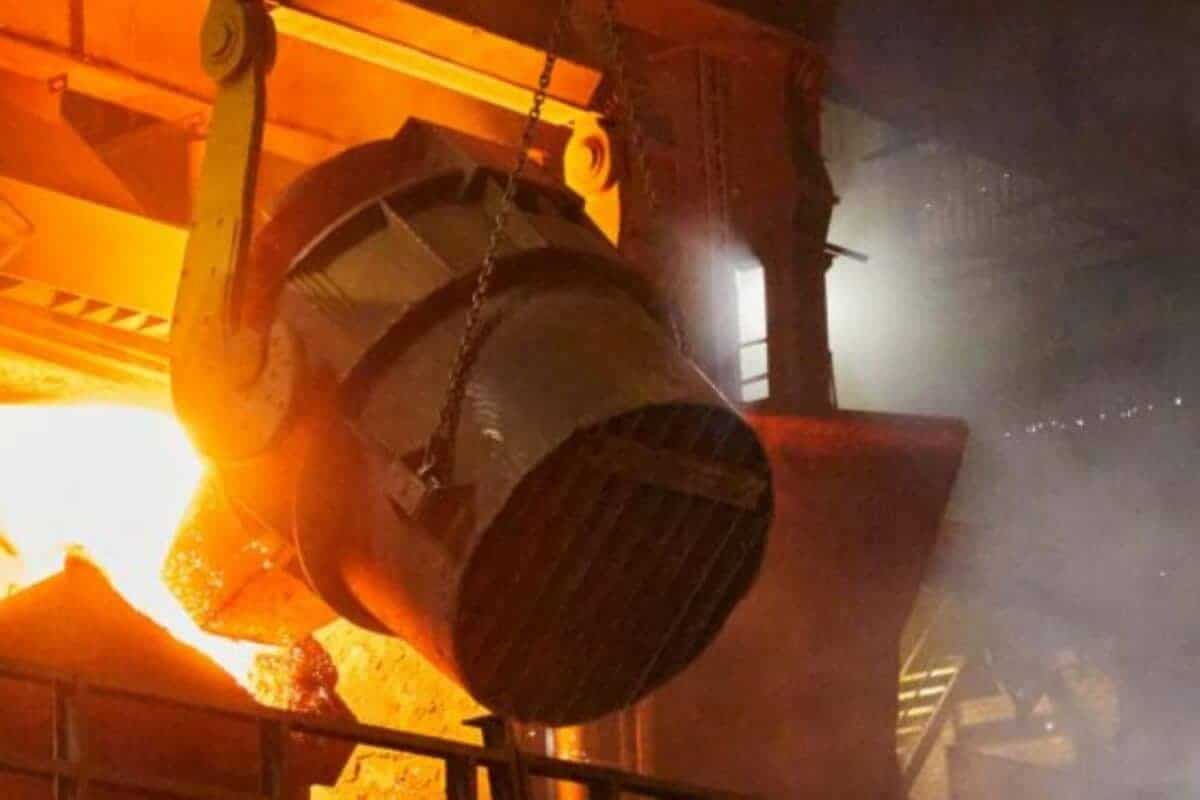
Ahead of the upcoming national budget, Transalloys chief executive Konstantin Sadovnik said he is not optimistic that meaningful electricity tariff relief for the wider smelting sector will be announced.
Electricity remains the company’s single largest input cost and the decisive factor in determining global competitiveness in very competitive ferroalloy markets, he said.
Retrenchments loom without tariff relief
Should no tariff relief be forthcoming, the company will be compelled to retrench about 600 employees, placing an estimated 7 000 livelihoods at risk.
Transalloys is the last remaining manganese smelter in SA and contributes around R2.5 billion annually to the eMalahleni economy through the procurement of local goods and services.
“Beyond the immediate job losses and downstream economic impact, shutting down the plant would wipe out a R5 billion strategic asset,” Sadovnik said.
“It would represent an irreversible loss of manganese beneficiation capacity in a country that holds roughly 80% of the world’s known manganese resources and severely damage investment climate in South Africa.”
While ferrochrome smelting has received tariff relief, silicomanganese smelting is about 30% more energy-intensive, Sadovnik said.
ALSO READ: Pressure mounts on Eskom pricing as more retrenchments loom
“If Transalloys is granted relief on par with that expected for ferrochrome, manganese smelting can be saved,” he said.
Call for parity with ferrochrome tariffs
Earlier, Glencore chief executive Gary Nagle expressed confidence the ferrochrome sector’s requirement of a 62c per kilowatt-hour energy tariff would be met before the end of February.
Sadovnik said a 62ckWh tariff would align with the 3 to 4 US cents per kilowatt-hour range paid by globally competitive smelters in jurisdictions such as the US Norway and Malaysia.
“Ironically, South Africa is losing competitiveness to countries that lack our resource base but have proactively structured energy solutions to capture the socio-economic benefits of beneficiation,” he said.
Interim relief versus long-term reform
A tariff reduction contemplated by Glencore, Sadovnik emphasised, would serve as an interim measure.
“It is an immediate bridge while a long-term energy solution is being developed. It would provide much-needed breathing space, not only for Transalloys but for the broader ferroalloys sector,” he said.
Both short-term relief and long-term reform must be considered within the broader fiscal and industrial policy framework likely to be outlined in the budget, he added.
ALSO READ: Eskom signs deal aimed at saving SA’s shrinking smelter sector
“Electricity pricing reform for energy-intensive sectors is not a concession. It is an investment in preserving productive capacity, export earnings, tax revenue and maintaining an attractive investment climate.
“A competitive framework strengthens the national balance sheet over time,” Sadovnik said.
Domino effect warning for Eskom and coal miners
He said the ferroalloy value chain is widely reported to support approximately 300 000 direct and indirect employment opportunities.
“A consolidated ferroalloys sector likely represents the largest Eskom’s customer. Smelter closure, conversely, would have a domino effect forcing Eskom to cut back power generation, spreading its fixed costs and huge debt burden over smaller number of paying customers, and consequently pushing the upstream coal miners to close,” he said.
Transalloys has engaged Eskom, government and other stakeholders since October last year to secure a workable electricity tariff solution.
Over time, escalating tariffs have rendered ore beneficiation in SA structurally uncompetitive.
NOW READ: Nersa’s mistakes turn 5.36% tariff increase into 8.76%
About the Author