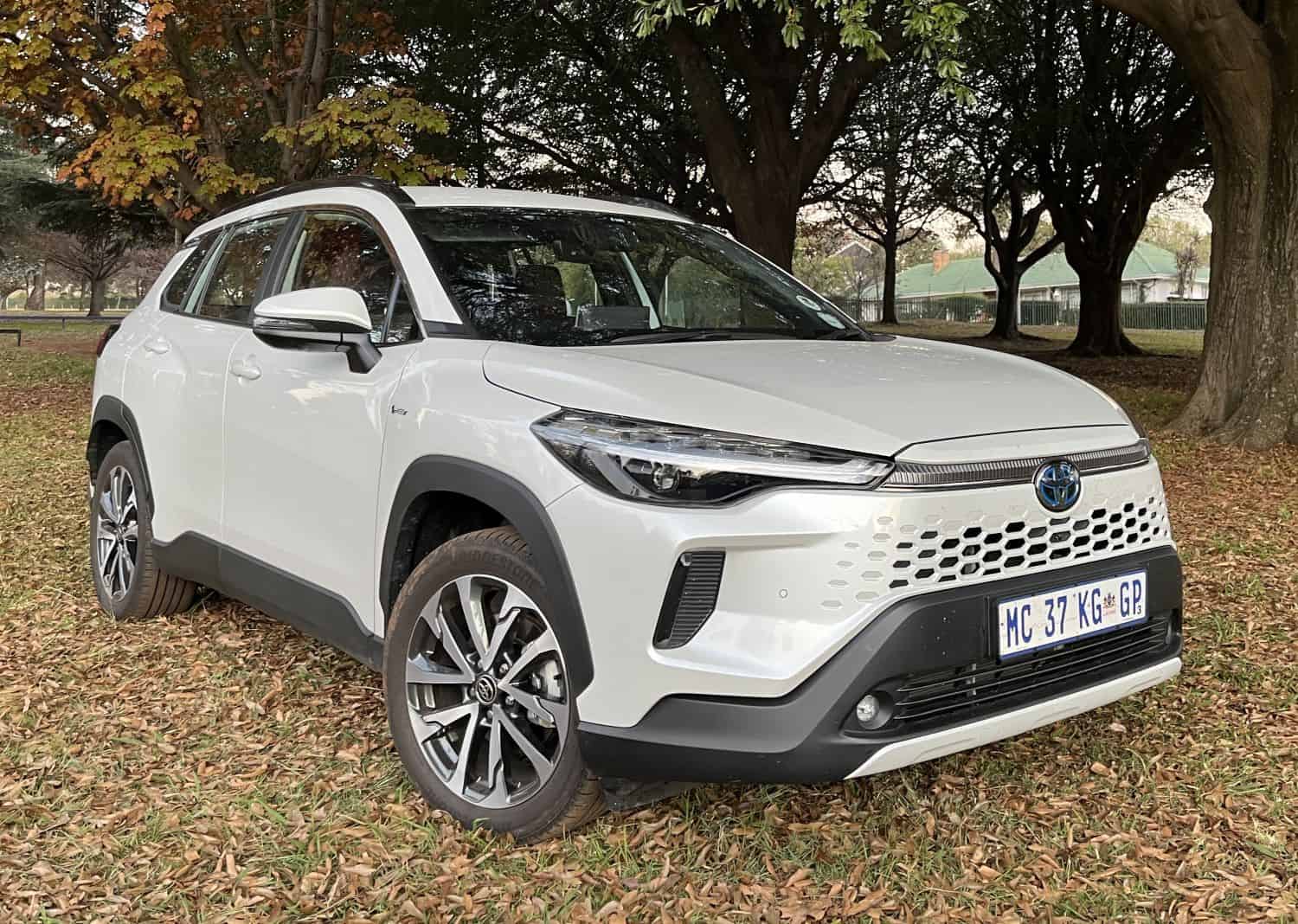
Carmakers are expanding their new energy vehicle (NEV) portfolios at the rate of knots.
While these NEVs, which includes all-electric cars, mild hybrids, self-charging hybrids (HEVs) and plug-in hybrids is environmentally friendlier and give better fuel economy than traditional internal combustion engine (ICE) cars, they come at a premium.
That is why The Citizen Motoring did a simple comparison in costs to determine when an NEV makes more financial sense than an ICE vehicle. Using Mzansi’s favourite NEV as example, the Toyota Corolla Cross HEV in XS guise, we did a few key calculations.
Toyota Corolla Cross shootout
The Corolla Cross HEV XS retails for R494 400, which is R42 200 more than the 1.8-litre petrol derivative at R452 200 XS. Toyota claims the HEV sips 4.3 litres of petrol per 100km and the ICE 6.8 litres per 100km.
Our calculations show that our average annual mileage should determine if the HEV will save you money or not. If you travel 15 000km, it will take you around 63 months on standard finance to cancel out the initial premium for HEV over ICE. Any less than this number of kilometers and the HEV will make less sense, while the savings start showing the more you go over this number.
2025 Motoring Newsmakers
BYD Shark dethrones Raptor – 2025 Motoring Newsmaker No 7
Feisty Suzuki Fronx shines – 2025 Motoring Newsmaker No 8
Toyota Tundra finally in Mzansi – 2026 Motoring Newsmaker No 9
BMW 333i E30 fetches R3.5m – 2025 Motoring Newsmaker No 10
Chery Tiggo Cross CSH in SA – 2025 Motoring Newsmaker No 11
JAC T9 sets endurance record – 2025 Motoring Newsmaker No 12
GWM introduces new Haval H6 – 2025 Motoring Newsmaker No 13
VW small bakkie for Mzansi? – 2025 Motoring Newsmaker No 14
BMW 325iS ‘Gusheshe’ reborn – 2025 Motoring Newsmaker No 15
About the Author