President Sets Ambitious GDP Goals as Dangote, Manufacturers Demand Urgent Power Reforms…
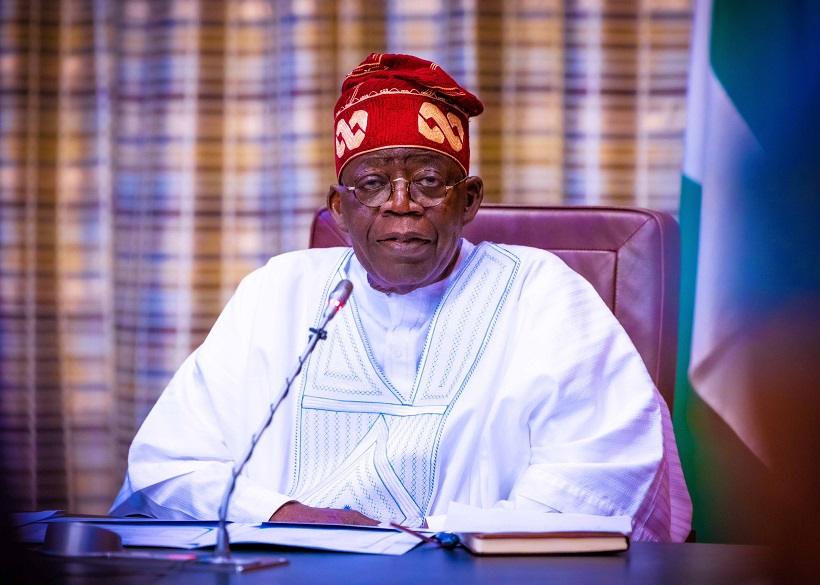
President Bola Tinubu on Tuesday formally launched the Nigeria Industrial Policy 2025, marking what his administration describes as a decisive shift toward rebuilding the country’s industrial backbone.
The unveiling took place at the Bola Ahmed Tinubu International Conference Centre in Abuja, where Vice President Kashim Shettima represented the President.
The event signals a transition from policy design to implementation, coming weeks after an earlier soft introduction in Lagos. Government officials say the framework is intended to deepen value addition, eliminate structural bottlenecks, and accelerate sustainable industrial growth.
“Industrialisation Is an Action”
In his address, President Tinubu described the policy as a strategic blueprint to re-engineer Nigeria’s industrial ecosystem and unlock growth across priority sectors.
He stressed that policy failure in Nigeria has often stemmed from weak execution rather than poor design, assuring stakeholders that a clear implementation structure has been established.
“Industrialisation is not a wish you think about; it is an action you perform,” Tinubu said, adding that success would be measured not by documents produced, but by factories operating, jobs created, and exports shipped with Nigerian value embedded in them.
He emphasised that the strategy promotes value chain development, shifting Nigeria from exporting raw materials to producing finished goods. The policy also seeks to integrate micro, small, and medium enterprises into mainstream industrial growth while aligning infrastructure, energy, finance, innovation, and skills development with long-term industrial ambition.
Dangote: ‘No Power, No Growth’
The launch comes amid mounting calls from industrial leaders for urgent power sector reforms.
Africa’s richest industrialist, Aliko Dangote, used the occasion to press the government on electricity supply, describing it as the single most critical factor for industrial success.
“If there is no protection, there is no way any industry will thrive here. No power, no growth,” Dangote said, urging the Vice President to convene a national forum dedicated to resolving Nigeria’s electricity crisis.
While commending the administration for stabilising the foreign exchange market, he maintained that reliable and affordable power remains non-negotiable for sustained industrial expansion.
The President of the Manufacturers Association of Nigeria, Otunba Francis Meshioye, also pledged manufacturers’ commitment to ensuring the policy delivers tangible results.
Raising Manufacturing’s GDP Share
The policy was initially soft-launched in January 2026 by the Minister of State for Industry, Senator John Owan Enoh, under the Federal Ministry of Industry, Trade and Investment.
At the time, the government set an ambitious target: to raise manufacturing’s contribution to Nigeria’s Gross Domestic Product to between 20 and 25 percent by 2030.
Among early measures cited was a temporary ban on raw shea nut exports, aimed at encouraging domestic processing and structured value addition. A dedicated implementation committee has also been established to translate the framework into measurable productivity gains and job creation.
Officials have further tied the policy to Nigeria’s strategic position under the African Continental Free Trade Area, warning against allowing the country to become a dumping ground for imported goods.
Implementation Will Be the Test
The formal rollout follows assurances made in August 2025 that a comprehensive industrial strategy was being finalised to curb Nigeria’s dependence on imports and strengthen domestic production capacity.
The initiative, driven by the Ministry of Trade in collaboration with industry stakeholders, is positioned as a practical roadmap rather than a theoretical framework.
However, analysts say the real test lies ahead. Policy coherence, cross-ministerial coordination, investor confidence, and most critically structural reforms in the power sector will determine whether the Nigeria Industrial Policy 2025 becomes a transformative milestone or another ambitious document constrained by execution gaps.
For now, the administration has signalled intent. Whether factories begin opening their gates at dawn, as the President envisions, will depend on how quickly policy ambition translates into reliable electricity, competitive production costs, and sustained private-sector confidence.