Tax reform architect and PwC executive nominated to replace Doris Uzoka-Anite as new laws reshape Nigeria’s revenue system….
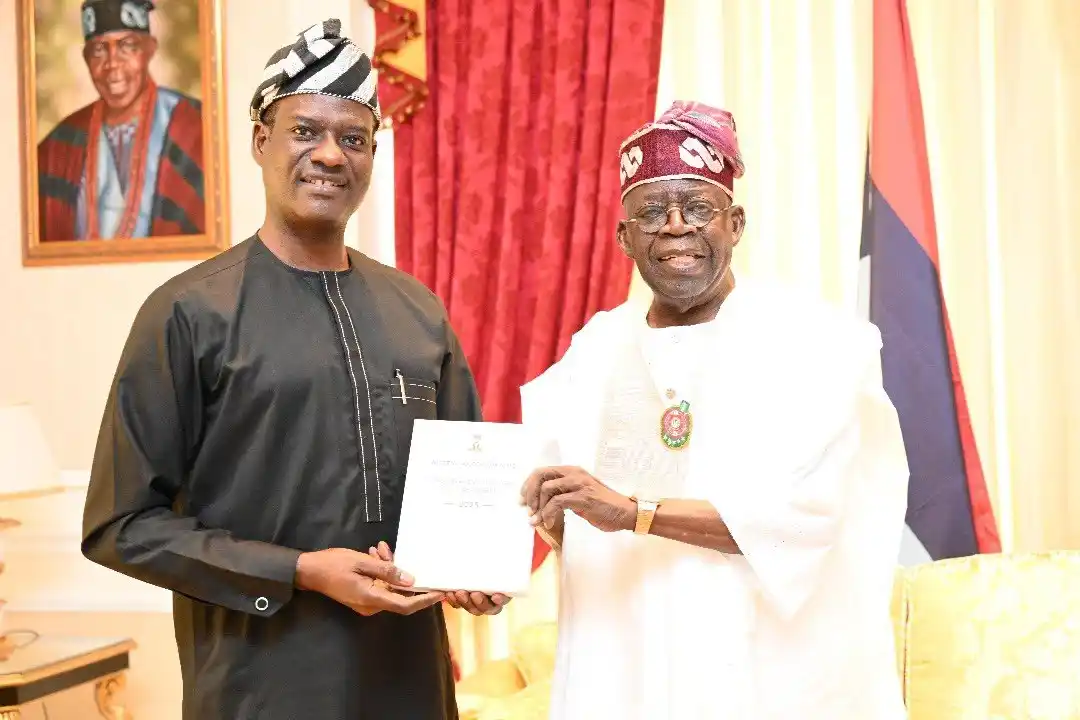
President Bola Tinubu has nominated Taiwo Oyedele as Minister of State for Finance, deepening the administration’s push to consolidate its sweeping tax reforms and fiscal restructuring agenda.
The nomination was formally transmitted to the Senate for confirmation in a letter addressed to Senate President Godswill Akpabio, according to a statement issued Tuesday by presidential spokesman Bayo Onanuga.
Oyedele will replace Doris Uzoka-Anite, who has been redeployed to the Ministry of Budget and National Planning as Minister of State. The reassignment marks her third portfolio since the start of the administration.
Oyedele is widely regarded as one of the key figures behind the federal government’s ongoing tax overhaul. In July 2023, President Bola Tinubu appointed him Chairman of the Presidential Committee on Fiscal Policy and Tax Reforms, a role that placed him at the centre of efforts to redesign Nigeria’s tax administration framework.
Before his appointment into public service, the 50-year-old served as Fiscal Policy Partner and Africa Tax Leader at PricewaterhouseCoopers, where he began his professional career in 2001. Over the years, he built a reputation as a public finance expert, combining accounting, economics and policy advisory work.
Oyedele holds a Higher National Diploma in Accountancy and Finance from Yaba College of Technology and later earned a Bachelor of Science degree in Applied Accounting from Oxford Brookes University.
His academic development also includes executive education programmes at the London School of Economics, Yale University, the Gordon Institute of Business Science and the Harvard Kennedy School.
Beyond his policy and corporate work, Oyedele serves as a professor at Babcock University in Ogun State and is a visiting scholar at Lagos Business School.
His nomination comes months after President Tinubu assented to four major tax reform bills developed by Oyedele and his committee. The legislative package — comprising the Nigeria Tax Bill, the Nigeria Tax Administration Bill, the Nigeria Revenue Service (Establishment) Bill and the Joint Revenue Board (Establishment) Bill was passed by the National Assembly following months of debate and controversy.
On June 26, 2025, Tinubu signed the bills into law, describing them as a foundation for transforming revenue generation and strengthening the fiscal base of the country. The laws officially came into effect on January 1, 2026, ushering in what the government has described as a new phase in Nigeria’s tax regime.
Despite pushback from opposition figures and various interest groups, the reforms are designed to modernise tax administration, expand the revenue base, improve compliance and create a more predictable environment for businesses and investors.
With Oyedele now nominated to join the Finance Ministry, the move signals continuity in the administration’s fiscal reform agenda at a time when revenue mobilisation remains central to economic management and budget sustainability.
About the Author