New policy positions Nigeria as major player in global carbon trading and climate finance
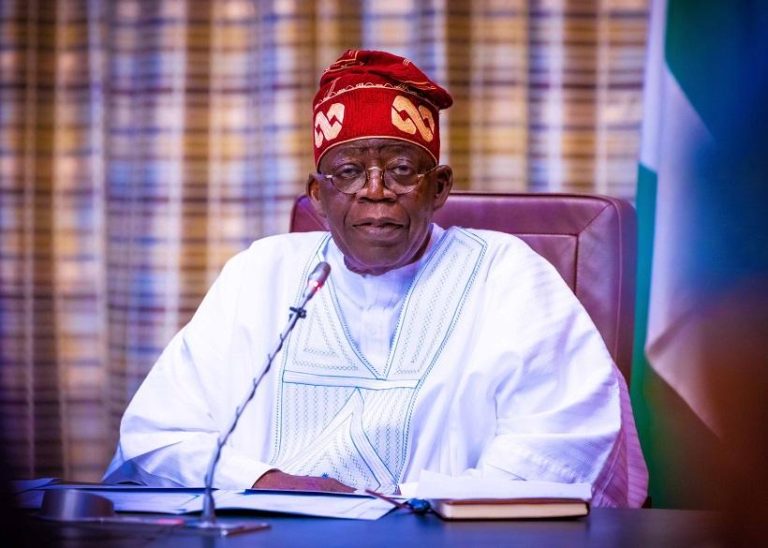
President Bola Tinubu has approved the full implementation and operational rollout of Nigeria’s National Carbon Market Framework, a landmark climate and economic policy projected to generate at least $3 billion annually by 2030.
The approval was confirmed by Tenioye Majekodunmi, Director-General of the National Council on Climate Change (NCCC), who described the move as a major step toward positioning Nigeria as a leader in carbon trading across Africa.
According to the NCCC, the framework establishes the foundation for large-scale carbon credit transactions across multiple sectors of the economy, placing Nigeria at the forefront of emissions trading and climate-related investment.
Government Strategy
Majekodunmi said the policy will unlock emissions-reduction opportunities in energy, agriculture, forestry, waste management and industrial activities.
Nigeria will initially focus on voluntary carbon markets and international trading, while gradually introducing a domestic emissions trading system and carbon taxation as part of a phased approach.
“Operationalizing this framework shows that carbon markets are now a central part of Nigeria’s economic strategy,” Majekodunmi said. “They are a tool for attracting foreign capital, supporting the energy transition and strengthening Africa’s role in global climate finance.”
Key Policy Features
The framework introduces a range of regulatory and fiscal incentives, including:
- Establishment of a national carbon registry
- Mandatory emissions reporting for covered companies
- Phased compliance measures aligned with Nigeria’s climate commitments, including emissions reductions by 2035 and net-zero by 2060
- Tax exemptions on carbon credit revenues for up to ten years
- Accelerated capital allowances for low-carbon investments
- Research and development deductions linked to emissions-reduction projects
These measures are designed to remove structural barriers that have previously limited investor confidence in Nigeria’s carbon market.
Nigeria’s Carbon Market Today
Nigeria currently hosts 57 registered voluntary carbon projects, mainly in household energy, renewable power and forestry.
Government figures show that 5.8 million carbon credits have already been issued. The new framework aims to rapidly scale this pipeline while ensuring compliance with international quality and integrity standards.
Oversight of the market will be handled by the National Council on Climate Change, chaired by the President, and supported by a dedicated carbon market office responsible for project approvals, registry management, authorizations and market supervision.
Global and Regional Context
Carbon credits represent one metric tonne of carbon dioxide avoided, reduced or removed from the atmosphere, often through projects such as reforestation or clean energy deployment.
According to BloombergNEF, global carbon credit supply could expand 20 to 35 times by 2050, driven by reforms focused on transparency and environmental integrity.
Several African countries, including Zimbabwe, Kenya and Malawi, have also moved to regulate their carbon offset markets. However, global confidence in carbon markets has weakened in recent years, with overall market activity shrinking by nearly two-thirds since 2021, amid concerns over credit quality and softer corporate climate commitments.
The Nigerian framework allows for public-private partnerships and bilateral cooperation, potentially enabling Nigerian carbon credits to attract sovereign and corporate buyers seeking high-integrity, compliance-grade offsets.
Majekodunmi said the policy is designed to “rapidly expand Nigeria’s carbon project pipeline while ensuring international quality standards are upheld.”
Background
In November 2025, Nigeria unveiled plans to mobilize up to $3 billion annually in climate finance through its Carbon Market Framework and Climate Change Fund.
The announcement was made by Vice President Kashim Shettima during a high-level session titled “Climate and Nature: Forests and Oceans” at the United Nations Climate Change Conference (COP30) in Belém, Brazil.
At the time, Shettima said Nigeria’s climate agenda is anchored on balancing environmental restoration, economic development and long-term resilience.
About the Author