After more than 15 years of legal and regulatory battles, Nigeria reaches a new agreement with Eni and NAEL, unlocking a key offshore asset expected to boost crude production by 150,000 barrels per day….
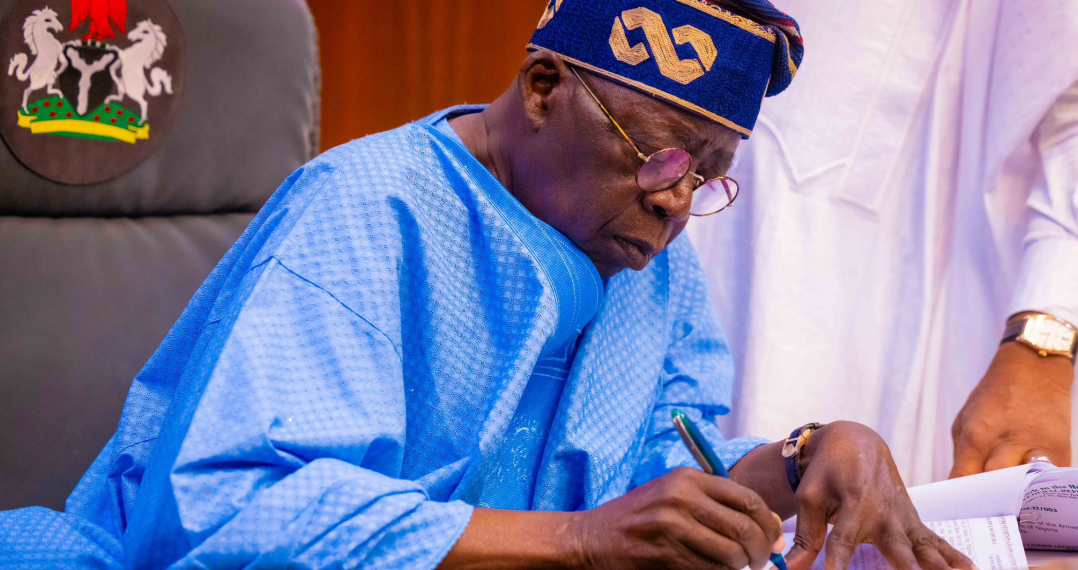
President Bola Ahmed Tinubu has announced the successful conclusion of a long-running dispute involving the Federal Government of Nigeria, Eni, and Nigerian Agip Exploration Limited (NAEL) over the controversial Oil Prospecting Licence 245 (OPL 245).
The settlement was finalised during a meeting at the Presidential Villa in Abuja attended by top executives from the Italian energy giant and senior officials from the Nigerian government.
Among those present were the Chief Executive Officer of Eni, Claudio Descalzi, the company’s Chief Operating Officer Guido Brusco, Head of the Sub-Saharan Africa region Mario Bello, Managing Director of Nigerian Agip Exploration Fabrizio Bolondi, and the President’s Special Adviser on Energy, Olu Verheijen.
According to a statement issued by the President’s Special Adviser on Information and Strategy, Bayo Onanuga, the agreement formally ends a dispute that has lasted for more than 15 years and restores regulatory clarity to one of Nigeria’s most commercially promising offshore assets.
Clearing the Path for a Major Oil Development
With the dispute now resolved, attention is expected to shift toward the development of the Zabazaba–Etan deepwater project, a major offshore initiative linked to the OPL 245 block.
Government officials say the project could significantly strengthen Nigeria’s oil output by adding about 150,000 barrels of crude oil per day to the country’s production capacity once it reaches full development.
The settlement is also expected to pave the way for a Final Investment Decision (FID) on the project, a key step required before large-scale development begins.
Tinubu: Settlement Sends Signal to Global Investors
President Tinubu described the agreement as a major step forward for Nigeria’s economic and energy reform agenda.
According to him, resolving the long-standing dispute demonstrates the country’s commitment to transparency, the rule of law, and the creation of a stable investment climate.
“This resolution sends a clear signal to global investors that Nigeria is prepared to address legacy issues transparently, uphold the rule of law, and create a stable environment for long-term capital,” the President said.
He added that the settlement aligns with his administration’s broader goal of restoring investor confidence while ensuring that Nigeria’s natural resources deliver sustainable benefits to its citizens.
Revised Terms Under Petroleum Industry Act Framework
Tinubu’s Special Adviser on Energy, Olu Arowolo-Verheijen, noted that the new settlement significantly improves on the earlier 2011 resolution agreement, bringing it in line with reforms introduced under the Petroleum Industry Act (PIA).
According to her, the revised terms provide a more balanced arrangement for both investors and the Nigerian government.
“The revised terms strike a balanced outcome, providing investors with the clarity and predictability required to proceed with major deepwater investments while ensuring stronger value accretion and safeguards for the Federation,” she said.
Part of Wider Energy Sector Reforms
The presidency said the agreement forms part of a broader set of reforms implemented since 2023 to reposition Nigeria as a more competitive destination for energy investment.
These reforms, built around the framework of the Petroleum Industry Act and supported by executive policy actions, are said to have already begun attracting renewed investor interest and fresh capital into Nigeria’s oil and gas sector.
Officials say resolving the OPL 245 dispute removes one of the most prominent legacy risks in Nigeria’s upstream petroleum industry and strengthens the country’s regulatory credibility.
Tinubu Commends Key Institutions
President Tinubu also acknowledged the contributions of several government institutions and stakeholders who played roles in achieving the settlement.
These include the Office of the Attorney General of the Federation, the Federal Ministry of Petroleum Resources, the Nigerian Upstream Petroleum Regulatory Commission, and the Nigerian National Petroleum Company Limited (NNPCL), alongside leadership from Eni.
The presidency said the resolution reflects the administration’s determination to unlock Nigeria’s strategic energy assets, attract responsible investment, and ensure that the country’s vast natural resources translate into economic growth, employment opportunities, and long-term prosperity for Nigerians.
About the Author