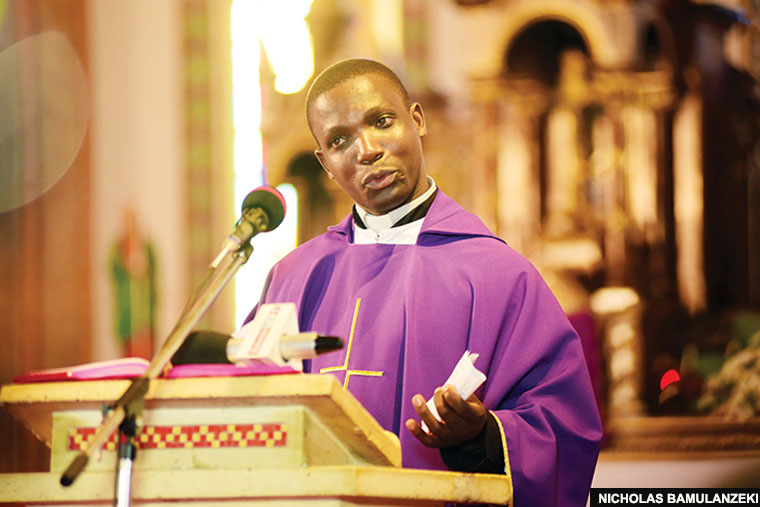
I attended a burial in Gombe last week, and had never encountered such a quarrelsome priest!
Before the requiem mass started, he warned mourners to stand when he says stand, sit when they were supposed to, and save the gossip for later like “grownup women”. To which a few women answered: “And men!”
“Unless you are sick or disabled, I expect you to stand. Otherwise, should you stay seated, may God strike you with an illness so bad, you never get to leave that seat again,” the reverend father, whose only name I captured was Ssentongo, said sternly.
My eyes nearly popped out. In Pentecostalism, we take words that roll off one’s tongue very seriously. After all, the Bible says, life and death are in the power of the tongue. I heard several people shout back: “Fire!” but the priest retorted: “Even if you loose fire, it shall consume you if you don’t stand up.”
One could easily tell that this youthful clergyman possibly looks up to Father Deogratius Kiibi, who famously uses banter and blunt humour to keep his congregation alert and entertained; but where Fr Kiibi is naturally witty and humorous, Fr Ssentongo came off as abrasive and angry.
In apparent fear of the issued curse, almost the entire congregation – some with Muslim caps on their heads – hilariously followed through with the Catholic rituals of sit-stand-kneel during the mass.
When someone remained seated, the priest would pause mid-sentence to ask, “Why is that one sitting?” And when push came to shove with the sit-stand battle, he declared: “Never mind; we are all going to die, after all. I can even see who is next, here amongst us.”
Africans joke about many things, but never death. A lady sitting next to me muttered: “Goodness! I feel afraid to even drive to Kampala now. What is his problem?” Soon, he turned to the deceased.
“I visited her in that house down there before she died. Imagine putting her body in such a beautiful casket and all of you parking these big cars to send her off, after failing to improve her house when she was still alive!” The crowd murmured.
The lady next to me whispered, “I wonder whether people attend his mass on Sundays, if this is how he preaches…”
The burial was for 106-year-old Matilda Naiga, whose daughter later explained that her mother refused to be removed from her mud and wattle marital home, and two attempts to improve the house had met her fierce resistance, apparently in memory of her husband who had died decades earlier. I had never sat through such a sermon.
About the Author