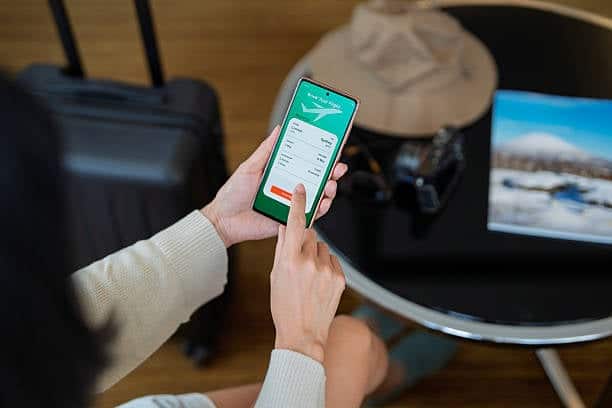
Artificial Intelligence (AI) is becoming more prominent as the digital world expands and integrates into modern society.
People and companies have found ways to combine the world of travel with technological automation, leading to new discoveries you may not have even known existed.
The future of travel is not about faster bookings or smarter destination recommendations, but about deepened personalisation and data-driven support features that are exquisitely curated just for your needs.
AI appears to be making travel experiences effortless for the user, whether you are planning a cross-country rail escape or simply checking into a hotel that uses AI for easier access. Kelsey van Eck from Irvine Partners unpacks three ways AI is transforming the travel industry right now.
ALSO READ: AI is risky business behind the ghost in the machine
AI-powered travel planners
Ever heard that your phone tracks your every word and move to better understand your preferences and suit your algorithm? Well, imagine the concept of a “personal concierge” right in your pocket, with the world at your fingertips with a simple tap of a button.
Forget planning an itinerary at a travel agency; AI-powered travel assistants are on the rise and are already reshaping travel planning across the world. In December 2025, the South African tourism industry partnered with the North American company GuideGeek to launch its first AI travel planner, Siyanda, which means “we are growing/increasing” in isiZulu and isiXhosa.
This platform was designed specifically to encourage easy travel in South Africa for locals and international travellerss. Van Eck says that advisors and travellers in the country can use it as well.
“Whether it’s a safari in the Kruger, a vineyard tour in Stellenbosch or the best dining spots in Cape Town, visitors are able to stretch their budgets while making every journey feel enriching,” Kelsey says.
Navan Edge is also well known amongst CEOs as the personal business AI agent considered “the always-on travel assistant who truly gets you”. This platform can handle complex itineraries, rebook flights, or automatically shift reservations when needed.
“The assistant doesn’t just react. It thinks ahead, ensuring every detail is handled. This is a new era where AI assistants don’t simply provide information, they are the orchestrators of seamless, supported journeys globally.”
AI transport booking integration
In 2025, Visa Business and Economic Insights reported that travel by bus or plane is making an eco-friendly comeback, too. After analysing customer spending between 2019 and 2024, ticket purchases increased by 59%.
Although the elder age group and affluent travellers appear to be the majority of this statistic, adventurers are drawn by scenic routes and a nostalgic charm, “seeking both comfort and convenience to explore the world.”
Busbud, the bus ticket app, has integrated ChatGPT to make booking effortless, using real-time schedules, prices, and availability instantly in the chat. Kelsey says that once a trip is selected, the process flows seamlessly into the booking process.
“ChatGPT provides a direct link to Busbud’s secure checkout, pre-filled with all the chosen details, so travellers can confirm their purchase in just a few clicks.”
“By centralising logistics in one conversational interface, this integration removes the friction from intercity travel planning.”
She expressed that the assistant filters results to match your travel desires, even down to onboard amenities like Wi-Fi or power outlets.
“It’s a streamlined way to coordinate buses and trains within a broader itinerary, giving travellers more time to focus on the exciting journey itself rather than the mundane admin behind it.”
AI in hospitality
Despite the common features of AI being known to automate manual administrative tasks. Kelsey points out that leading hotel groups in Australia have been using advanced cleaning robots that autonomously vacuum, scrub, and mop floors around the clock.
“This gives staff a convenient chance to focus on more personalised touches, while ensuring spotless common areas for guests.”
Van Eck says that in the kitchens, AI-powered food waste monitoring systems have been deployed and helped chefs cut down on unnecessary waste. This not only helps cleaning and kitchen staff keep the space clean without constantly having to tidy common areas that get dirty quickly, but also saves major hotels up to $100 million in waste reduction.
At one of the world’s largest French hospitality groups, Accor, guests can also book rooms using ChatGPT, meaning you can now book rooms conversationally. The robotic chatbot serves as a digital concierge, tailoring recommendations to individual needs.
While other hotels have partnered with Be My Eyes, which is an application that assists blind and low-sighted guests to their rooms and facilities, using live video and AI. According to Kelsey, hotels are experimenting with voice AI, and agentic payment systems are also on the rise as they aim to seamlessly and securely make reservations and transactions.
“These innovations highlight a shift towards conversational discovery where guests ask and simply receive tailored solutions.”
She says that ultimately, AI is being used to handle routine tasks and back-end operations, which provide the staff more time to meaningfully engage with guests. AI is no longer just a “buzzworthy tool”, but these innovations provide more luxury and ease.
“The future of hotel stays looks less like robots at reception and more like invisible AI systems working in the background. AI has become the invisible engine behind smoother travel.”
READ MORE: US cybersecurity company invests in SA – but who will benefit?
About the Author