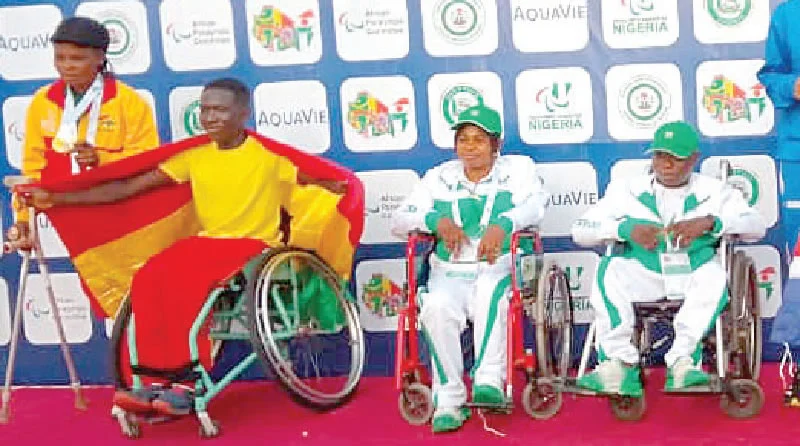
Nigeria’s elite para-athletes have voiced their frustration over the non-payment of competition and transport allowances following their historic triumph at the inaugural West Africa Zone A and B Para Games. Despite dominating the regional event in Abeokuta with a massive haul of 59 gold medals, the 190-strong Nigerian contingent remains unpaid more than a month after the competition ended.
Several athletes reported a complete lack of transparency regarding their financial entitlements and lamented the absence of a pre-tournament training camp.
The Federal Government recently allocated N1.28bn in the 2026 budget for special sports programs and the third edition of the Para Games, alongside N1.175bn for specialized equipment. However, the athletes maintain that the National Sports Commission must prioritize athlete welfare and permanent training infrastructure over statutory procurement. Many competitors argue that the lack of a dedicated games village hampers their ability to prepare for the upcoming 2026 Commonwealth Games in Glasgow and the 2028 Paralympic Games in Los Angeles.
Sunday Odebode, President of the Paralympic Committee of Nigeria, responded to the outcry by guaranteeing that payments would commence within the next seven days. He assured the sporting community that even athletes who attended camp but did not compete, such as the para-swimmers, would receive their full dues. This commitment comes as the committee prepares to launch intensive training camps in February to sustain Nigeria’s global standing in para-sports.
An anonymous athlete expressed the group’s frustration to journalists: “There was no prior negotiation. I think they did everything in collaboration with the secretaries of the associations; they didn’t really allow the federations to be involved. They just took us to the RCCG camp as the base of the competition. Nothing was said about allowances. Initially, they said there would be a pre-tournament camp, but there was none. As we speak now, we are yet to be paid our allowances. We were paid N50,000, I believe, as transport allowance, but there are some athletes who didn’t get the money. Now let’s talk about the allowances, which we don’t even know when they will pay. So where are we heading to?”
Another competitor highlighted the need for better facilities: “Based on our contribution to the success of Nigerian sports, we should have a purpose-built games village where we can lodge and train for extended periods. The stadium facilities we currently have are more or less makeshift. This is 2026 and we already have major competitions ahead. How do we even keep body and soul together to prepare? We really can’t talk about the amounts stated in the budget unless we see what they are doing.”
Sunday Odebode offered a definitive timeline for the resolution: “This week, unfailingly, they will start getting their money. There are some athletes who were in camp but didn’t compete, such as para-swimming athletes; they will still receive their allowances. The priority now is our preparation for the Commonwealth Games and the Paralympics, and we are hitting the ground running by February.”
About the Author