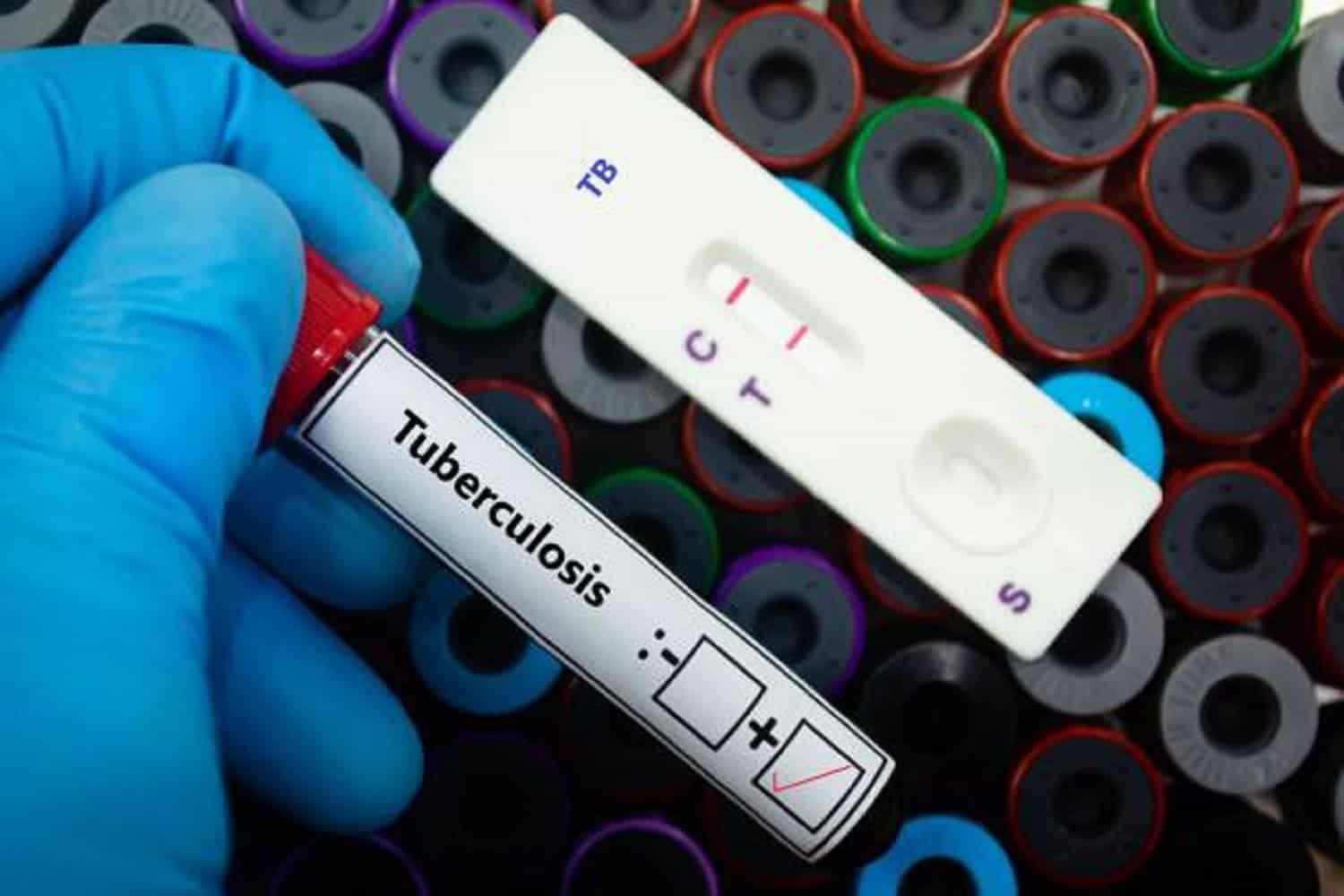
Blood sample of patient positive tested for tuberculosis by rapid diagnostic test.
By not finishing the full course of prescribed tuberculosis (TB) medication, sufferers could be signing their own death warrants, an expert warned.
And even if the disease is not fatal, it carries the danger of debilitating side effects if a treatment regimen is ignored, said Christopher Ealand, a senior researcher at the Faculty of Health Sciences at Wits University.
A World Health Organisation report on TB said recently the disease killed 54 000 people in South Africa in 2024.
“TB can be cured, and it is not a death sentence,” Ealand said.
“One needs to seek treatment early following exposure, and all antibiotics must be taken correctly and to completion. It is vitally important to complete the antibiotic because failure to do so can lead to more drug resistance.
“That statistic is the tip of the iceberg. Looking only at the death toll misses the incredible complexity of this disease and what it takes to manage it on the ground.”
HIV co-infections worsen crisis
Ealand said South Africa has persistent co-epidemic TB and HIV co-infections, as a large proportion of all reported TB cases were in people living with HIV. HIV-infected people have an increased chance of developing active TB and account for most deaths.
Another factor is the rise and spread of drug-resistant strains of TB. With multi-drug resistance cases, the treatment options were limited. Resistant strains take up to 24 months to treat.
“While SA is now rolling out highly effective six-month regimens for these strains, adherence is critical,” Ealand said.
“It is important for people to complete their antibiotic therapy because failure to do so can lead to more drug resistance. If these strains spread more broadly, the prospects of survival decrease.”
However, the country was progressive in treatment options for TB as it was managed through a comprehensive national programme with support from the department of health.
‘Missing cases’ fuel transmission
Another factor contributing to the persistence of the disease is its complexity. “There is a phenomenon known as ‘missing cases’.
These are people who have TB but are undiagnosed and are not on treatment. This fuels transmission.
“We also have sub-clinical forms of TB. This is where people have TB but no symptoms and will not seek treatment. The problem is that these people also spread it. “Without an effective vaccine, it is incredibly difficult to eradicate the disease. This is a global problem,” Ealand said.
Department of Health spokesperson Foster Mohale was not available for comment.
About the Author