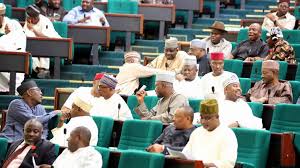
The Minority Caucus of the House of Representatives has called on the Federal Government to immediately suspend the implementation of Nigeria’s newly enacted tax reform laws amid mounting allegations that the laws were altered after being passed by the National Assembly.
The demand follows recent comments by the Chairman of the Presidential Committee on Fiscal Policy and Tax Reforms, Mr. Taiwo Oyedele, who insisted that the January 1, 2026 commencement date for the Nigerian Tax Act and the Nigerian Tax Administration Act remains “sacrosanct.”
Speaking after a high-level meeting attended by the Chairman of the Federal Inland Revenue Service (FIRS), Zacchaeus Adedeji, and the Chairman of the National Tax Policy Implementation Committee, Joseph Tegbe, Oyedele defended the reforms, describing them as people-centred and growth-driven.
According to him, the reforms will deliver significant relief to Nigerians, with the bottom 98 per cent of workers either exempted from Pay As You Earn (PAYE) tax or paying reduced rates.
He added that about 97 per cent of small businesses would be exempt from Corporate Income Tax, Value Added Tax (VAT), and Withholding Tax, while large businesses would also benefit from lower tax burdens.
“The whole idea is to promote economic growth, inclusivity, and shared prosperity for our people,” Oyedele said, while also welcoming the National Assembly’s decision to investigate allegations of alterations to the laws.
He assured that the Federal Government remains open to working with lawmakers and stakeholders to address concerns raised by Nigerians and opposition figures.
However, in a strongly worded statement jointly signed by Minority Leader Rep. O.K. Chinda, Minority Whip Rt. Hon. Ali Isa J.C., Deputy Minority Leader Rt. Hon. Aliyu Madaki, and Deputy Minority Whip Rt. Hon. George Ozodinobi, the Minority Caucus urged the Federal Government to halt implementation until investigations are concluded.
“We call on the government to suspend the implementation of the tax laws until investigations are completed and there is clarity and certainty regarding the laws to be implemented,” the statement read.
The caucus stressed that Nigerians and the business community are entitled to authentic copies of the laws they are expected to obey and warned against circulating documents that lack due legislative authentication.
The lawmakers expressed deep concern over what they described as a “storm brewing” around the tax reform laws, noting that while the bills were duly passed by the National Assembly and signed by President Bola Ahmed Tinubu, allegations of unlawful alterations are too grave to ignore.
They recalled that a member of the House had raised the issue during plenary, prompting the inauguration of a high-powered investigative committee to probe claims that the laws were fraudulently altered, gazetted, and circulated to the public.
The Minority Caucus assured Nigerians that it would stand firmly with the House to uncover the truth and ensure that anyone found culpable is held accountable.
“We are aware of the legitimate procedures for gazetting laws, which begin with the Clerk to the National Assembly transmitting the authenticated copies to the appropriate federal agency. The National Assembly remains the custodian of the genuine versions of the laws, and we will ensure that the truth prevails,” the statement said.
The caucus urged Nigerians to disregard any purported tax laws circulating without the signatures of the Clerk to the National Assembly and the President, stressing that such documents neither originated from the legislature nor reflect what was actually passed.
“Any attempt to foist fake laws on Nigerians is a direct attack on the independence and constitutional role of the National Assembly. We will unconditionally defend the legislature and Nigeria’s democracy,” the statement added.
The controversy intensified after Rep. Abdussamad Dasuki raised concerns over discrepancies between the versions of the tax laws passed by lawmakers and those later gazetted and made public.
He argued that his legislative rights had been violated, stating that the harmonised, clerk-certified versions sent to the President were not available for lawmakers to verify.
President Tinubu had earlier signed four major tax reform bills into law, describing them as the most comprehensive overhaul of Nigeria’s tax system in decades.
The laws — the Nigeria Tax Act, the Nigeria Tax Administration Act, the Nigeria Revenue Service (Establishment) Act, and the Joint Revenue Board (Establishment) Act — are set to operate under a unified authority, the Nigeria Revenue Service, and are scheduled to take effect on January 1, 2026.
Despite government assurances, opposition and controversy remain, particularly among lawmakers from the northern part of the country, as calls grow for transparency and accountability before implementation proceeds.
About the Author