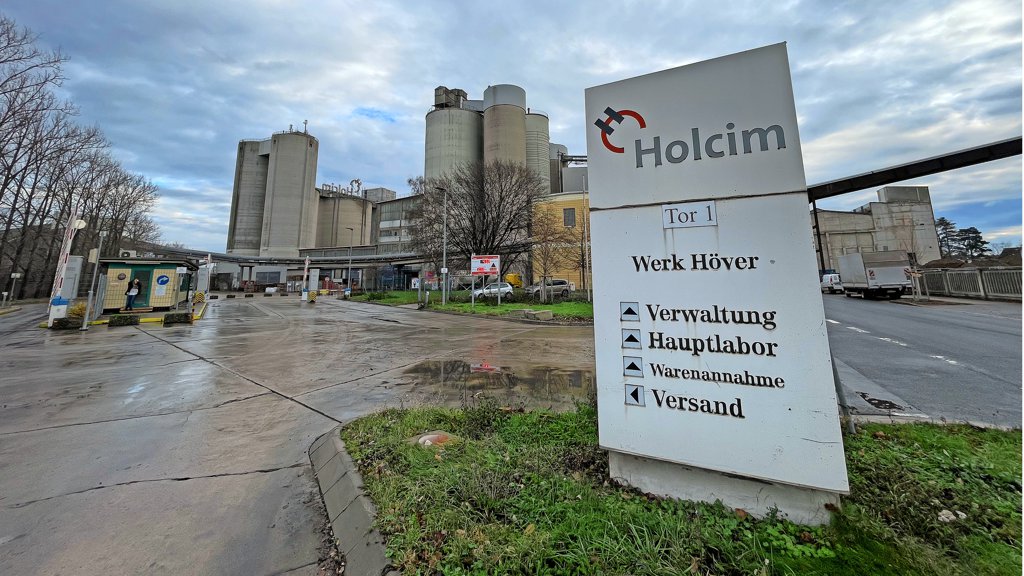
A Swiss court has agreed to hear a groundbreaking climate case brought by residents of a small Indonesian island threatened by rising sea levels, targeting cement giant Holcim, NGOs assisting the plaintiffs said on Monday.
“For the first time in Switzerland, a court has accepted climate litigation against a major corporation,” said a joint statement from NGOs including Swiss Church Aid (HEKS).
The case forms part of a growing international effort to hold large companies accountable for climate-related damage that disproportionately affects vulnerable communities, particularly in developing countries. While oil companies have traditionally faced the brunt of such litigation, activists hope the Swiss case will draw attention to the cement industry, which contributes roughly eight per cent of global human-caused carbon dioxide (CO2) emissions annually.
Four residents of Pari Island filed the lawsuit in January 2023, seeking compensation from Holcim and support for protective measures to safeguard the island. Two of the islanders traveled to Switzerland in September to attend a preliminary hearing at the court in Zug, where Holcim is headquartered, to determine whether their complaint would be formally accepted.
“Gives us strength”
“The court has now ruled that the complaint must be admitted in its entirety,” the NGOs said. Both parties received the decision ahead of Monday’s public announcement and have the right to appeal. Holcim confirmed in a statement that it “anticipated this as a potential outcome and intends to appeal.”
Environmentalists warn that 11 per cent of Pari Island’s 42-hectare (104-acre) area has already been lost to rising seas, and the island could be fully submerged by 2050.
One of the plaintiffs, Asmania—who, like many Indonesians, goes by a single name—welcomed the ruling. “We are very pleased. This decision gives us the strength to continue our fight,” she said in the NGOs’ statement.
The case could set a historic precedent for climate litigation against major industrial corporations in Switzerland and beyond, potentially reshaping the global debate over corporate responsibility for climate change.
About the Author